
A census enumerator's encrypted laptop is stolen from a parked car and is not expected back at the office. The management service can still reach it. Which control fits the loss?
Select an answer to reveal the explanation.
Short Explanation
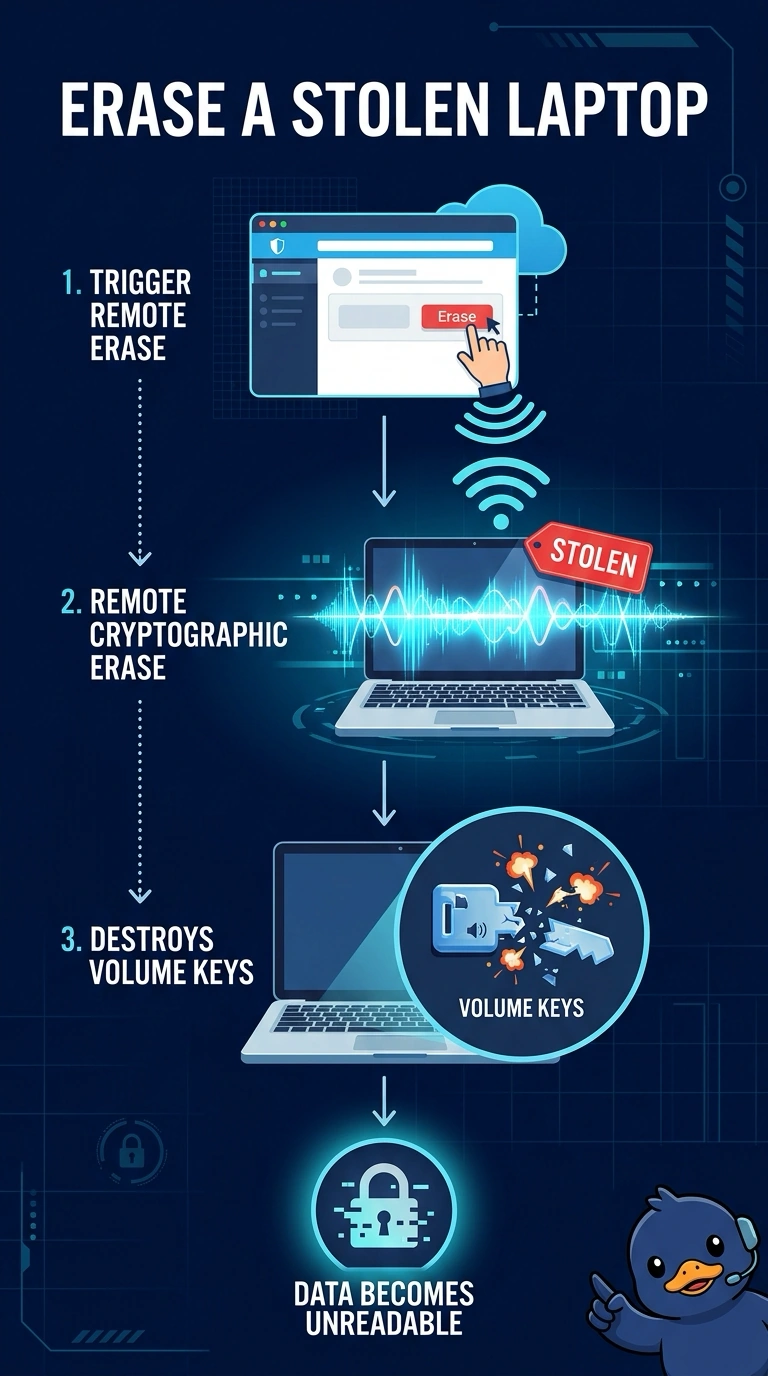
You can use a remote cryptographic erase to destroy the volume keys on the stolen laptop, making its encrypted disk unreadable. The campus firewall cannot reach a laptop that stays with the thief, the mail filter has no path to its disk, and the posture check waits for an application attempt.
Full Explanation
The laptop is encrypted, remains reachable by management, and is not expected to return to the office. A remote cryptographic erase destroys the keys that protect its volume, making the stored copy unreadable. This control fits because management can reach the stolen laptop without relying on it crossing the campus network or the thief opening an application. A campus firewall change that the laptop will not cross while it stays with the thief cannot affect it after the theft because the firewall does not see the device. A mail filter that scans message attachments and has no path to the laptop disk examines messages, not the disk, and cannot destroy its volume keys. A posture check that runs only if the thief tries to open a census application depends on an application attempt that may never happen and does not erase the disk. Exam caveat: If the laptop does not check in, the erase remains queued; the disk is protected only if volume encryption was already enabled. Practical check: From the management console, queue an erase for a lab laptop, bring it online, and confirm the volume keys are gone and the census files no longer open.