
A county fair planned a public photo-upload page, then found no booth needs it and the files would be untrusted. Leadership agreed the page will not ship. Which treatment matches that decision?
Select an answer to reveal the explanation.
Short Explanation
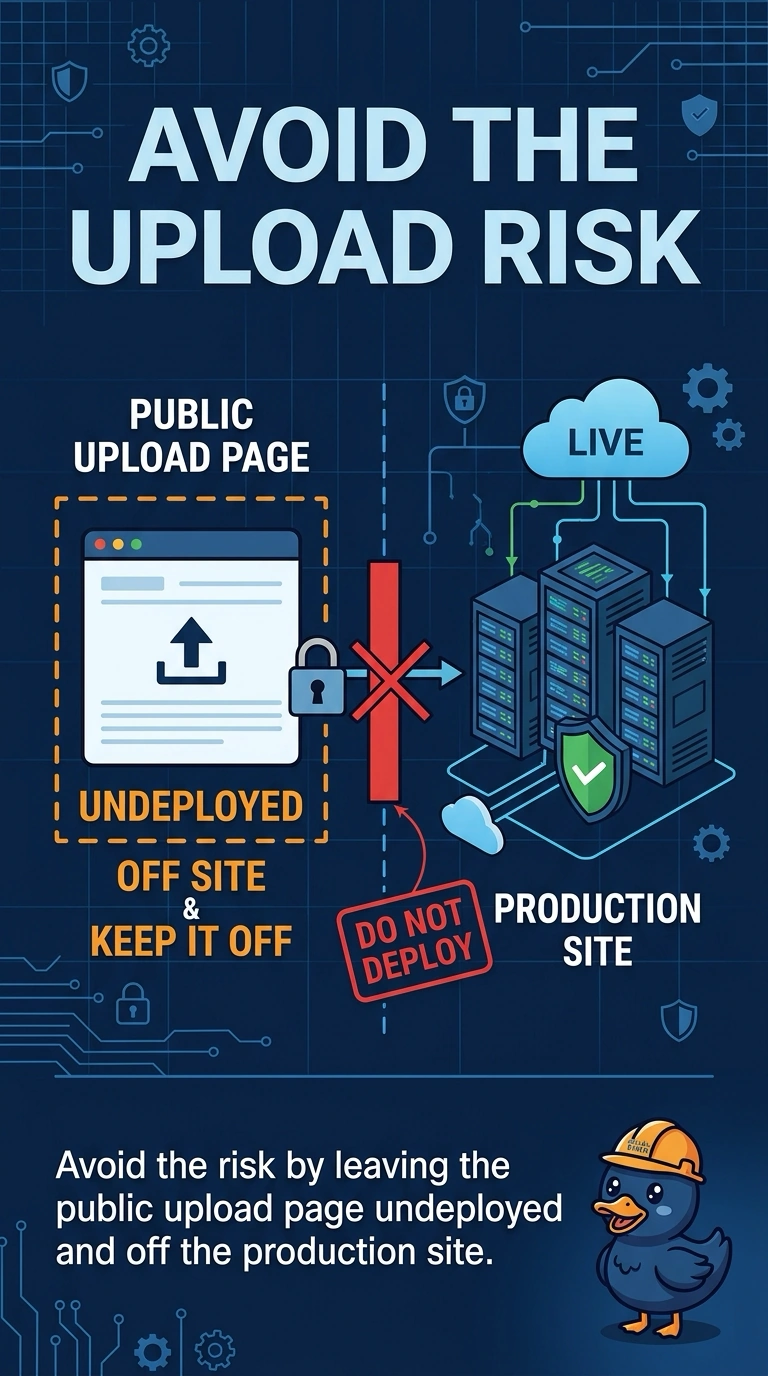
You don’t install a door you’ve decided not to use. Leaving the public upload page undeployed and off the production site avoids the risk. Accepting the risk without an appetite decision, insuring a deployed page, or putting a scanner in front of a public page all keep a feature leadership chose not to ship.
Full Explanation
The page has no business purpose because no booth needs it, and leadership decided it will not ship. Leaving the public upload page undeployed and off the production site avoids the risk because the untrusted files never reach production. Accepting the upload risk with no statement that the residual risk is inside appetite does not match the decision: acceptance requires a recorded decision that the residual risk is within appetite, and leadership chose not to create the exposure. Transferring the risk to a cyber-insurance policy and deploying the page unchanged leaves the page live; insurance may provide financial recovery after a loss but does not prevent the exposure or carry out the decision not to ship. Deploying the page behind a malware scanner while keeping it open to the public still introduces the exposure leadership chose to avoid; scanning does not make the decision not to deploy. Exam caveat: Record the decision so a later season does not quietly add the page, and treat any later need for uploads as a new decision rather than a silent reversal. Practical check: Inspect the production site and deployment pipeline to confirm there is no upload route, upload bucket, or scheduled change that adds one.