
A marina's remote-admin port is open to the internet, and the board calls that exposure outside appetite. The harbormaster still needs the tool each day. The harbormaster reaches the tool through the vendor’s authenticated management service, which uses known source addresses. Which treatment addresses the open port?
Select an answer to reveal the explanation.
Short Explanation
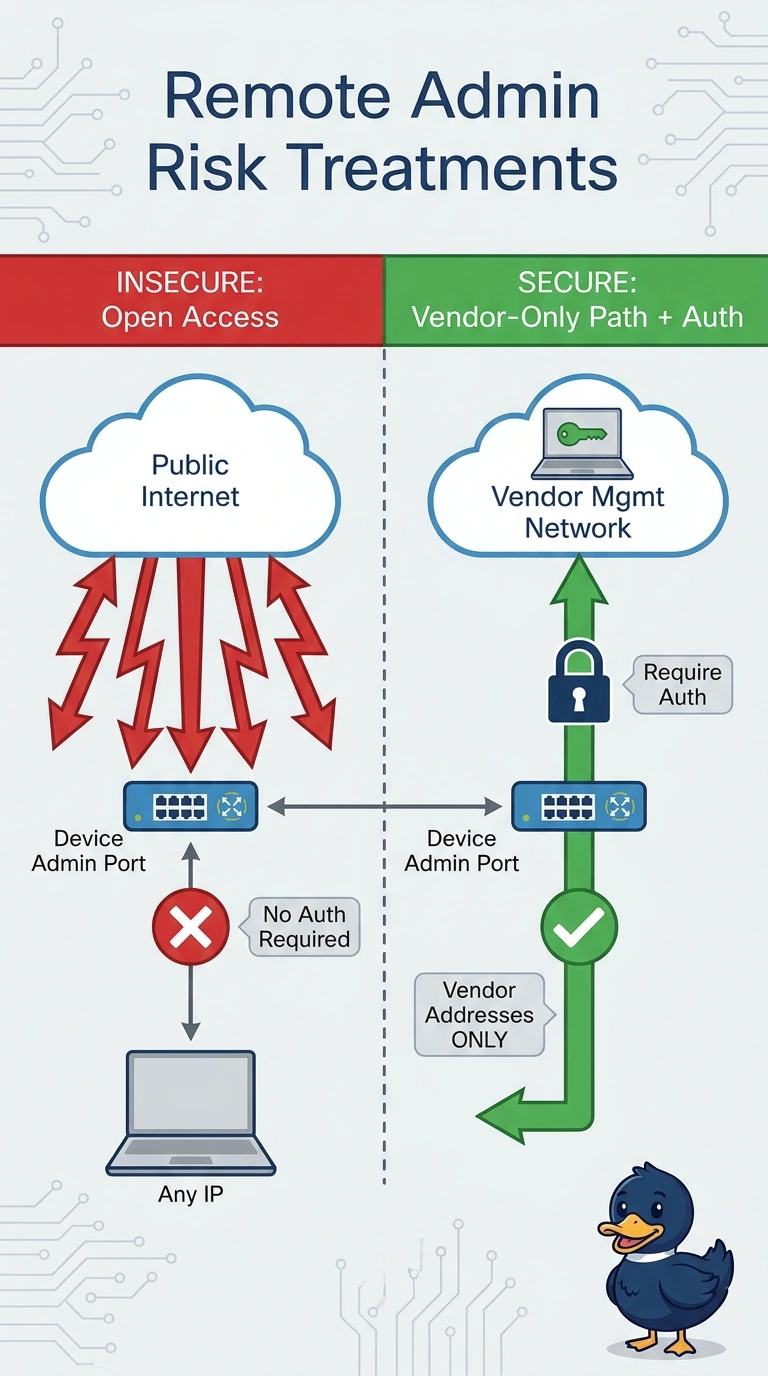
Leaving the door open and buying a payout does not shut it for you. You restrict remote administration to the vendor’s approved management path and require authentication there, so only known addresses can reach it. That way you reduce exposure while the harbormaster keeps the daily tool.
Full Explanation
The open port is a technical exposure the board has placed outside appetite, and the tool must remain available each day through the vendor's authenticated management service with known source addresses. Restricting remote administration to the vendor's approved management path and requiring authentication there reduces exposure by shrinking who can reach the service without retiring the tool. Transferring the exposure by buying cyber insurance and leaving the port open to the internet is the wrong fit because insurance moves financial loss to a carrier after an incident and does not close the port an attacker can still reach. Accepting the open internet port as residual risk the board already placed outside appetite is the wrong fit because acceptance is for residual risk inside appetite, and this exposure is already declared outside appetite. Avoiding the risk by removing the remote-admin tool the harbormaster still uses each day is the wrong fit because avoidance would retire a daily operational capability the marina still needs. Exam caveat: Insurance can still transfer leftover financial loss after the port is restricted, but it is not a substitute for restriction while the port is open. Operational check: From a non-vendor address confirm the port no longer answers, and confirm the vendor path still reaches the tool.