
A geology crew's tablet was stolen from a truck, and the drill maps on it were readable because the disk was not encrypted. Crews still work for hours with no signal. Which redesign follows from that loss?
Select an answer to reveal the explanation.
Short Explanation
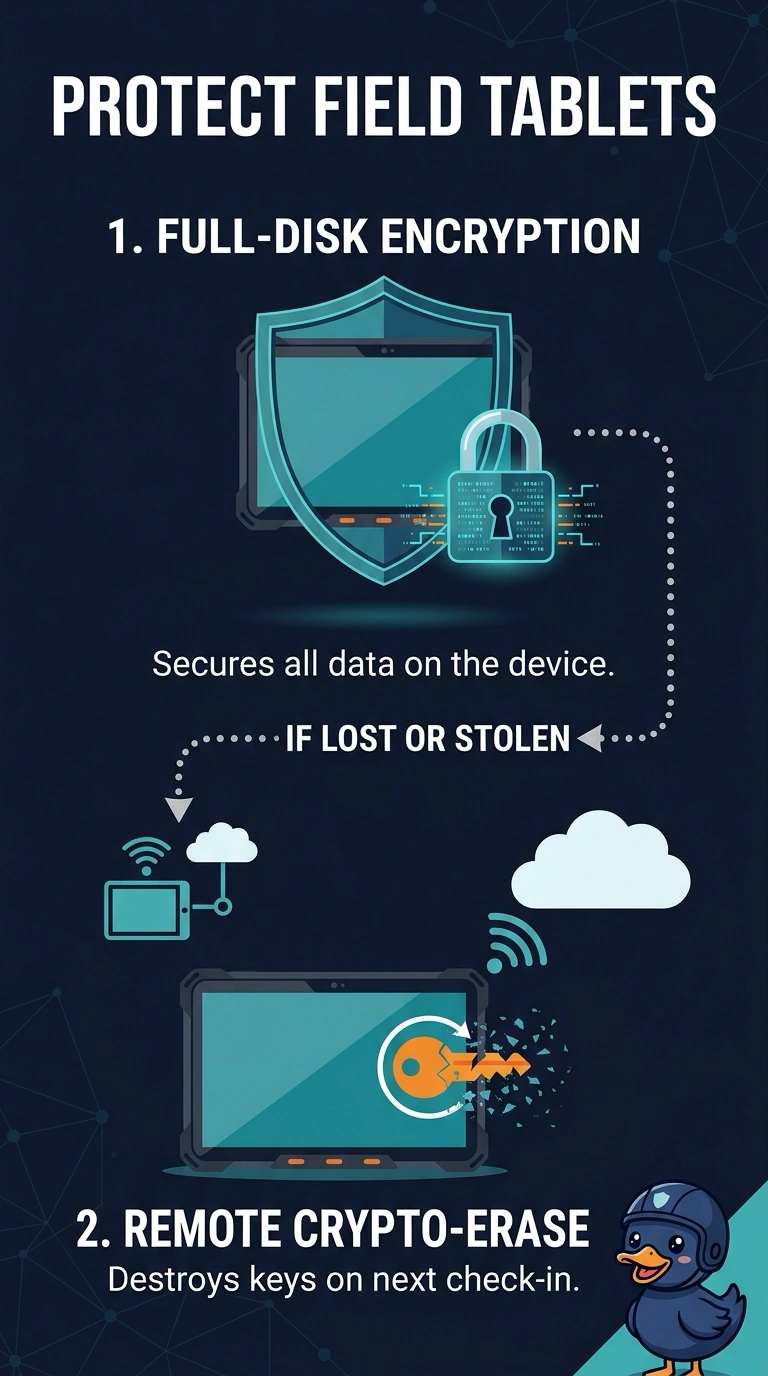
A stolen notebook is harmless if the pages are in a code only you can burn. You encrypt the field tablets and you crypto-erase a lost one when it checks in. A cloned unencrypted image, a hosted desktop that needs signal, or a new office wireless passphrase leaves the maps readable on the next truck ride.
Full Explanation
The loss succeeded because the maps sat in the clear on a device that leaves the office, and cloning that image would put the same readable files on the next tablet. Encryption makes a stolen disk unreadable, and crypto-erase destroys the key after the lost tablet is reported and later checks in. A hosted desktop cannot serve crews who work for hours with no signal, and the office wireless network is not where the maps were stored. Full-disk encryption on the field tablets, with crypto-erase when a lost tablet next checks in is the design that meets this requirement. A replacement tablet cloned from the same unencrypted image the crew already carries is the wrong fit because it puts readable maps back on the next tablet that leaves in the truck. A hosted desktop the crew cannot open while working in a canyon with no signal is the wrong fit because it needs connectivity the canyon work does not provide. A new passphrase on the office wireless network the field tablet does not join is the wrong fit because that path is not where the maps were stored. Exam caveat: Remote erase needs a supported device and a successful check-in. If the tablet never returns, its existing encryption protects the data while usable keys remain inaccessible. Operational check: Move a lab tablet's disk to another machine and confirm the maps are unreadable.