
During a phishing incident, three analysts worked overlapping leads and none could say which mailbox had already been contained. The dashboards were up the whole time. Which SOC practice fixes that handling gap?
Select an answer to reveal the explanation.
Short Explanation
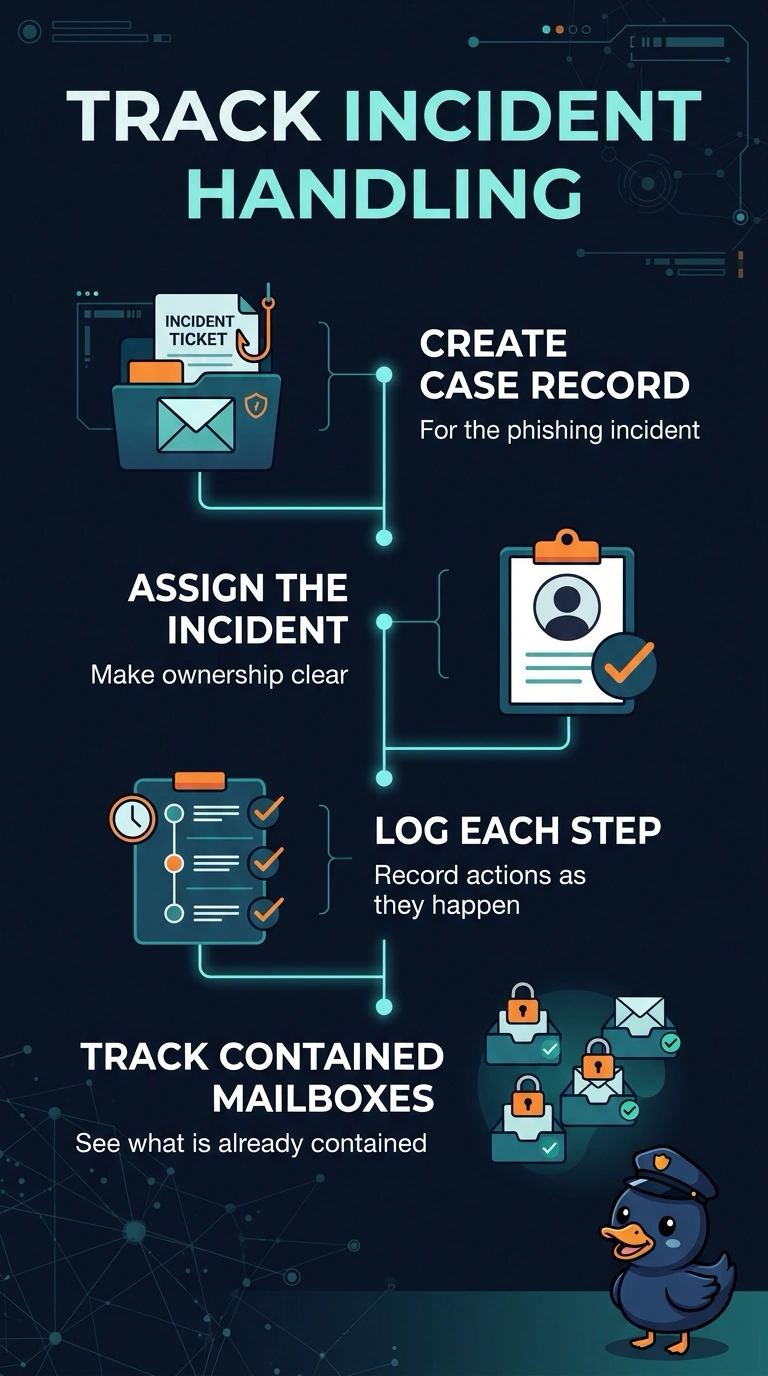
Three people can stare at the same scoreboard and still chase the same play. You open one case, you name the owner, and you log each mailbox as it is contained. A bigger tile, a duplicate rule, or a weekly volume note never records that work.
Full Explanation
Incident handling needs a single place that owns the work: who has the case, which mailboxes are contained, and what the next step is. Dashboards show conditions; they do not assign work or stop two analysts from repeating each other. A case record is the tool the SOC was missing while the tiles stayed green. A case record that assigns the incident and logs each containment step is the design that meets this requirement. A brighter wallboard that shows the same alert counts in a larger font is the wrong fit because a larger tile still does not record who owns the incident or which mailbox was already contained. A second correlation rule that fires on the same phishing subject line is the wrong fit because another rule on the same subject creates more alerts and no shared record of the work. A weekly stack-rank of alert volume mailed to leadership is the wrong fit because a weekly volume note arrives after the overlapping response is already over. Exam caveat: A case tool that nobody is required to update becomes a second shadow notebook. Make the case the only place containment is marked done. Operational check: Replay a lab phishing report with two analysts and confirm both are on one case and neither contains a mailbox the case already lists as done.