
A ferry operator's pipeline scans each image, deploys it, and pages the on-call when a host fails. After a deploy, nobody can tell whether application errors rose. Which element is missing?
Select an answer to reveal the explanation.
Short Explanation
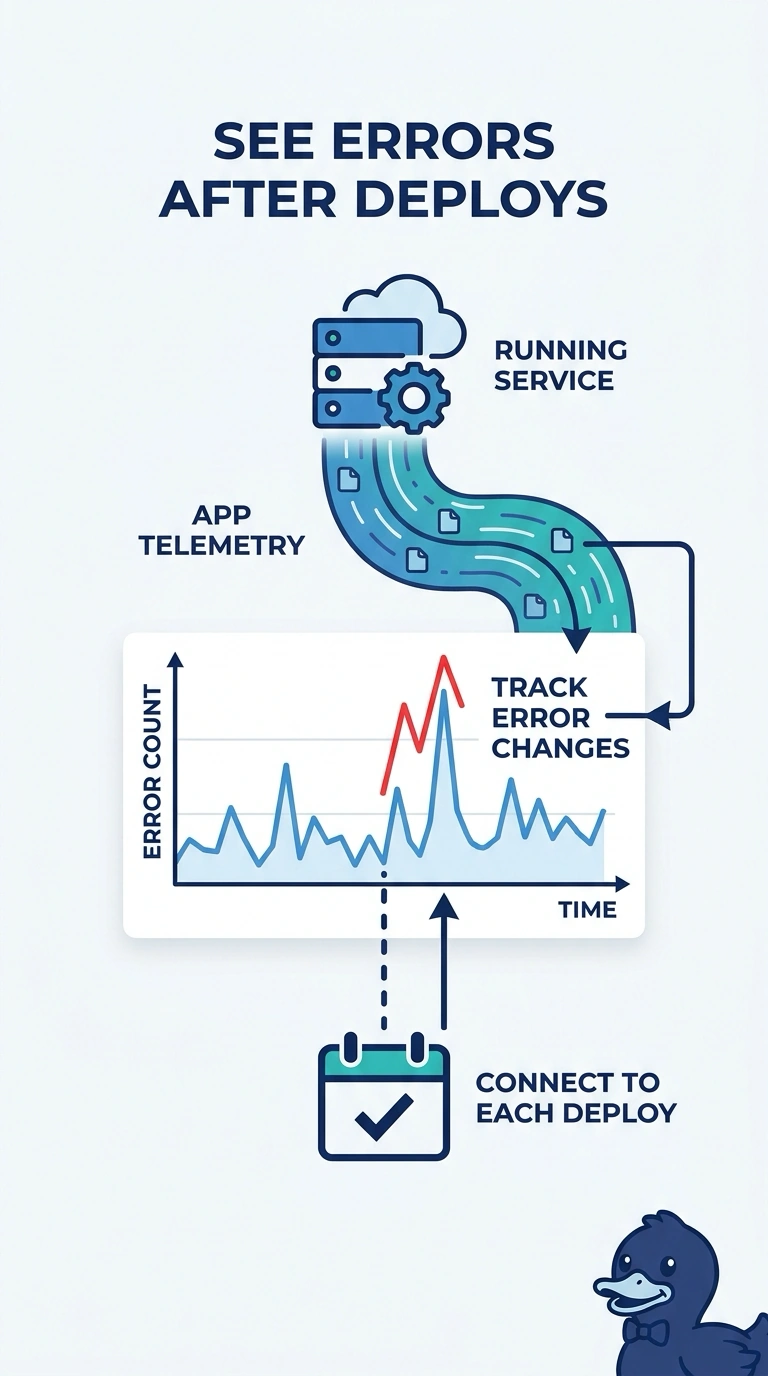
A smoke alarm that already works will not tell you why the bread tastes wrong. You add telemetry so the ferry service shows whether errors rose after the deploy. Another image scan, a second host-down page, or an unused warehouse plan does not report those errors.
Full Explanation
The pipeline can already build, scan, deploy, and page someone when a host dies. The hole is after the deploy: nothing reports application errors, so a bad release looks the same as a good one. Telemetry from the running service supplies that before-and-after error rate, while a second scan, a duplicate page, and an unrelated plan sit on other problems. Application telemetry from the running service so a deploy can be tied to a change in errors is the design that meets this requirement. Another container scan of the same image the pipeline already scanned before the deploy is the wrong fit because the image was already scanned, and another scan does not show how the running service behaves after deploy. A second paging rule for host failure on top of the page the on-call already gets is the wrong fit because host-failure paging is already in place and does not report whether application errors rose after deploy. An infrastructure-as-code plan for a warehouse the ferry service does not use is the wrong fit because a plan for an unused warehouse does not emit application error rates from the ferry service. Exam caveat: Telemetry that nobody alerts on is only a chart. Once the signal exists, tie a threshold to the same deploy window or the new data will sit unread. Operational check: Deploy a lab build that raises a known application error and confirm the telemetry shows the rise in that window, while the host-down page stays quiet.