
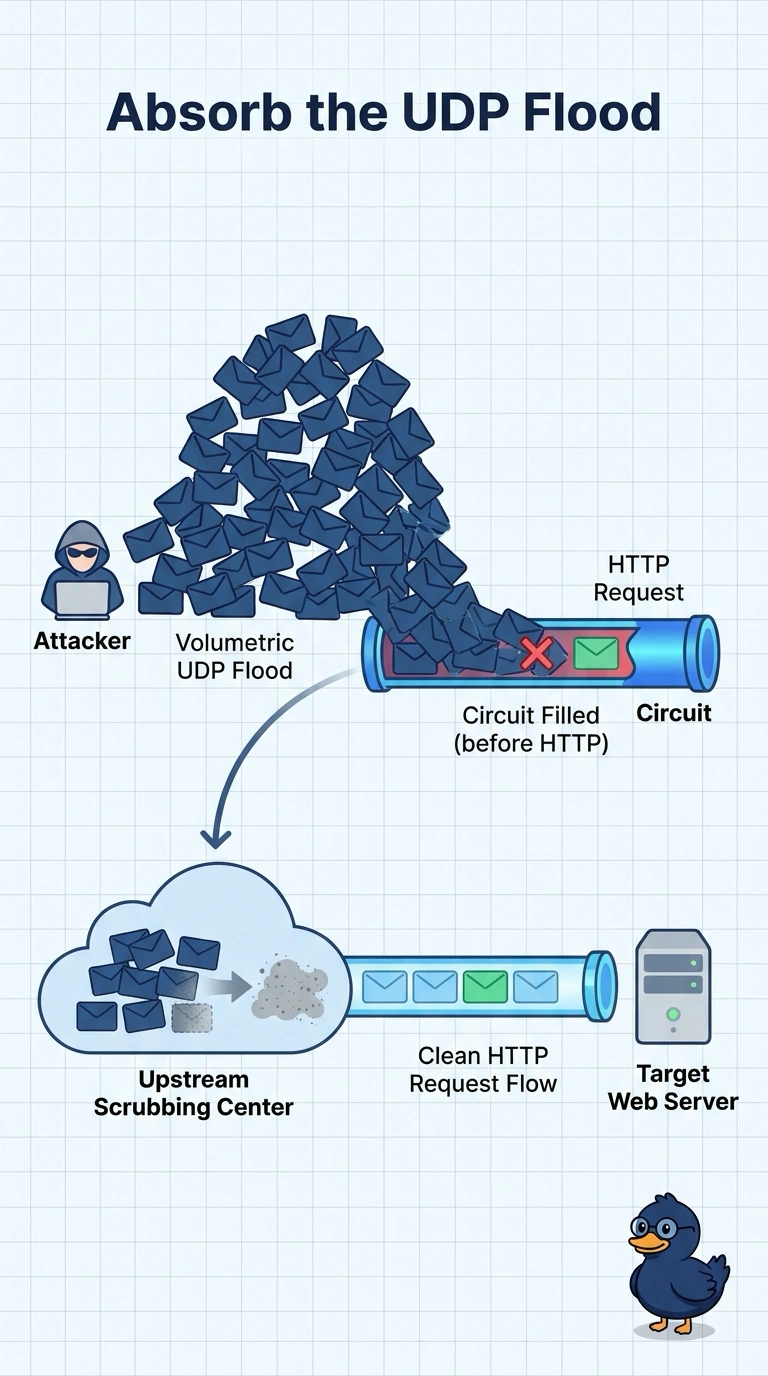
A power utility's public address is hit by a volumetric UDP flood that fills the circuit before any HTTP request is formed. Which control can absorb that network flood?
Select an answer to reveal the explanation.
Short Explanation
When a river is already over the road, the useful barrier is upstream of the crossing. You send this volumetric UDP flood to upstream scrubbing because the circuit fills before HTTP exists. The trap is expecting a web application firewall, a laptop firewall, or a DNS name block to absorb that flood.
Full Explanation
A volumetric UDP flood consumes the circuit with packets that never become clean HTTP requests. A web application firewall judges application traffic it actually receives, so it is not a complete answer once the pipe is full. Upstream scrubbing is the layer that can absorb that volume before it saturates the utility's circuit, which is why the flood should be sent there. Relying on a web application firewall alone leaves the flood unanswered, because this UDP flood never becomes HTTP the firewall can judge. Enabling a laptop host firewall in the control room puts a personal filter on the wrong device, far from the public address that is being filled. Blocking the utility's public name in DNS does not drain packets already aimed at the address, and clients that connect by address never need the name. Exam caveat: once traffic is HTTP, a web application firewall can still be the right control for an application-layer flood, which is a different event from this one. Operational check: confirm the scrubbing service is advertising the public prefix during the attack and that the circuit utilization drops while the utility's own edge is no longer the first place the flood arrives.