
A university runs an infrastructure instance in a public cloud and finds the guest operating system missing security patches. Who is responsible for applying those guest patches?
Select an answer to reveal the explanation.
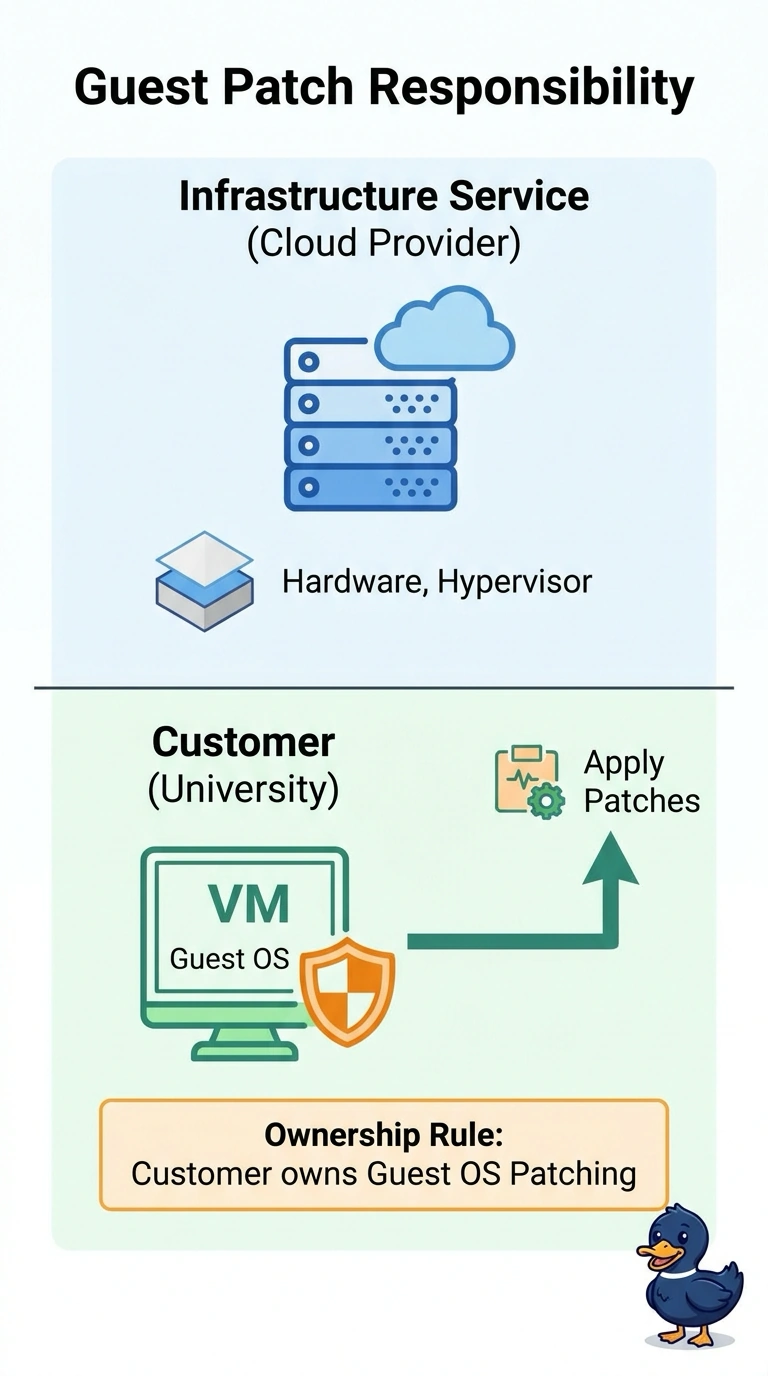
Short Explanation
Think of the provider as maintaining the building and you as patching your own apartment. You own the guest operating system on this infrastructure instance, so the university applies those patches while the provider maintains the platform underneath. A hypervisor update does not patch the guest, and this is not a platform service where the provider runs the engine and guest for you.
Full Explanation
On an infrastructure service, the provider secures the platform underneath, while the customer owns the guest operating system and the patches it needs. The university therefore applies the missing guest patches on this instance. Assigning every guest operating system patch to the cloud provider reverses that responsibility split and leaves the instance waiting on a party that does not patch the guest. Patching the hypervisor maintains the host underneath the instance; it does not install security patches inside the guest operating system. Calling this a platform service also misidentifies the service model: with a platform service, the provider runs the engine and guest, whereas an infrastructure instance leaves the guest with the customer. Exam caveat: distinguish responsibility for the underlying platform from responsibility for the guest, even when both run in the same cloud. Practical check: compare the instance patch report with the provider status page and confirm that the missing fixes are guest packages the university can install, not hypervisor maintenance.