
A hotel manager saved a sensitive guest file into the sanctioned cloud tenant from a phone that never sent traffic through the secure web gateway. Which control can still evaluate that stored file?
Select an answer to reveal the explanation.
Short Explanation
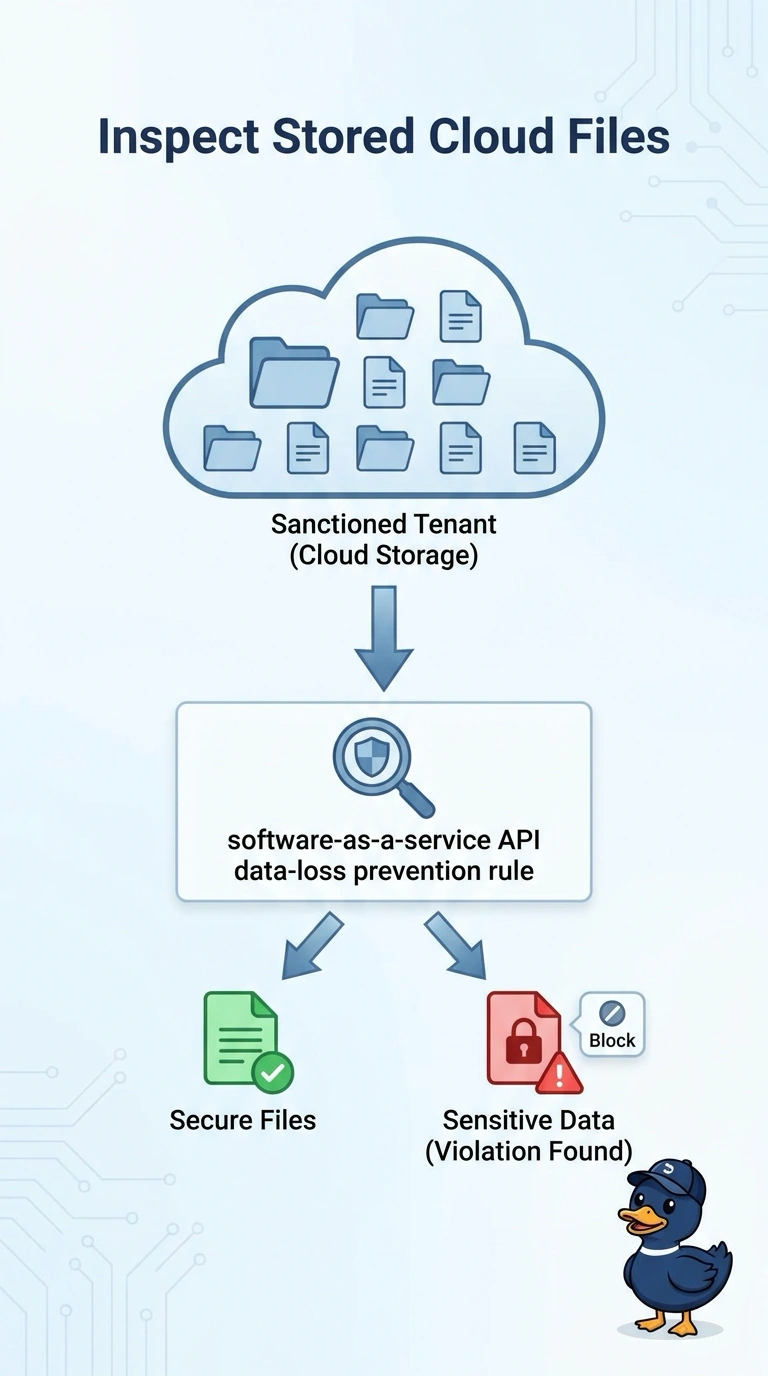
A letter already in the office cabinet is still there even though it did not pass today's front-door scanner. You use a software-as-a-service API data-loss rule to evaluate the sensitive file stored in the tenant. The trap is today's proxy rule, which did not see the phone that skipped the gateway.
Full Explanation
Software-as-a-service API data-loss prevention evaluates files already stored in the tenant, including a file that was saved from a phone that never traversed the proxy. That is why the API rule can still see this guest file. Today's secure web gateway rule only sees sessions that actually pass the proxy, and this phone stored the file outside that path. An email data-loss rule through Secure Email Threat Defense inspects mail, and no message was sent. Blocking the sanctioned tenant name in DNS makes the approved application fail to resolve and does not classify the file that is already stored. Exam caveat: an API rule is not an inline block of a future browser upload, and a real-time web rule is still what stops an upload that does go through the gateway. Operational check: use an authorized supported tenant and confirm the matching SaaS API DLP event after the test file changes; for an unchanged inventory file, run a discovery scan. Continuous SaaS API rules evaluate changes, while discovery inventories existing objects. Compare the tenant event time with the proxy logs for that manager and confirm no web upload explains the stored guest file.