
A campus ISE deployment classifies VoIP phones correctly, but a new batch of laser printers lands in the Unknown profile because the DHCP fingerprint selector matches only a few of them. The access team wants higher confidence before granting printing access. Which profiling change should the engineer make first?
Select an answer to reveal the explanation.
Short Explanation
A DHCP fingerprint is one clue, so it may not identify every printer model. You’ll get more reliable coverage by adding attributes from other available printer data, rather than relying on a vendor OUI, more frequent polling, or manual MAC registration.
Full Explanation
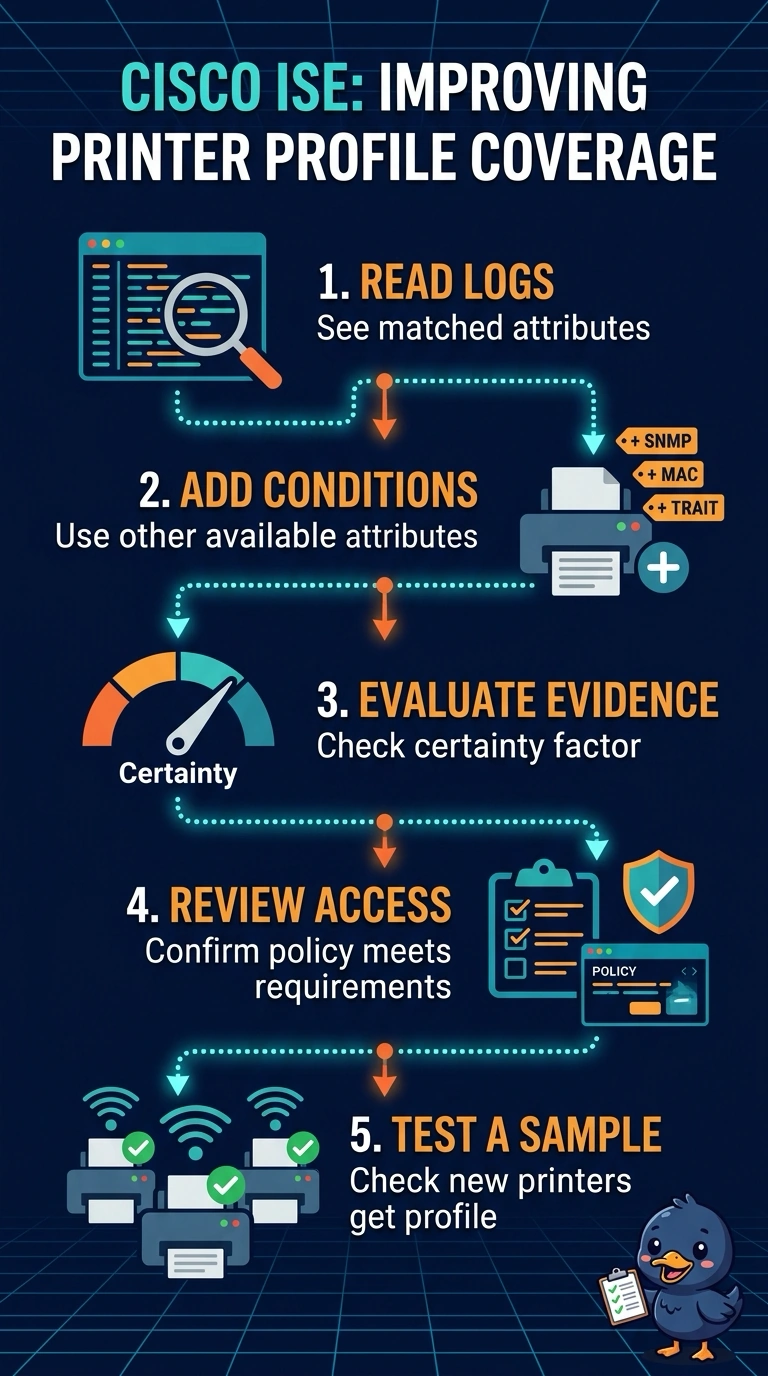
Add conditions based on other printer attributes that ISE can observe, combining supported evidence to cover more of the batch without relying on a sparse DHCP fingerprint alone. Attributes learned through SNMP or other enabled profiling probes may help, but confirm that they are actually present and distinguish printers from unrelated endpoints. A vendor MAC OUI identifies a network-interface vendor, not necessarily a printer or a particular device class, so it cannot provide the requested confidence by itself. Increasing SNMP polling frequency may collect observations sooner, but it does not add a discriminating profile condition; ISE may still leave devices Unknown or repeat weak evidence. Registering each printer’s MAC address in a static endpoint group can recognize enrolled devices, but it replaces reusable, attribute-based profiling with manual registration and does not classify an incoming batch broadly. Exam caveat: a profiler certainty score reflects the strength of matched evidence, not an absolute guarantee of correct identification. Practical check: inspect representative printer records and profiler logs to see which attributes are being learned, then test the revised conditions against printers and non-printers before granting printing access.