
A retail chain's Layer 3 access switch serves 60 VoIP phones and badge readers on VLAN 130. The DHCP server sits in the central data center on another subnet, no ip helper-address is configured yet, and every lease must be relayed there while ISE receives only standard RADIUS attributes from the switch. Which configuration both keeps leases central and feeds the DHCP hostname and vendor-class options to the ISE profiler?
Select an answer to reveal the explanation.
Short Explanation
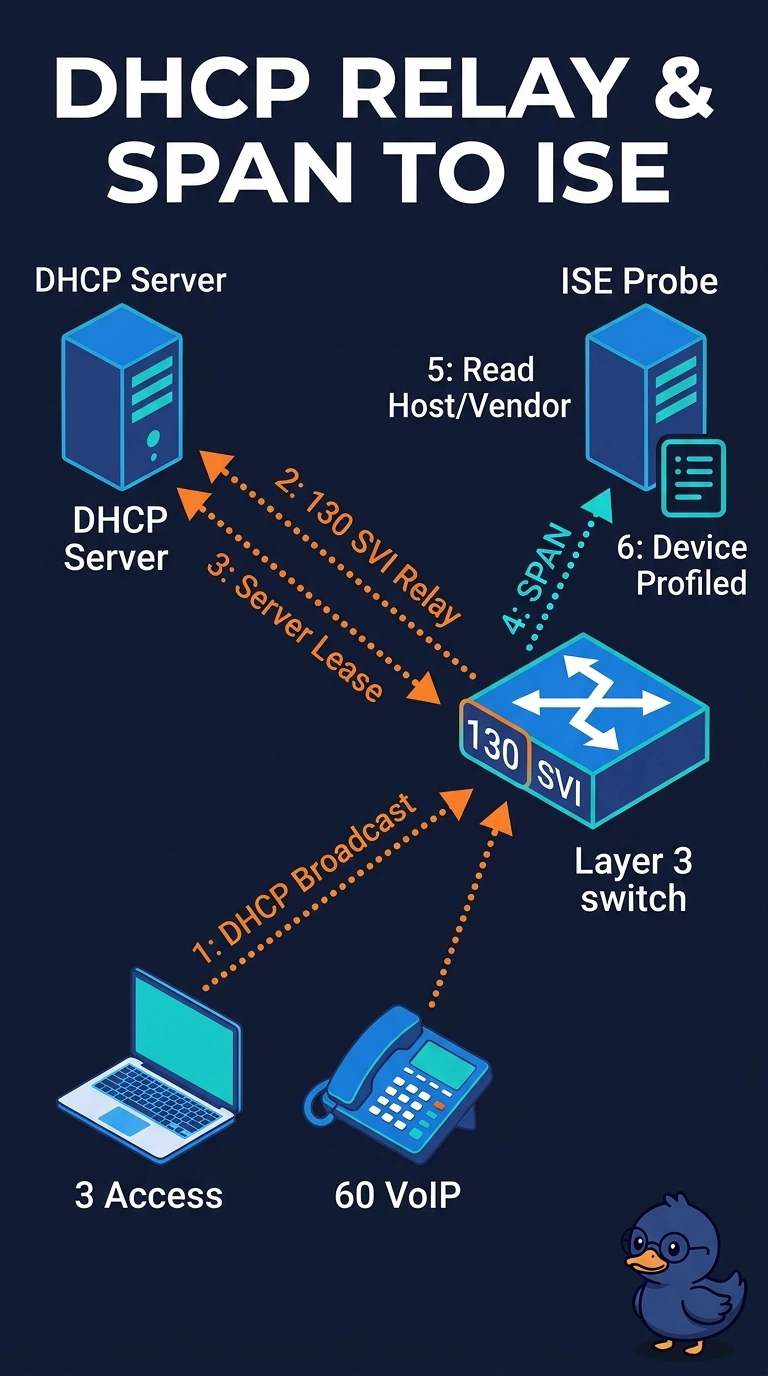
Your VLAN 130 SVI should relay DHCP to the central server, and SPAN should mirror the client ports and uplink to the ISE probe—like sending ISE a copy of the conversation. That copy lets the profiler read the hostname and vendor-class options, which standard RADIUS attributes alone won’t provide.
Full Explanation
An ip helper-address on the VLAN 130 SVI makes the switch a DHCP relay agent: it forwards the client's broadcast DISCOVER as a unicast to the central data center server, then relays the server's response to the client. SPAN copies DHCP traffic from the selected client-side and uplink ports to the ISE probe interface, where the DHCP probe can read option 12 (hostname) and option 60 (vendor class) and use them in profiling. Building profiles from RADIUS data alone does not provide those DHCP options. Mirroring without a relay does not deliver the client’s broadcast to the central server, so it cannot obtain a lease from that server. A local DHCP scope would issue leases from the access switch rather than the required central server. SPAN copies traffic rather than forwarding it, and a busy switch can drop mirrored frames, so scope the session to the ports that matter. Check the endpoint in Context Visibility > Endpoints and confirm the DHCP hostname attribute appears with the expected profile.