
On a factory floor, 60 VoIP phones register through MAB and produce only DHCP traffic, with option 60 in each request. The profile must match on that vendor class value to place the phones in the voice policy. Which profiling probe supplies the option 60 value to the policy?
Select an answer to reveal the explanation.
Short Explanation
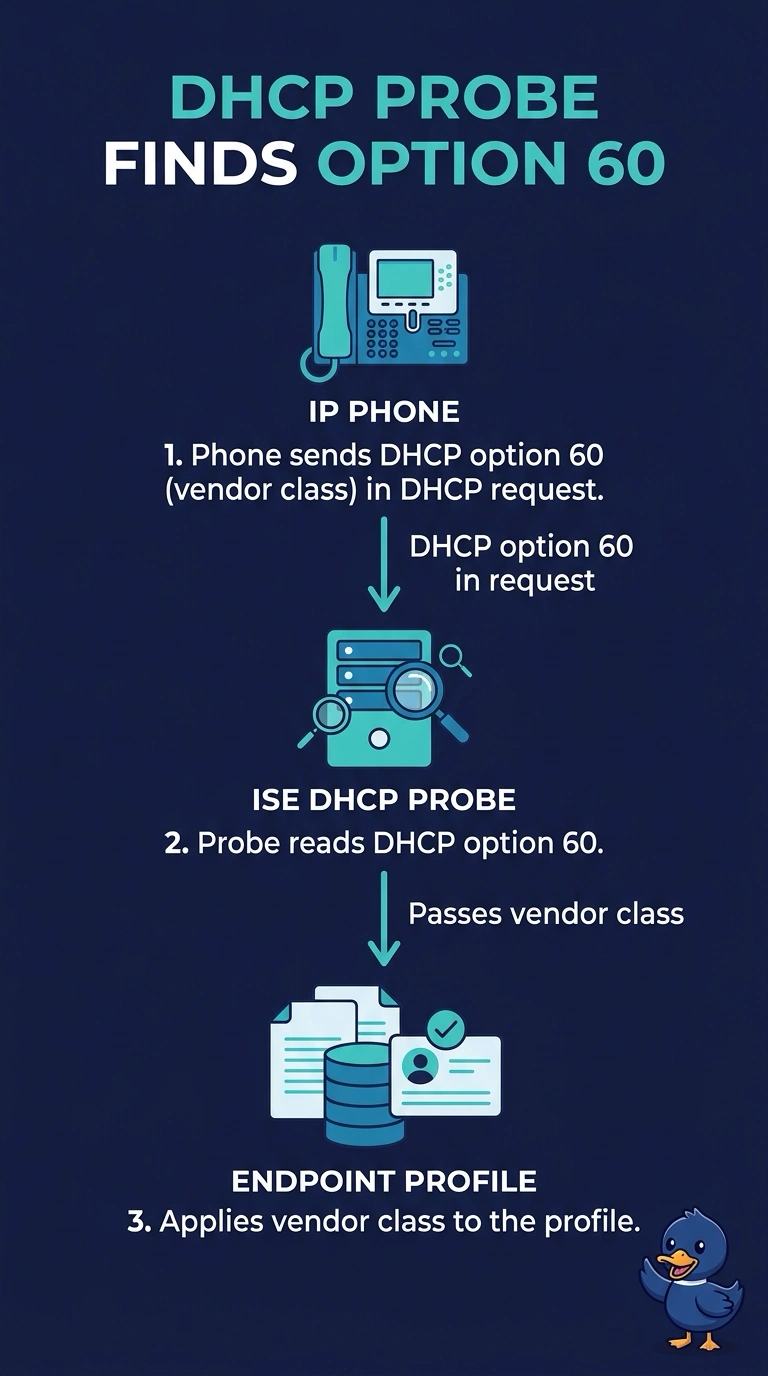
Right—you’ve matched the DHCP probe to a value carried inside the phones’ DHCP requests. Option 60 is like a vendor label on the request, so the DHCP probe can pass that value to the profile. Hostnames, RADIUS attributes, and switch-port data do not provide the required option 60 value.
Full Explanation
The DHCP probe is correct because the phones send DHCP requests and the profile’s required discriminator is the vendor class identifier in option 60. The probe reads that field and makes its value available to the profiling policy, allowing matching phones to be placed in the voice policy. A DHCP probe can also profile from a hostname in option 12, but a hostname is not the required vendor-class value and cannot substitute for option 60. The RADIUS probe can use MAB-related authentication attributes to identify or classify endpoints, but a MAC identity or RADIUS attribute does not supply the DHCP option 60 value to the profile. The SNMP probe can use switch-port and VLAN data to learn where a device is connected and correlate it with network inventory, but that information does not provide the vendor class from the DHCP request. Exam caveat: profiling systems may offer several probes that identify the same endpoint; choose the probe that exposes the exact attribute named in the policy condition, not merely one that can recognize the device. Practical check: inspect a phone’s DHCP request or a packet capture to confirm option 60 is present, then verify that the profiling record exposes the same value used by the voice-policy match.