
A private hospital is hosting a two-day clinical conference in its lobby. Every visitor must be approved by a named staff sponsor before joining the guest Wi-Fi, and each session has to end automatically at the close of the conference day. Which guest access design should the ISE team deploy for these visitors?
Select an answer to reveal the explanation.
Short Explanation
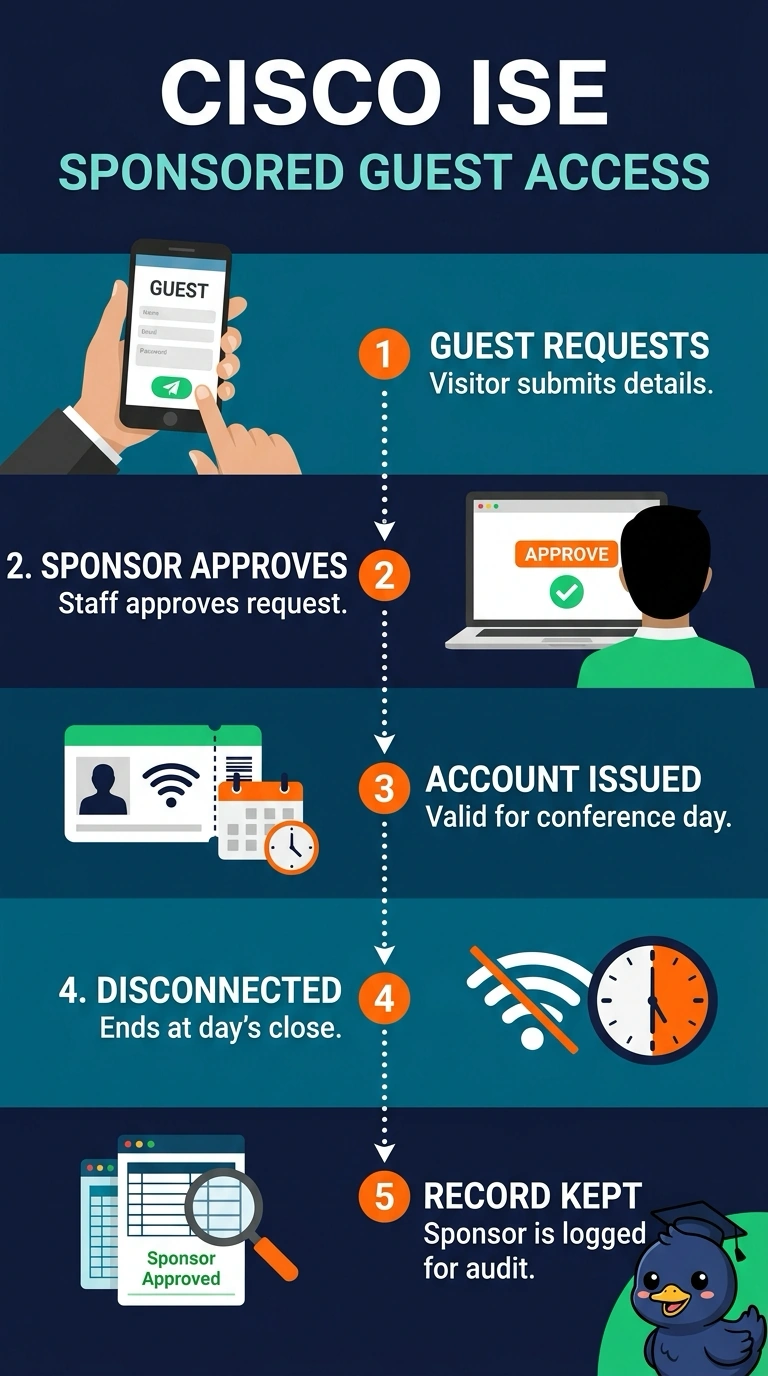
You’ll use a sponsored guest portal so a named staff sponsor approves each visitor before they get Wi-Fi—like a host checking guests in. Set each account to expire at the end of that conference day, and schedule a disconnect so any active session ends then, too.
Full Explanation
The sponsored guest portal is the appropriate design because it makes a named staff sponsor approve each visitor before access is granted, while account validity and a scheduled disconnect address the separate requirement that sessions end at the close of each conference day. The design that relies on account expiration alone includes sponsor approval and day-specific account validity, but account expiration may prevent future logins without terminating an active session; it therefore lacks the required forced disconnect. The front-desk guest portal can verify visitors and end sessions at the correct time, but receptionist verification is not approval by a named staff sponsor, so it does not meet the stated authorization process. The sponsored portal with a 24-hour timeout obtains sponsor approval and can automatically terminate sessions, but a timer measured from each login is not synchronized to the scheduled daily close; a session begun late in the day could continue past it. Exam caveat: account expiration, session timeout, and a scheduled disconnect are distinct controls and should not be treated as interchangeable. Practical check: test a guest session that remains connected at the conference-day close and verify that ISE or the wireless platform terminates it at the configured time.