
A regional bank runs 22 Secure Firewall Threat Defense devices across its branches. The continuity plan requires that policies be applied and reports reviewed during a multi-day loss of internet connectivity, while the security team still wants one shared policy set instead of per-branch edits. Which device management tool best meets both requirements?
Select an answer to reveal the explanation.
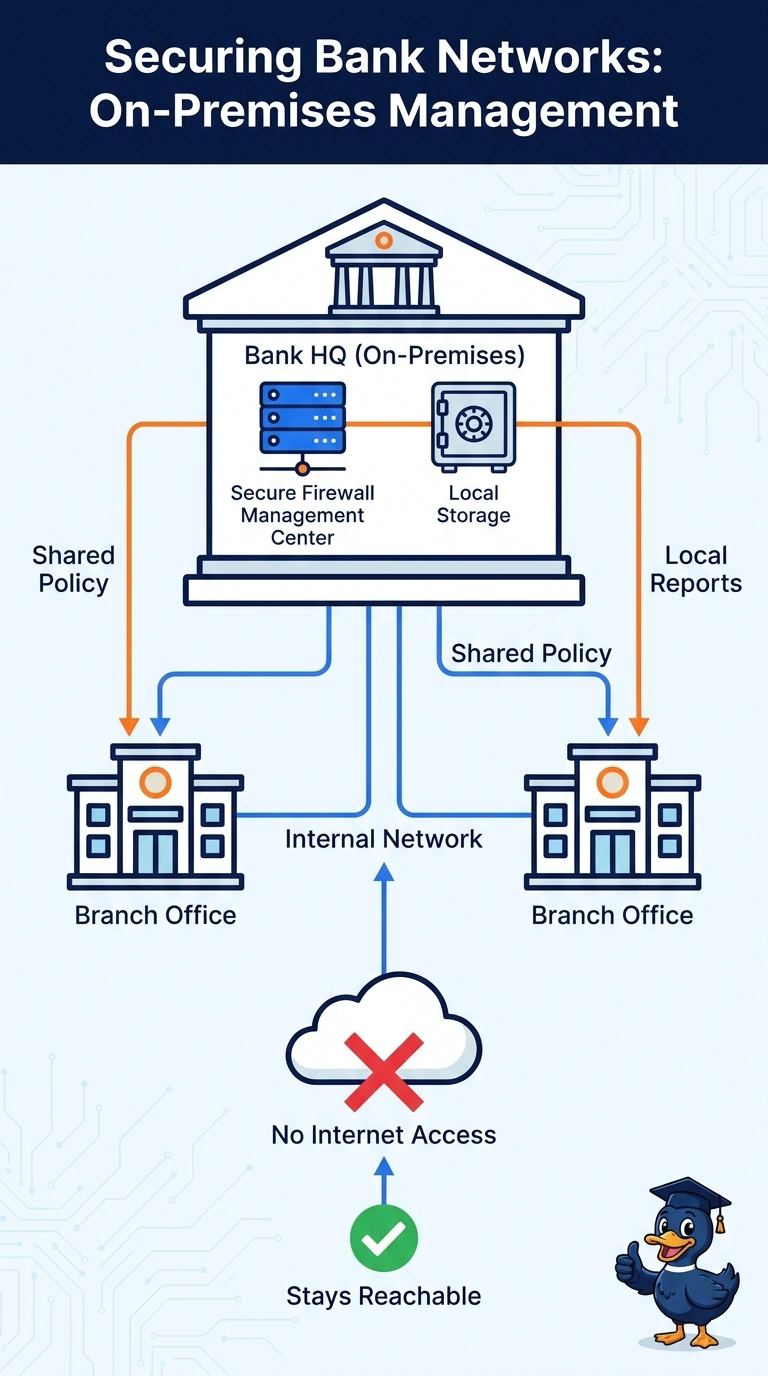
Short Explanation
An on-premises Management Center keeps the policy engine and its report history inside your own network, so an internet outage never takes management away from you. It's a filing cabinet in your building rather than one you have to drive to. The cloud options still need internet, and the on-box manager gives up the shared policy.
Full Explanation
An on-premises Secure Firewall Management Center is a dedicated manager you host yourself, so its policy database, deployments, and report history sit inside your own network and stay reachable when the internet does not. One manager holds the shared policy set, pushes deployments to all 22 devices over the management network, and keeps reporting available through the outage, which satisfies both stated requirements together. Security Cloud Control Firewall Management removes the burden of maintaining a manager, but its management plane lives in the cloud, so a multi-day internet loss removes exactly the access the continuity plan requires. Secure Firewall Device Manager is a local manager bound to a single appliance, so it keeps each branch reachable but forces twenty-two separate policy sets and fragmented reporting. A virtual manager in a public cloud region reached over VPN still rides the same internet path, so it fails on reachability for the same reason the cloud service does. Exam caveat: an on-premises manager becomes an asset you must patch, back up, and make redundant, and every device must be able to reach it. Practical check: isolate a test branch from the internet and confirm you can still deploy a policy change.