
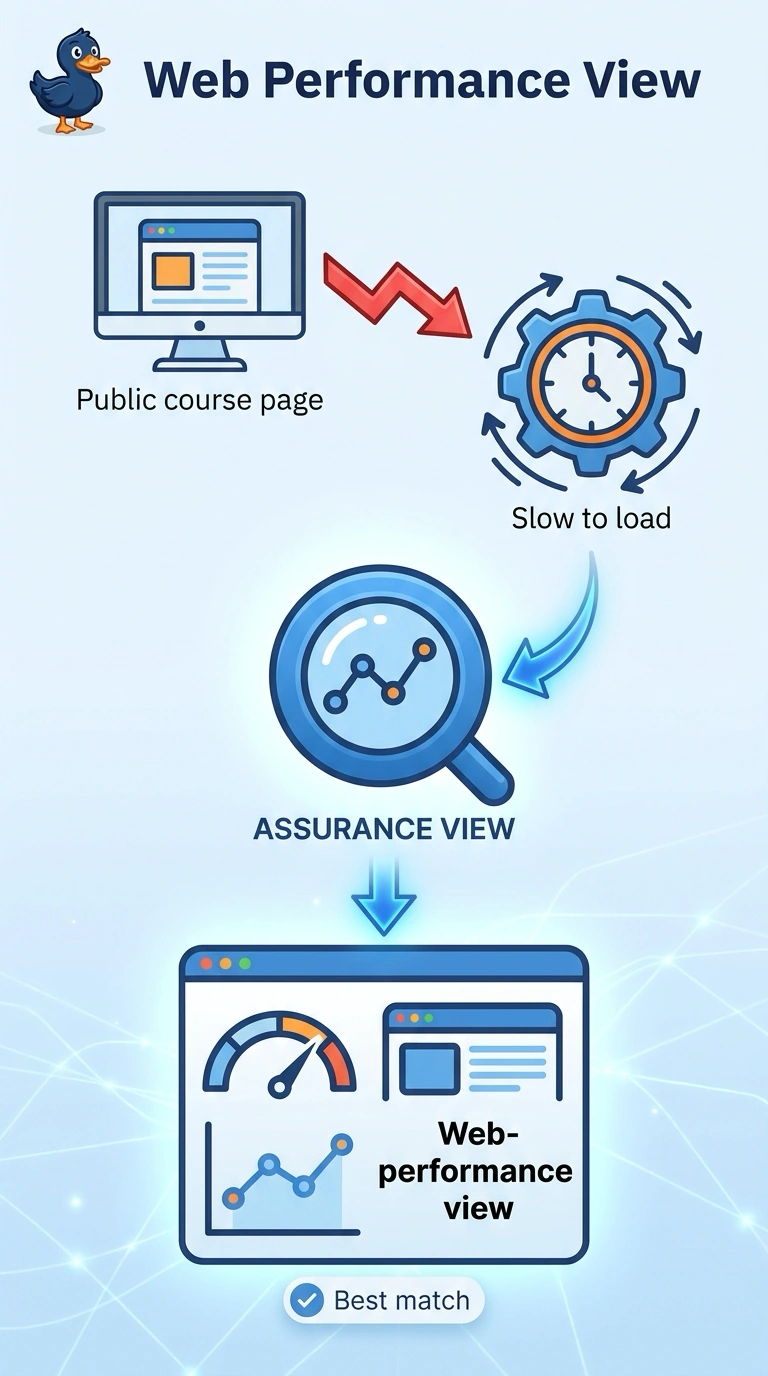
A university webmaster says one public course page is slow to load and asks which assurance view matches that complaint. Which view matches the question they asked?
Select an answer to reveal the explanation.
Short Explanation
You reach for a thermometer when someone asks how hot the soup is, not for a highway map. A slow course page is a web-performance question, so the view you open should show how that page loads. The trap is a path ranking, a student-device view, or an Internet-event list, because each of those serves a different question.
Full Explanation
The business question is a slow public course page, so the matching assurance view is the one that shows how that page performs: object timing, response behavior, and the load of the page itself. A path-and-experience ranking of SaaS routes answers which routes worsened for the campus, which is a different question even if the page happens to use a SaaS host. An endpoint view of the student device and its local network is the right place when the fault is the laptop, the gateway, or the wireless hop, and nothing in the request says the page is slow for only one device. An event view of Internet-wide outages and routing changes is how you follow broad incidents, not how you see which part of one course page is slow. Exam caveat: the view follows the question that was asked, and a slow page is not automatically a path, endpoint, or event investigation. Operational check: confirm the selected test records the course page and can show which object or phase dominates the load, rather than only a route list, a device health summary, or an outage feed.