
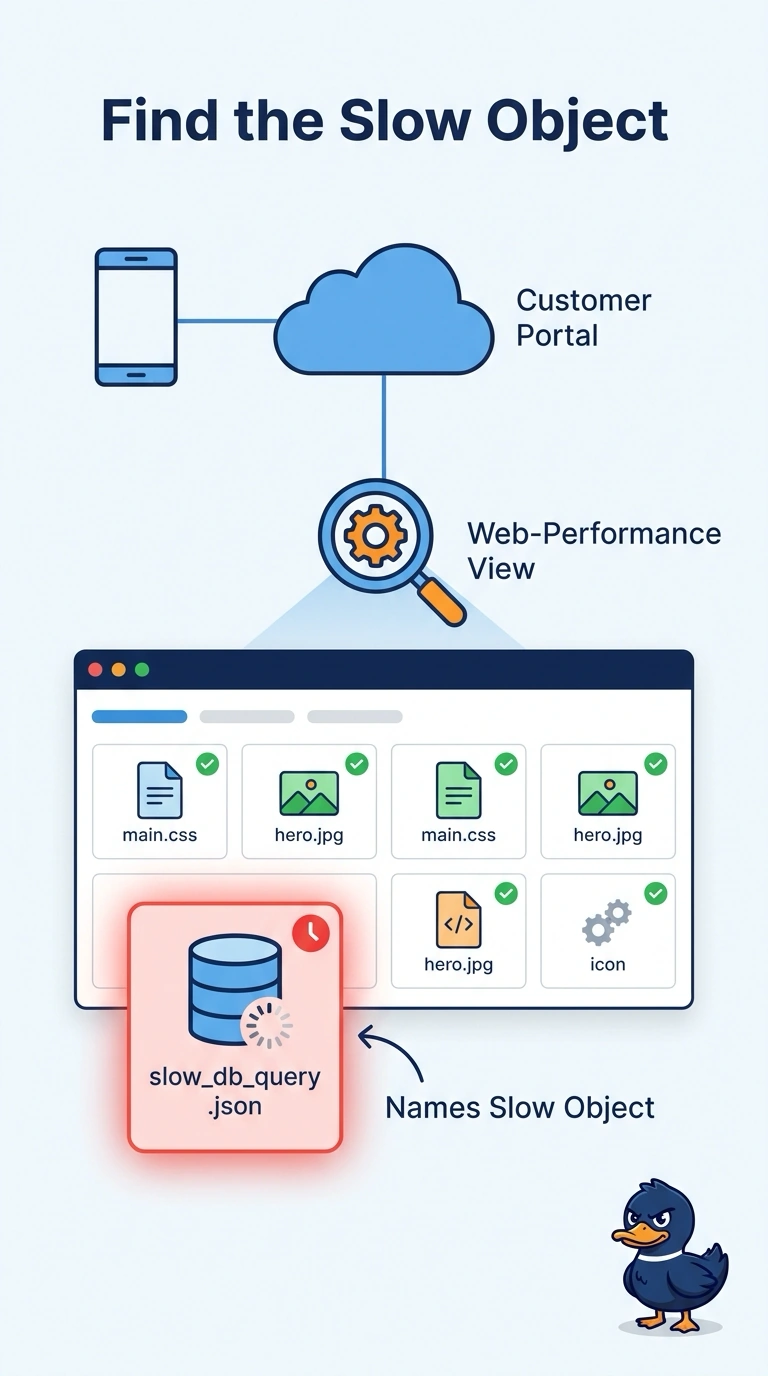
A logistics web team asks which object on the customer portal is slow, and they do not want a list of BGP events. Which assurance view should they open?
Select an answer to reveal the explanation.
Short Explanation
If the cook asks which ingredient made the soup salty, you inspect the ingredients, not the weather report. The logistics web team wants the slow portal object, so they need the web view rather than a BGP event list. The trap is a SaaS-path ranking, a laptop view, or an event list that does not name the object.
Full Explanation
The web team asked which object on the customer portal is slow, and they explicitly do not want a BGP event list. A web-performance view is the one that times the page and names the slow object. Object timing is what lets that team point at a script, an image, or another call on the portal, and a path ranking, a laptop summary, or a BGP list does not record that breakdown. A path-and-experience ranking of SaaS routes that does not name page objects can tell you a route worsened and still leave the object question unanswered. An endpoint view of the warehouse laptop, its local gateway, and its wireless answers a device and local-network question, not which portal object dominates the load. An event view that lists BGP changes and does not identify a slow object is the list the team said they do not want. Exam caveat: object-level slowness is a web-performance question even when BGP events exist somewhere else in the same hour. Operational check: open the page measurement for the customer portal and confirm it identifies the slow object by timing, and that the view in front of the web team is not a path ranking, a laptop summary, or a BGP event list.