
An auditor at a government agency asks which RFC defines active and passive methods for IP performance metrics. Which reference answers the auditor?
Select an answer to reveal the explanation.
Short Explanation
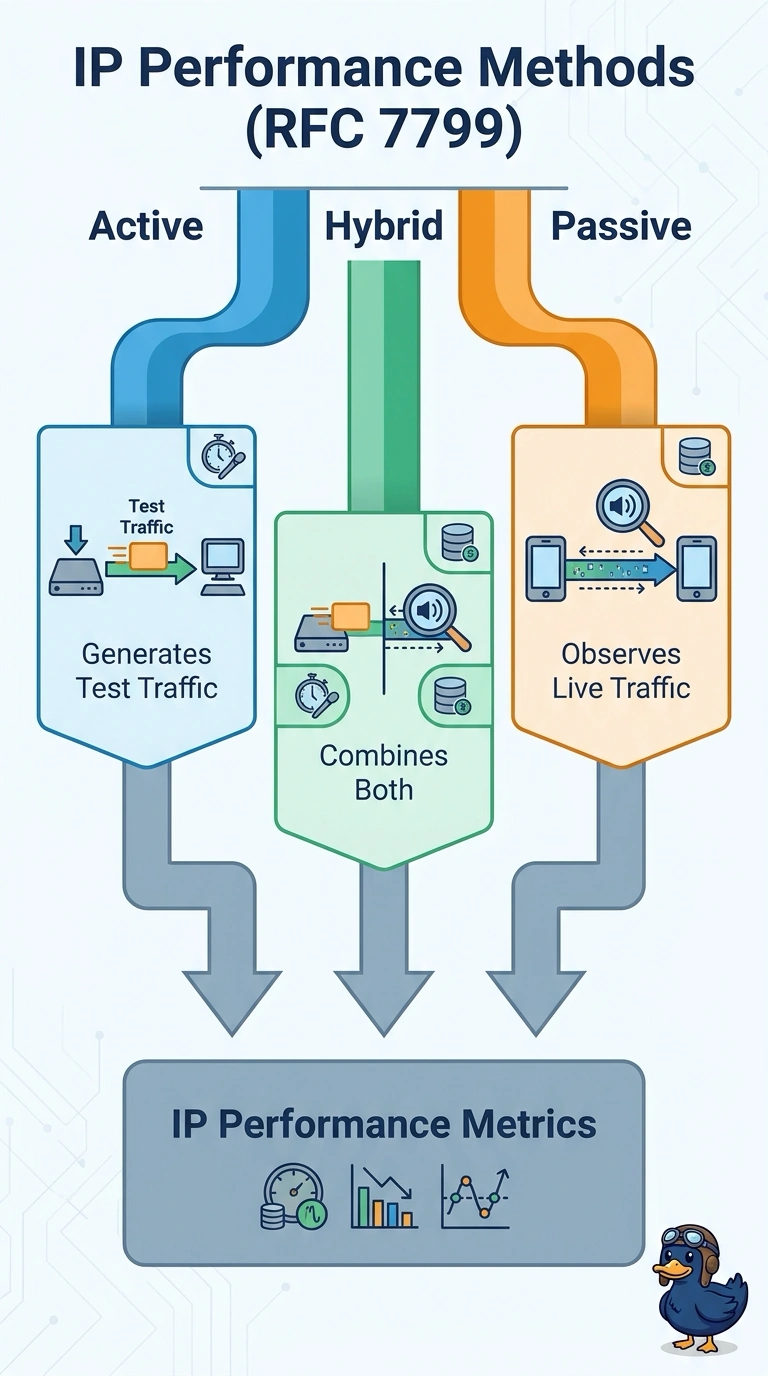
When an auditor asks for the rulebook, you can point to RFC 7799, which defines active, passive, and hybrid methods for IP performance metrics. A device-configuration backup, a synthetic portal login, or switching to active probes without naming a document does not identify that reference.
Full Explanation
RFC 7799 defines active, passive, and hybrid methods for IP performance metrics. Active methods generate measurement traffic, passive methods observe traffic that is already present, and hybrid methods combine the two. When an auditor asks which RFC defines active and passive metric methods, you can cite RFC 7799 as the reference. Switching a design from watching traffic to active probes chooses one method but does not name the document, so it does not answer which RFC applies. A device-configuration backup is an archive of settings, not a specification of measurement methods. A synthetic login against the agency portal is a scripted application transaction, not the standards reference for active and passive metrics. Exam caveat: RFC 7276 is an overview of operations, administration, and maintenance tools; it does not replace RFC 7799 as the active-versus-passive metrics document. Practical check: when a design review describes a method as active or passive, confirm that the team means generating probes or observing existing traffic, respectively, consistent with the categories RFC 7799 defines.