
A hotel booking form fails only after the guest submits the second page, and loading the opening page never shows the error. Which agent style should walk that failure?
Select an answer to reveal the explanation.
Short Explanation
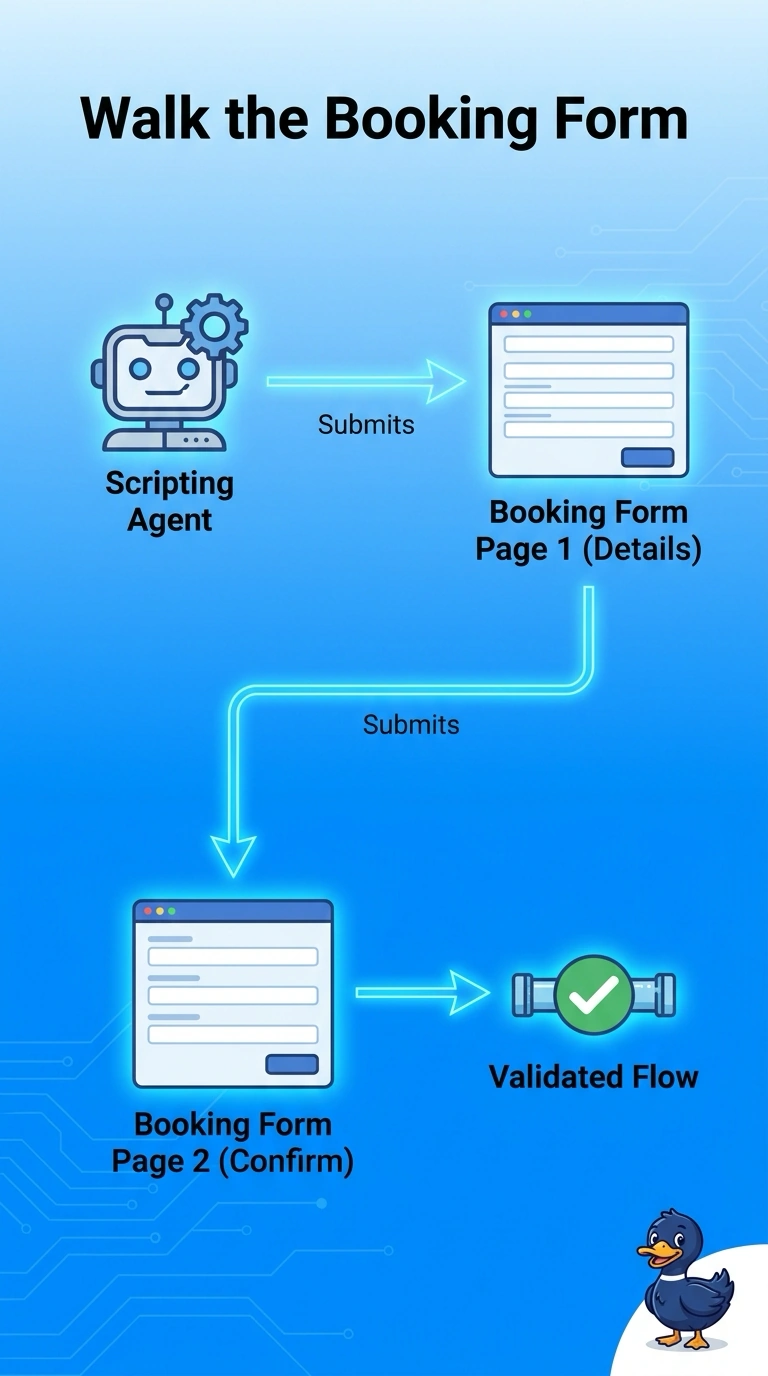
A form that breaks on the later page needs a clerk who actually turns both pages. You use a scripting agent so the test submits the second page, which is where this booking form fails. Stopping on the opening page, watching the LAN, or copying packets never reaches the step you need.
Full Explanation
The booking form fails only after the guest submits the second page, and a load of the opening page never shows the error, so the agent style has to walk both pages. A scripting agent that submits both pages of the form reproduces the multi-step transaction where the failure actually happens. A synthetic user agent that loads the opening page and then stops is the style for a single-page visit; it never performs the submission that triggers this fault, so a green opening page would hide the bug. A local collection agent that records LAN traffic without opening the form can see packets on the wire, but it does not fill in or submit either page, so it cannot tell the second page from a healthy first load. A packet capture that copies frames and never walks the application pages has the same gap: frames are not a guest moving through the form, and the capture will not press the control that fails. On the exam, a multi-step failure belongs to the scripting style, while a one-page visit and a passive look at packets stop short of the broken step. In production, run the script through both pages and confirm the failure appears only after the second submission, matching what guests report.