
A retailer runs a large file transfer during the branch busy hour, the circuit fills, and the transfer can shift to a quiet hour without hurting store sales. What should the capacity recommendation be?
Select an answer to reveal the explanation.
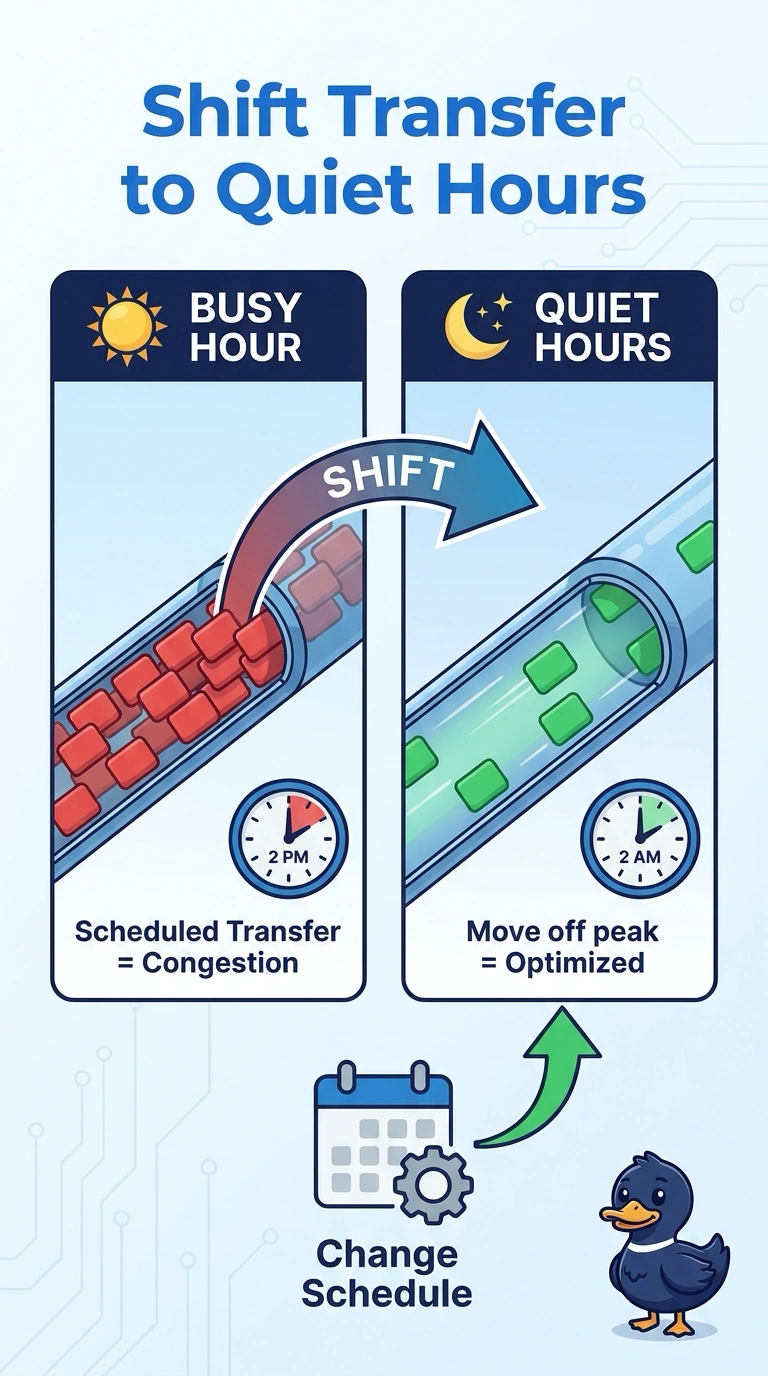
Short Explanation
You move a delivery truck out of rush hour when the truck, not the width of the street, is what clogs the block. The retail transfer can leave the busy hour, so the capacity recommendation is a schedule change. The trap is another alert, a renamed dashboard, or more tests that leave the transfer where it is.
Full Explanation
The circuit fills because a scheduled transfer runs during the branch busy hour, and the business can move that transfer to a quiet hour without hurting store sales. The capacity recommendation is therefore a configuration or schedule change that places the transfer outside the busy hour. Adding another alert that pages staff when the busy-hour transfer fills the circuit reports the same collision again and does not move the file. Renaming the branch dashboard so the busy hour stands out more clearly changes a label. Adding tests that collect more of the same busy-hour data and leave the transfer schedule unchanged produces a thicker chart of a problem the schedule can remove. Exam caveat: the fitting change is the transfer schedule, because another alert, a renamed dashboard, or more tests of the same hour leave the transfer in the busy hour. Operational check: compare the transfer window with branch busy-hour utilization, then confirm the proposed change shifts that schedule rather than adding an alert, a dashboard title, or another test of the same hour.