
A bank sees loss only in the backup traffic class while backups run, and interactive classes on the same circuit stay clean. What should the capacity recommendation be?
Select an answer to reveal the explanation.
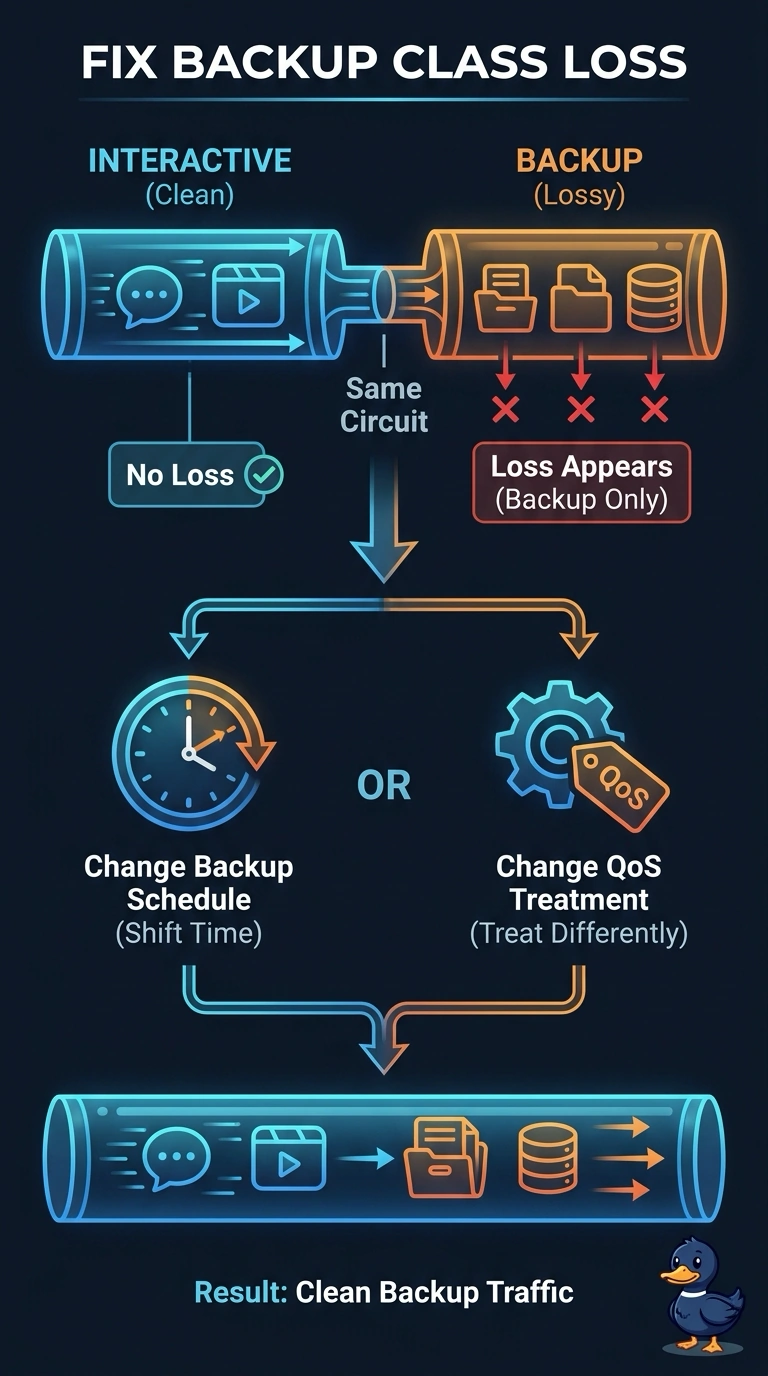
Short Explanation
When you see loss only in the backup class while backups run, you can focus on that class rather than disturbing interactive traffic. Change the backup schedule or its QoS treatment to address the pattern. Another alert, a renamed dashboard, or more of the same per-class data will not change the schedule or treatment.
Full Explanation
Loss is confined to the backup class and occurs only while backups run, while interactive classes on the same circuit stay clean. That pattern points to when the backup runs or how that class is treated, rather than a shortage affecting every class. The capacity recommendation is to change the backup schedule or the QoS treatment of the backup class. Adding another alert that fires on backup-class loss already shown in the current view repeats a notification; it does not alter the schedule or traffic treatment. Renaming the operations dashboard so the backup class stands out changes how the information is presented, not how the backup traffic uses the circuit. Adding tests that collect more of the same per-class data, without a topology, configuration, or QoS change, gathers more evidence but leaves the schedule and policy unchanged. Exam caveat: loss in the backup class during the backup job calls for a schedule or QoS change for that class, even when interactive classes remain clean. Practical check: compare loss by class inside and outside the backup window, confirm interactive classes stay clean, and specify a backup schedule change or a QoS change for the backup class.