
A university has both network operations and a production support desk, and the support desk asks for the view it will use to work alerts. Which deliverable should support receive?
Select an answer to reveal the explanation.
Short Explanation
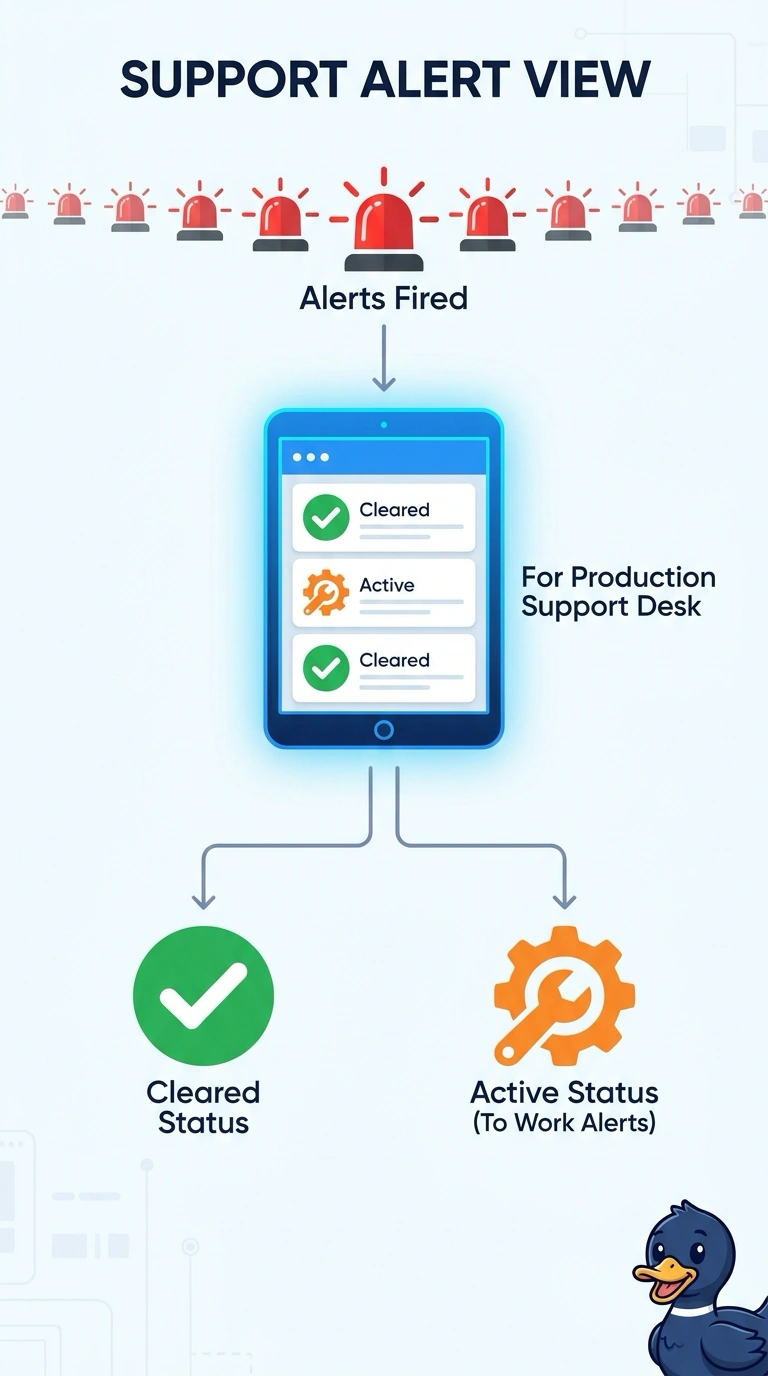
When a desk asks you for the packet with its own job on the cover, you do not hand over the neighbor's. Production support should receive the view of alerts they can work, because the request comes from that desk while operations already has a different job. An operator rule pack, an application waterfall, or an executive semester trend is built for a different reader.
Full Explanation
The university has both operations and production support, and the request in front of the team comes from support, which needs a view it can use to work alerts. That deliverable is a support view of which alerts fired and whether each one cleared, so the desk can pick up live items and close the ones that recovered. An operator rule pack that shows how each alert is defined and probed belongs with operations, the group that maintains the rules, and it is not the working view support asked for. An application-team waterfall of the slowest objects on the student portal is an application analysis of page objects, useful to the portal owners and not a support queue of alerts. An executive trend of semester availability without per-alert detail is a leadership summary across the term, and without per-alert detail it cannot be the view support uses to work individual alerts. Exam caveat: when operations and support both exist, the desk that asked for a working view gets the support deliverable, and the other audiences keep their own packs. Operational check: confirm the support desk receives fired and cleared alert state for the items it works, and that the rule definitions stay with operations rather than replacing the support view.