
A university network team wants an on-call page when tests show loss on the path to the learning system, and they have said a laptop fan is not that page. Which action matches the request?
Select an answer to reveal the explanation.
Short Explanation
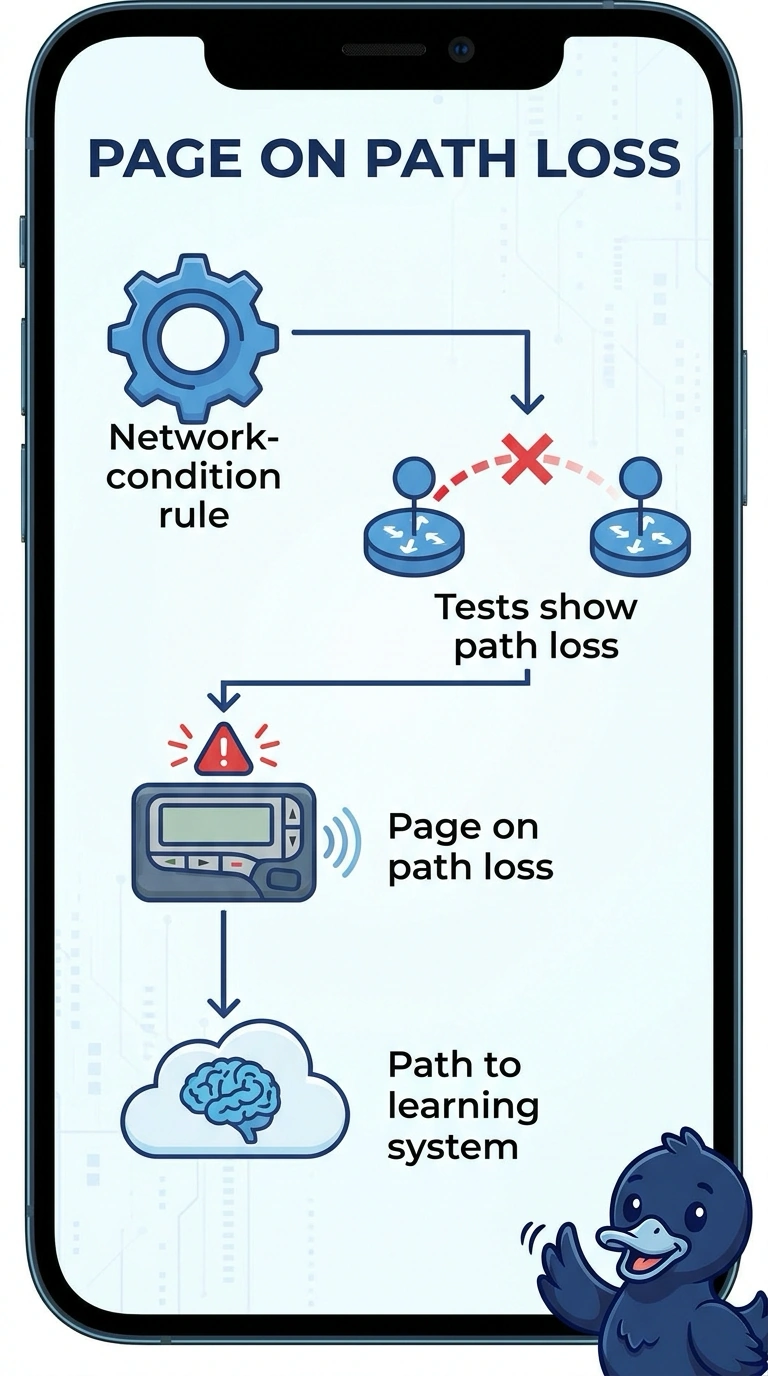
A hallway smoke alarm is the wrong gadget for a laptop fan. You page the university on-call roster with a network-condition rule when tests show path loss, because that's the failure they asked to hear about. A hot-laptop alert, a silent dashboard, and a capacity project don't send that page.
Full Explanation
A network-condition rule is what turns a path-loss measurement into an on-call page for the university roster. The team asked to be paged when tests show loss toward the learning system, so the rule has to watch that path measurement and send the notification. An endpoint CPU alert watches the student laptop, which is the fan case they set aside, and it stays quiet when the path loses packets while the laptop is cool. That CPU alert would be the right page only if the symptom were the laptop itself. A dashboard of path charts can make the same loss visible and still page nobody, because a chart has no notification attached. A capacity project may redraw the campus core later and does not notify the roster when tonight's test shows loss. Exam caveat: a request for a page maps to an alert rule on the named network symptom, while a display and a later design change are different jobs. Operational check: review an interval where the learning-system test showed path loss, confirm the network-condition rule paged the roster, and confirm a CPU spike on a laptop with a clean path did not.