
A government agency watches SNMP and sees one WAN interface stay pinned at full utilization through the workday. Operators want a page when that condition returns. Which alert fits?
Select an answer to reveal the explanation.
Short Explanation
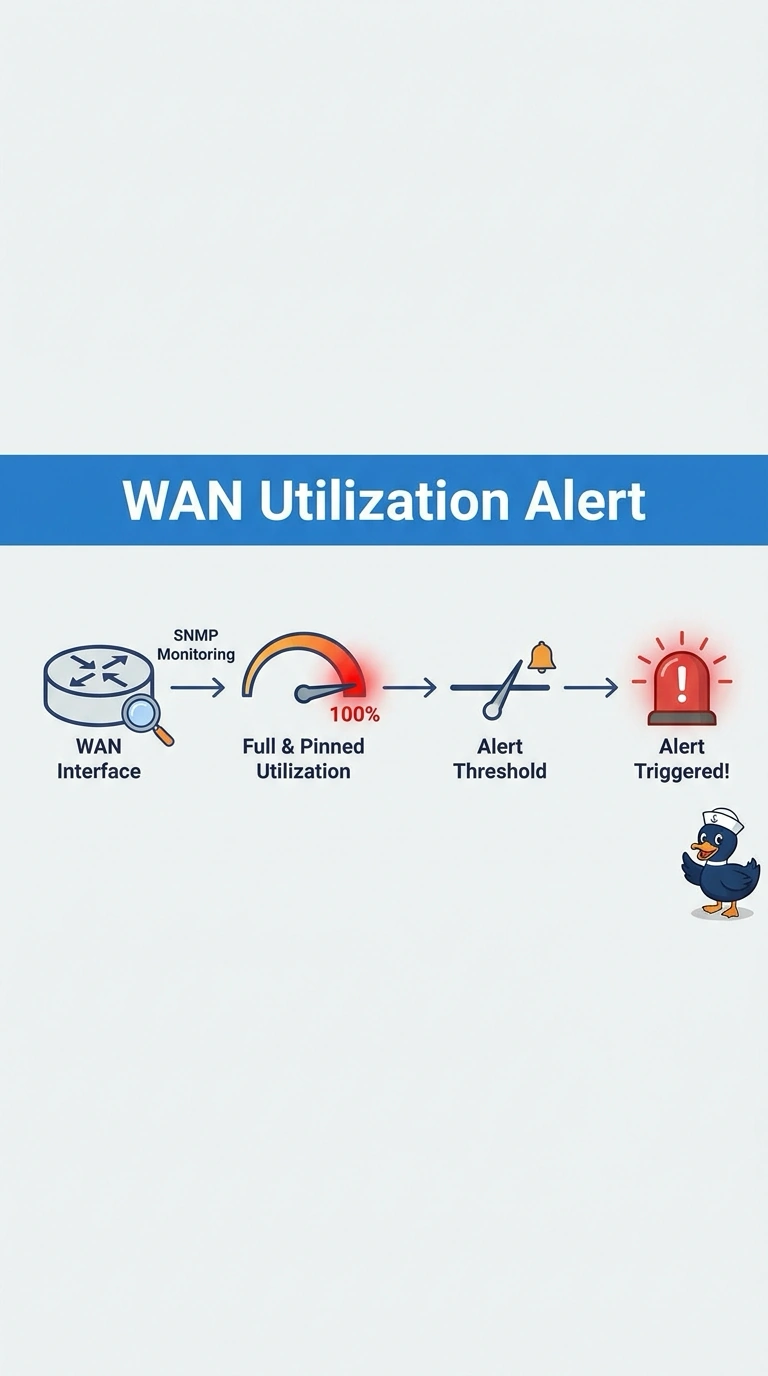
You want the alert tied to the gauge that is already pegged, not to a thermometer in another room. An SNMP threshold alert on the WAN interface can page you when its utilization pins again. A workstation CPU alert, an unmonitored dashboard, or a later capacity project won’t page you for that interface.
Full Explanation
SNMP shows one WAN interface pinned at full utilization through the workday, so an SNMP threshold alert on that interface matches the evidence and can page the operators when utilization pins again. The rule is tied to the network condition SNMP reports; it does not require a second measurement system. An end-user CPU alert on workstations in the same building watches host processors instead: a busy workstation can page while the WAN is idle, and a pinned WAN interface can go unpaged while every workstation looks fine. A utilization dashboard can show the same pinned interface, but with no alert rule watching it, the picture never becomes a page. A capacity project that studies the link later may help decide whether it needs more room, but it pages nobody when the interface pins again, so it is follow-up design work rather than the requested alert. On the exam, an SNMP view without a rule is still just a view, and a host CPU rule measures a different layer from interface utilization. In production, confirm that the SNMP alert opens while the interface is pinned and clears after utilization comes off that pin, using the same interface the operators were watching.