
A retailer branch portal uses basic authentication over TLS. A tester wants to turn TLS off so the synthetic web test is easier to run. What should the test keep?
Select an answer to reveal the explanation.
Short Explanation
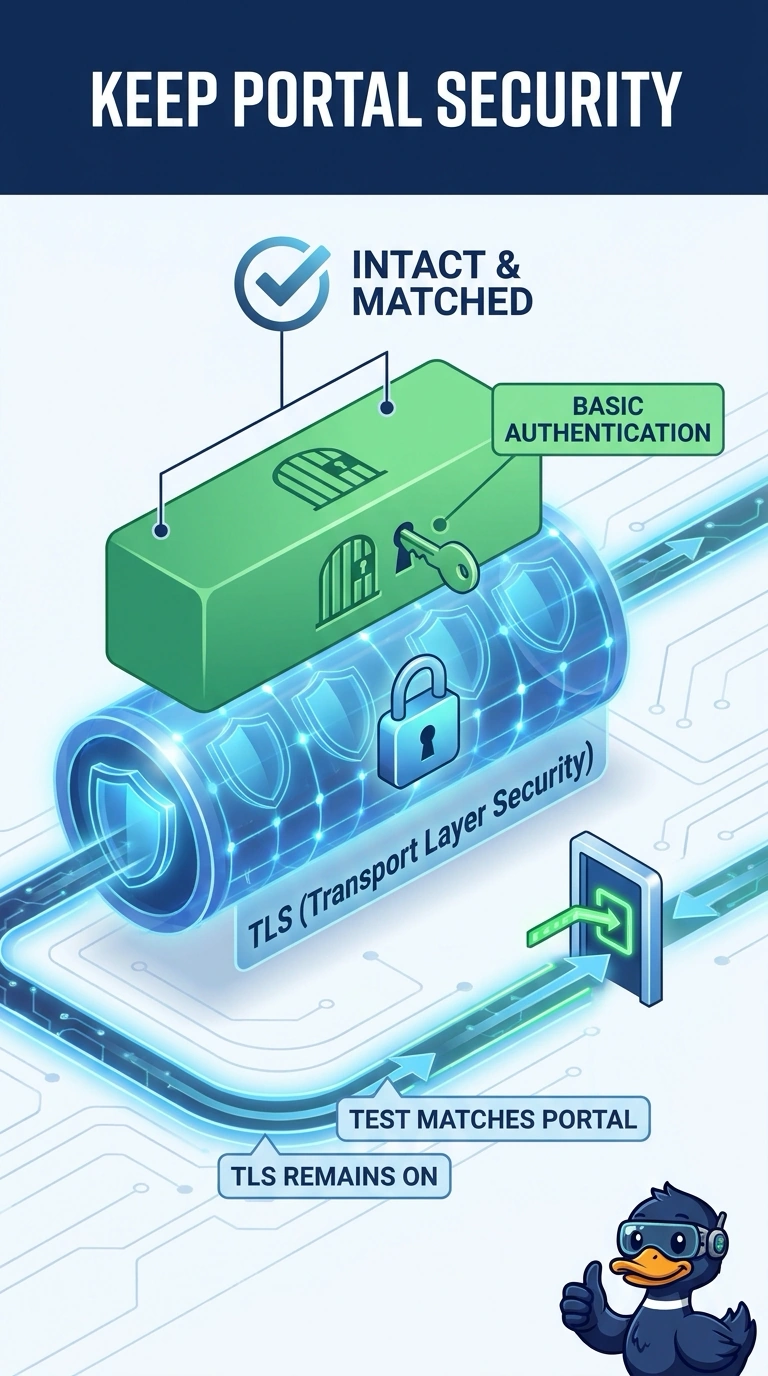
You do not remove the deadbolt to make it easier to practice opening the same door the store actually uses. The branch portal uses basic authentication over TLS, so the test should keep that method and keep TLS. The trap is a different auth method, a run with no credentials, or a network-loss test that does not log in.
Full Explanation
The branch portal authenticates with basic authentication protected by TLS. A synthetic test proves that path only if it keeps both: the same authentication method and TLS. Turning TLS off to make the run easier measures a portal the branches do not expose, and it drops the protection the real login uses. The test should keep basic authentication over TLS. A switch to digest authentication is a different method than the branch portal uses, so success would not describe the real form. A credential-free run that does not present the basic authentication challenge skips login. A network-loss test aimed at the portal address does not log a user in, so it cannot show that basic authentication over TLS works. Exam caveat: simplifying a test by removing TLS or by changing the authentication method makes the test easier and also makes it a different application. Operational check: confirm the transaction still negotiates TLS and still sends basic credentials, and reject a revision that disables TLS, switches the method, drops the credentials, or replaces the web test with a network-loss probe.