
At a manufacturer, the supplier portal spends most of its load time on a chain of redirects before any page content is returned. What does the waterfall identify as the cost?
Select an answer to reveal the explanation.
Short Explanation
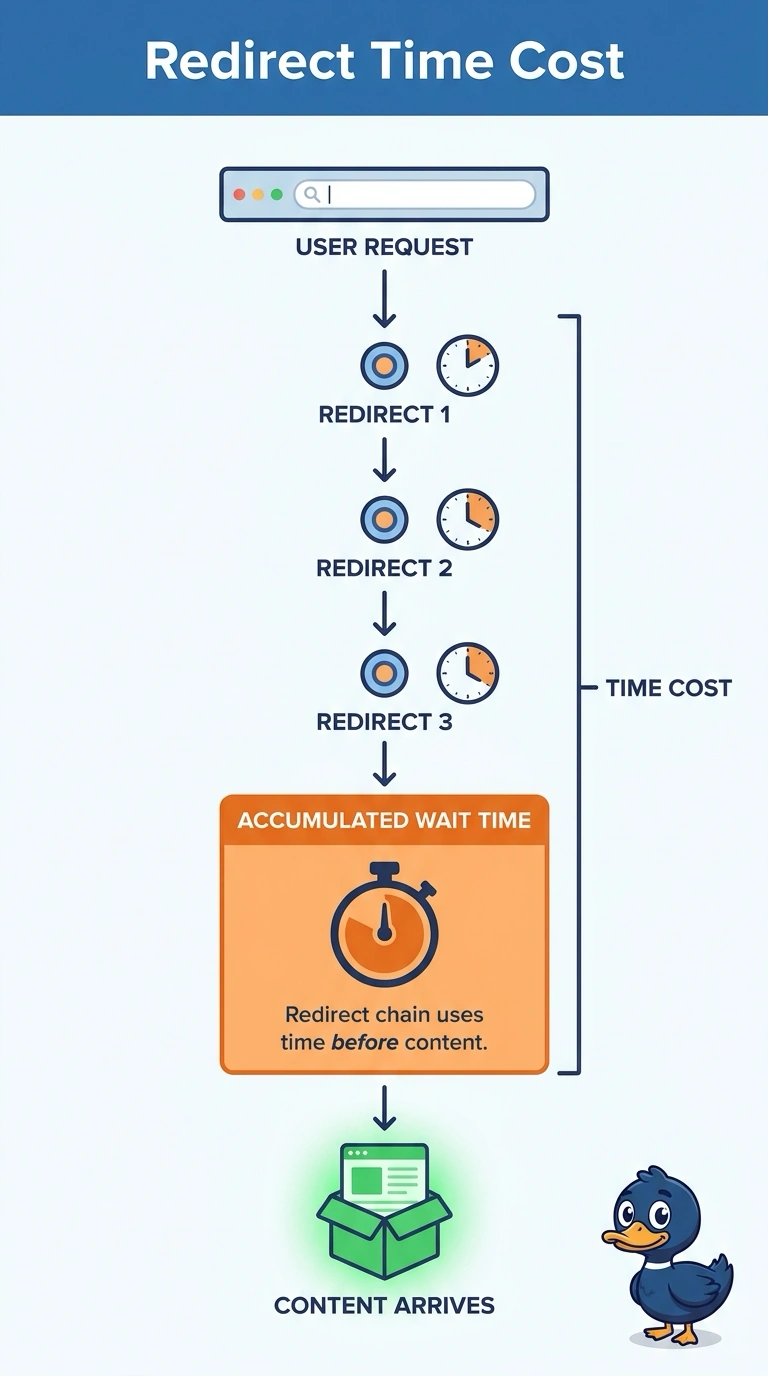
Three doorways before the room can use up the whole visit, and you time the doorways rather than the furniture. The redirect chain that runs before any content is what the waterfall is spending time on. A WAN loss alarm, a hijack conclusion from the extra names, or a QoS change on the plant edge does not explain a delay that finishes before the page body starts.
Full Explanation
The waterfall spends most of the load time on redirects and only then would return page content, so the identified cost is the redirect chain that runs before any content arrives. Each redirect is another round trip, and a long chain delays the page even when the final body is small. A loss alarm on the WAN path between the plant and the portal host would fit dropped traffic on that path, and the waterfall locates the time in redirects rather than in loss. A DNS hijack conclusion because several names appear before the content confuses a designed redirect sequence with an attack, and multiple names in a redirect chain are not by themselves evidence that a name was captured. A QoS change on the plant edge for traffic toward the supplier portal changes scheduling for that traffic and does not shorten a chain of redirects that burns the time before content. Exam caveat: several host names in a waterfall can be redirects, and a hijack conclusion needs signs that resolution went somewhere unintended. Operational check: list the redirect hops in order, confirm they account for most of the load time before content, and only then consider path loss or a plant-edge QoS change if those signals show up separately.