
In a retail branch, a room system cannot reach a scheduling service while PCs on the same switch succeed, and the room system is configured with a different DNS server than the PCs. What should be checked?
Select an answer to reveal the explanation.
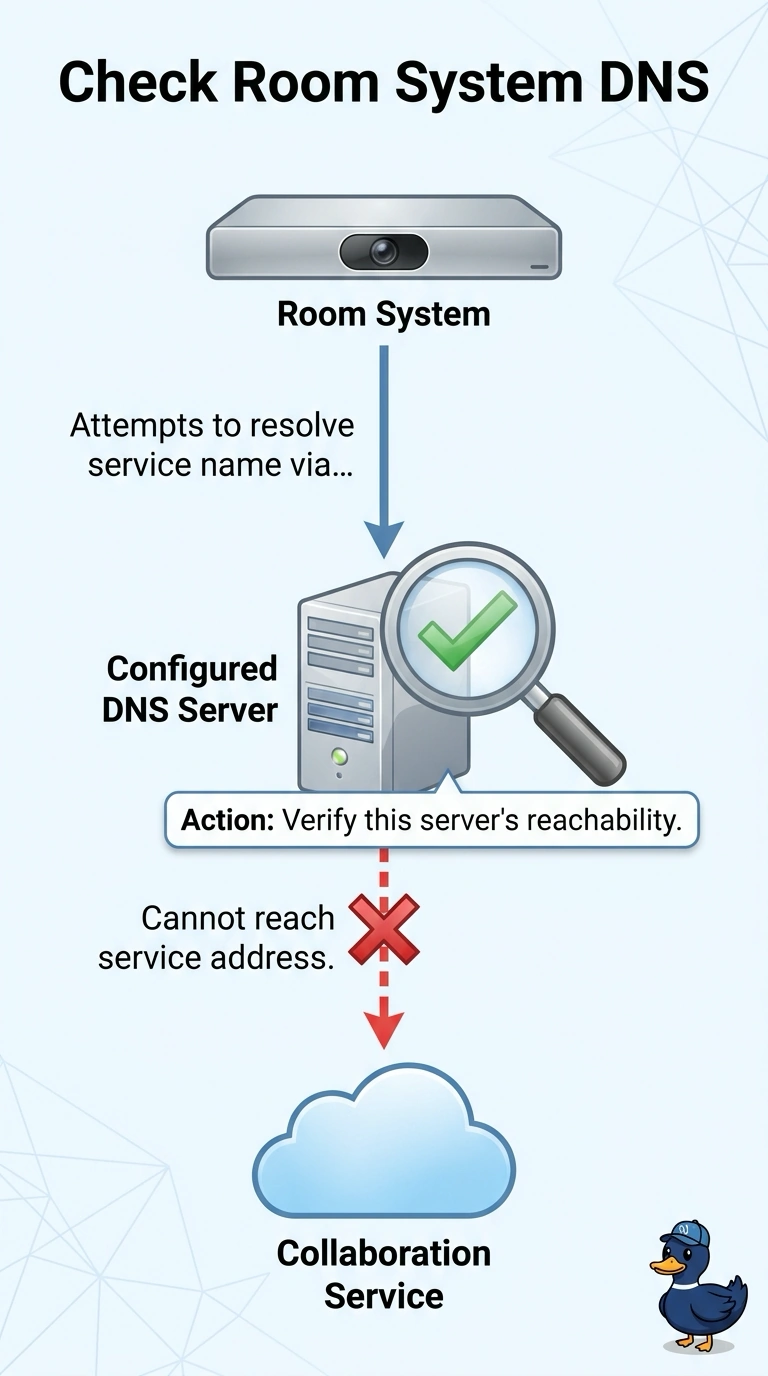
Short Explanation
That room system is reading a different directory than the PCs beside it, so you start with its directory. The PCs reach the scheduling service and this room system does not, and it is the one set to a different DNS server. Replacing the branch circuit, raising a provider routing alert, or moving a data-center probe would also hit the PCs that already work.
Full Explanation
PCs on the same switch reach the scheduling service while the room system does not, and the room system is configured with a different DNS server, so the check is the DNS server on that device. Shared switching and working PCs show that the branch path is carrying this service for other hosts, which leaves the device-specific resolver as the difference that matches the failure. Replacing the branch WAN circuit would fit a path failure affecting hosts that use the circuit, and the PCs on that circuit are already succeeding. A BGP session alert at the store provider edge describes provider routing, not the DNS server configured on one room system. Moving the data-center Enterprise Agent into the closet changes a remote probe and does not change which resolver the room system queries. The exam trap is treating one device that uses a different resolver as a branch-wide circuit failure. In production, compare the DNS server configured on the room system with the DNS server on a working PC, then query the scheduling name on both and compare the results. If the PCs keep working on their resolver, a circuit replacement and a provider routing alert are not supported by this evidence.