
At a logistics hub, a dispatch video fails only while a laptop VPN is connected and plays as soon as that VPN drops. Where should diagnosis start?
Select an answer to reveal the explanation.
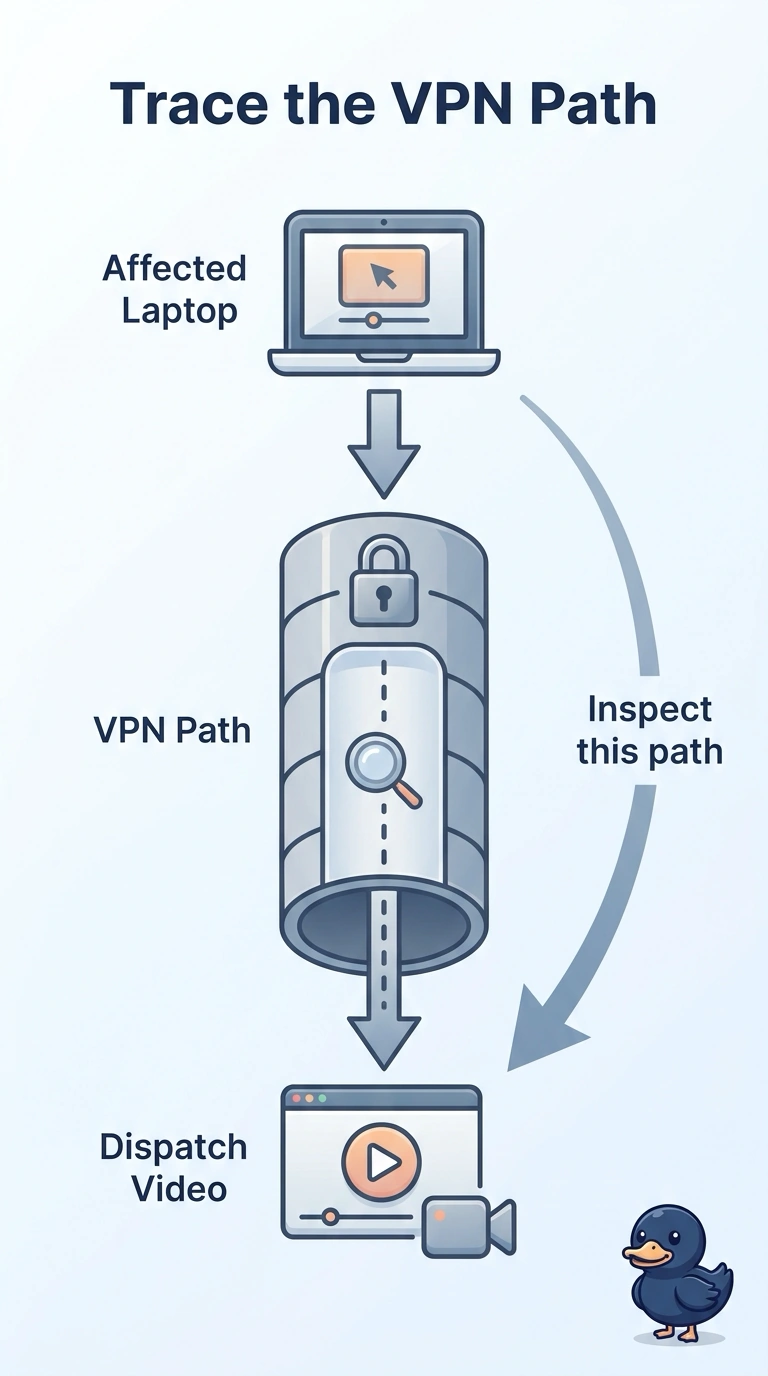
Short Explanation
The stream is a hose that kinks only after you add a second coupling. You start on the VPN path from that laptop, because the video fails only while the tunnel is up and plays when the tunnel drops. Replacing the whole circuit, raising a routing alert, or moving a data-center probe does not follow that pattern.
Full Explanation
The dispatch video fails only while the laptop VPN is connected and recovers as soon as that VPN drops, so diagnosis starts on the VPN path from that device toward the video. Traffic that succeeds with the tunnel down has already shown that a blanket failure of the site underlay is not what the evidence describes. Replacing the hub WAN circuit would fit a stream that failed for users whether or not a laptop tunnel was up. A BGP alert fits a provider route change, and nothing in the report ties the failure to a routing update. Moving the data-center Enterprise Agent closer to the video source changes a probing point in the data center and leaves the laptop tunnel, the condition that tracks the failure, untouched. The exam trap is treating every video complaint as a circuit or routing incident when the failure appears and disappears with the tunnel. In production, compare a path measurement from that laptop to the same video destination with the VPN connected and again with the VPN disconnected. The comparison keeps the destination constant so the tunnel is the only condition that changes between the two results.