
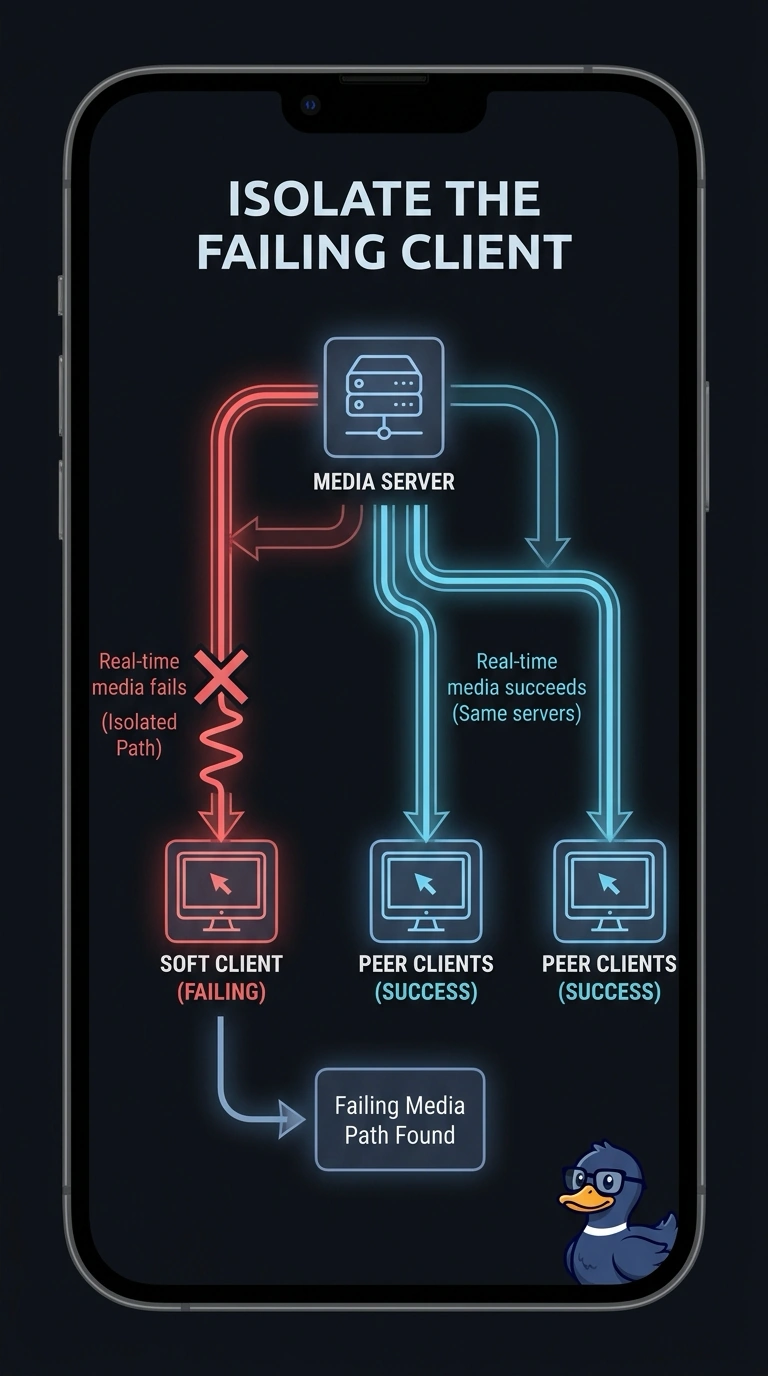
At a logistics hub, real-time media fails on one soft client and succeeds on every other client that uses the same media servers. What does that isolate?
Select an answer to reveal the explanation.
Short Explanation
When one soft client fails while its peers reach the same media servers, you can focus on that client’s media path. Replacing a WAN circuit, reacting to a BGP alert on a shared route, or moving the data-center agent would target infrastructure the working clients already use or reach.
Full Explanation
When real-time media fails on one soft client while other clients using the same media servers succeed, the evidence isolates the failing client’s media path: the soft client, its capture path, and how that device reaches the media servers. Replacing a WAN circuit that the other soft clients already use successfully changes shared infrastructure that working calls have cleared, so it does not explain why only one client fails. A BGP alert on a route shared with soft clients that still complete calls also points to a path used successfully by peers; the alert alone does not account for the single-client failure. Moving the data-center agent away from media servers the other clients still reach relocates the agent but leaves the failing soft client’s media path unchanged. Exam caveat: a single-client media failure with healthy peers points first to that client, but shared infrastructure is not ruled out if the clients do not actually use the same path. Practical check: place a test call from the failing soft client and a working peer to the same server, then compare the media paths and identify what only the failing client shows.