
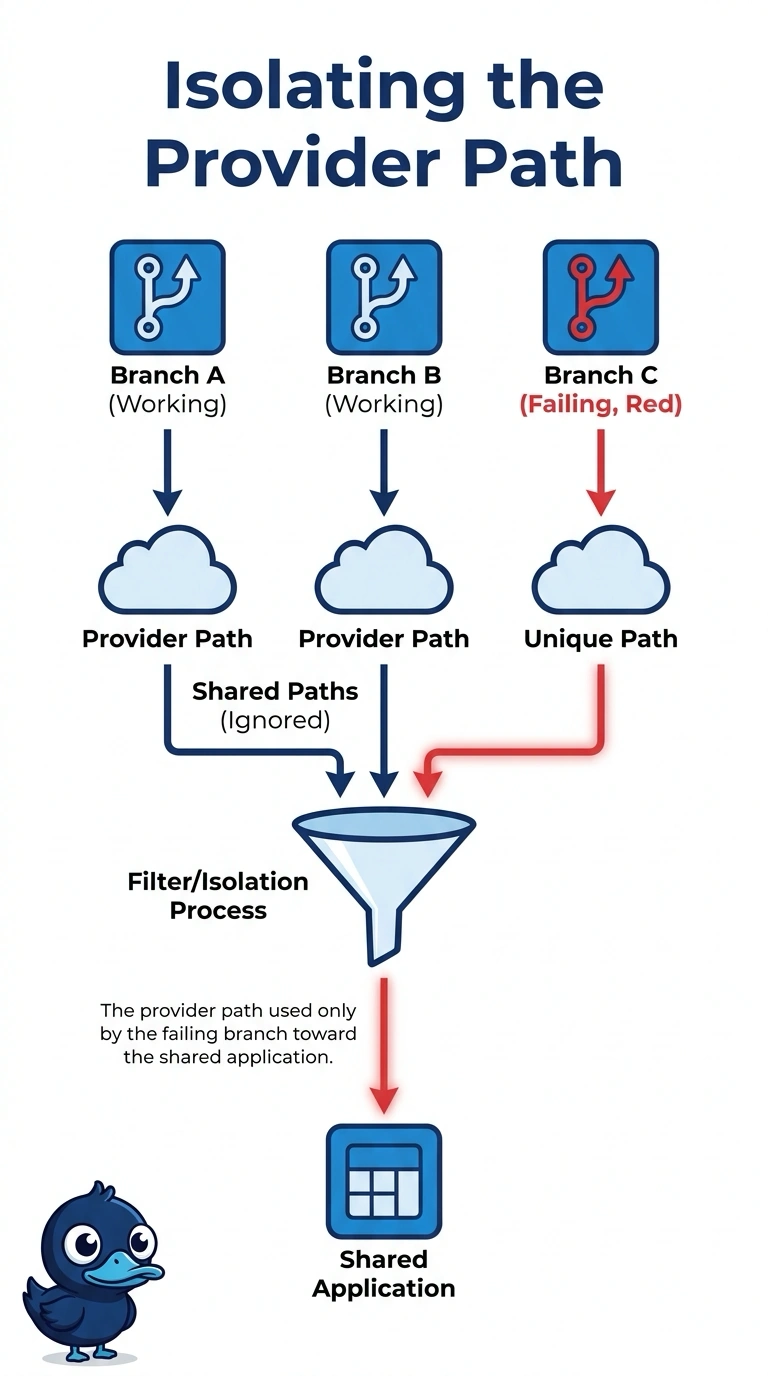
A retailer sees path tests fail at one branch while branches that use a different provider stay green to the same application. What does that pattern point to?
Select an answer to reveal the explanation.
Short Explanation
If only the stores on one road go dark, you look at that road. You point at the provider path used only by the failing branch, because the other provider stays green to the same application. A browser bug, DNS alone, or a wireless ticket would not draw a line along that provider boundary for you.
Full Explanation
Path tests fail at one branch and branches that use a different provider stay green to the same application, so the pattern points to the provider path used only by the failing branch. The application itself is reachable on the other provider, which means the split follows the path into the failing site rather than a fault shared by every store. The store browser can make checkout feel slow to clerks, but a browser fault in the shared application would not pass on every other provider and fail only on one provider's tests. DNS only is a weak fit for the same reason: every branch looks up the same application name, yet the branches on the other provider stay green, so a single name fault does not explain a provider-shaped outage. A wireless ticket for the failing store is plausible in a branch, yet the tests split along the provider path, not along a wireless symptom, so that ticket ignores the evidence that already separates the providers. On the exam, when healthy sites and a failing site differ by provider, keep the fault on the failing provider path. In production, compare a failing-branch path test with a green branch on the other provider toward the same application, and work the provider hop that only the failing site uses.