
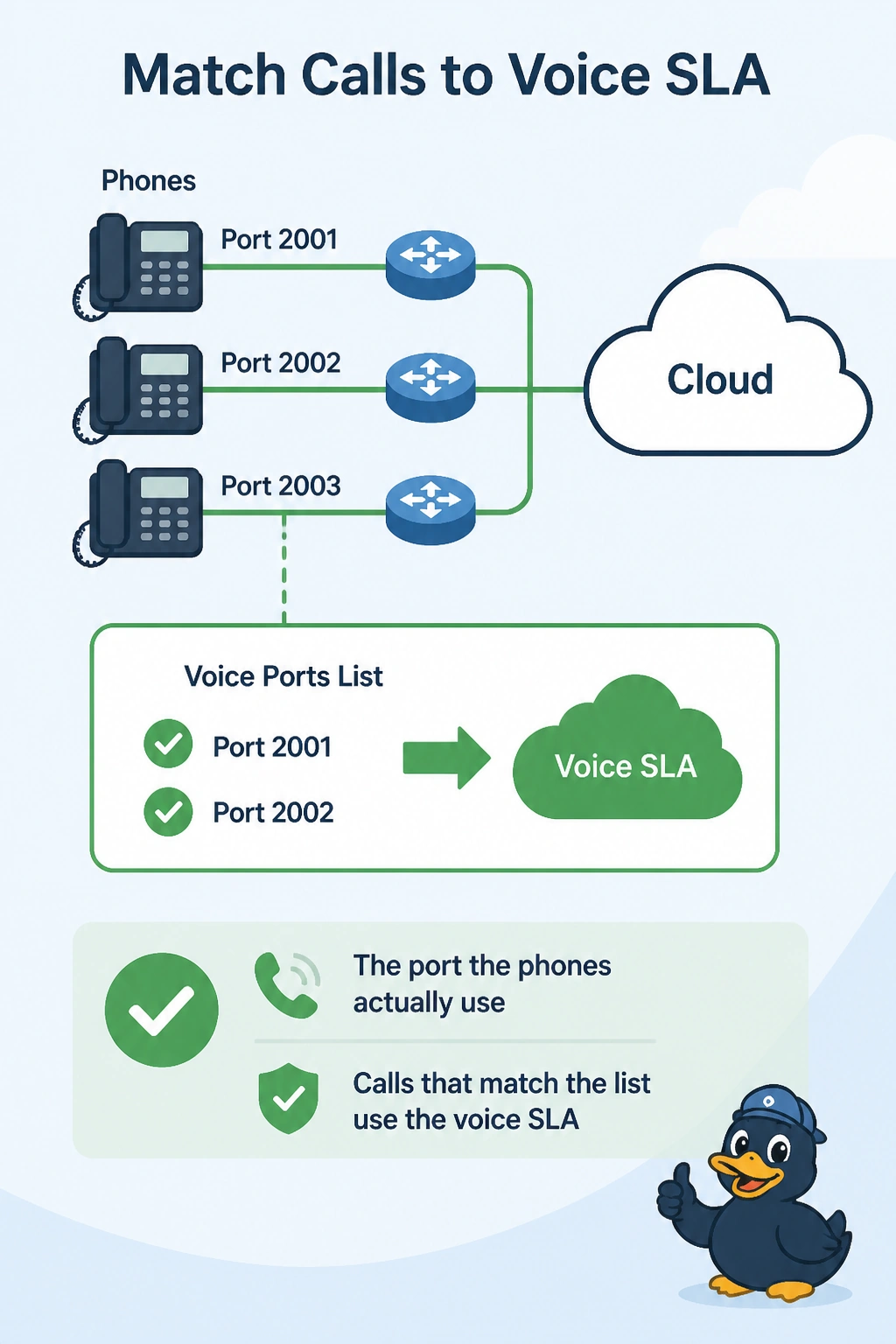
Calls use a port the voice application list does not include. Those calls follow the bulk path. Calls that match the list use the voice SLA. What should the list include?
Select an answer to reveal the explanation.
Short Explanation
Your voice list needs to describe the traffic the phones actually send. Add the port they use so those calls match the voice SLA; a second copy of the bulk application does not identify the missing port. Match the list to the calls.
Full Explanation
Application-aware routing matches traffic against the list it is given. Calls using a port the voice list omits do not match that list, so they follow the bulk path; calls that match the list use the voice SLA. Include the port the phones actually use so their calls match the voice SLA. A second copy of the bulk application still describes bulk traffic and does not identify the missing voice port. The guest zone does not add every port to the voice list, so it cannot make calls on the omitted port match. A shorter BFD hello affects failure detection timing; it does not classify an unknown port as voice. Exam caveat: a data policy that pins all voice traffic, matched some other way, can still override the SLA after the port is added to the list. If calls begin matching the voice list but continue to use the bulk path, check whether that pin is in effect. Practical check: verify that a call using the phone's port hits the voice list and forwards on the voice path.