
A new store edge has control connections and BFD on its internet color. It receives no service-VPN routes, and its users have no VPN 10. A VPN membership policy lists every other store and omits this one. What is missing?
Select an answer to reveal the explanation.
Short Explanation
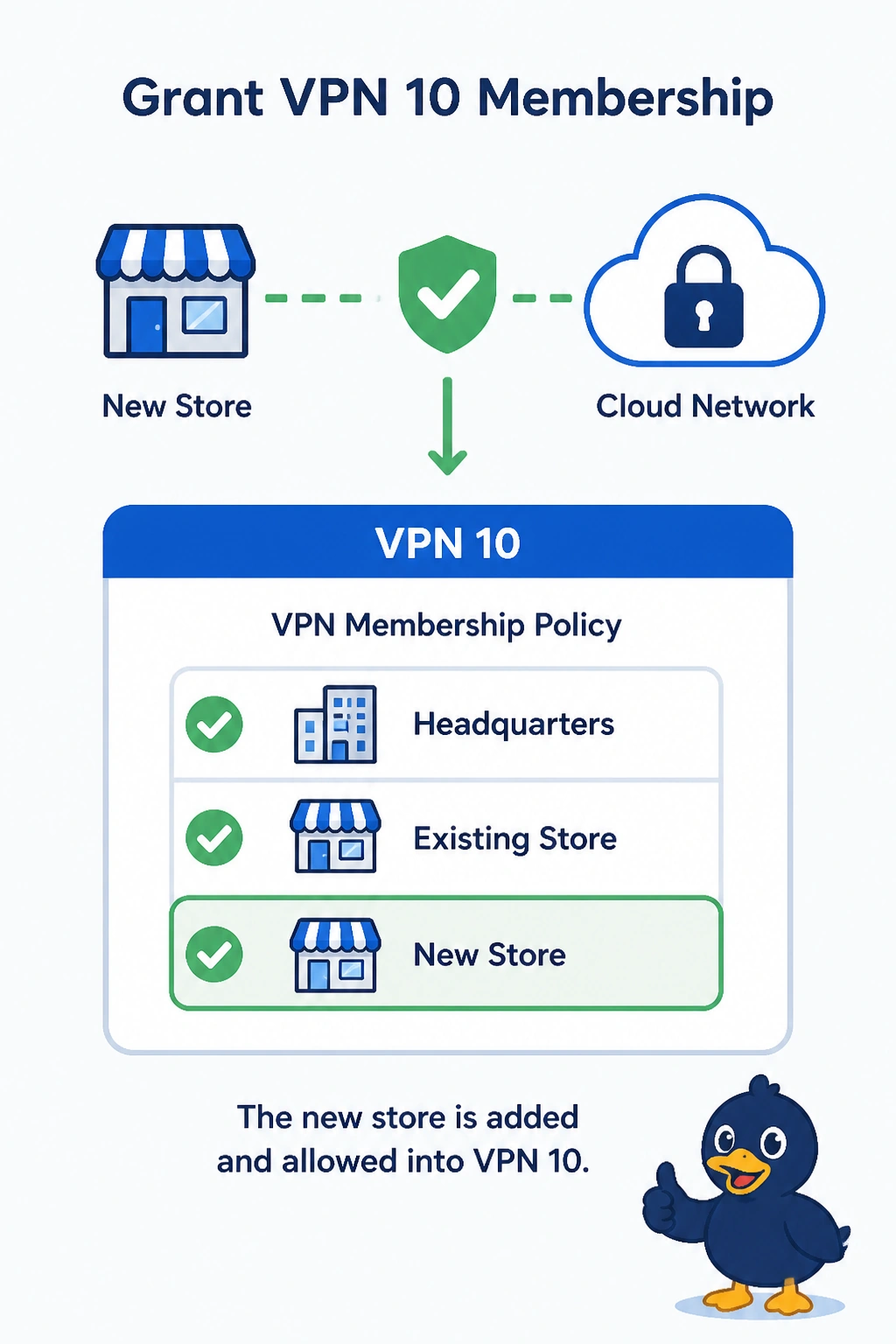
The store is on the highway and was never given a door into the building. You add it to the VPN membership policy so it may join VPN 10. BFD is already up, and parking the internet port in VPN 10 does not grant that membership.
Full Explanation
VPN membership policy decides which service VPNs a site is allowed to join. This store has transport, control connections, and BFD, and it is absent from the policy that lists every other store. OMP therefore has no VPN 10 to give it. Add the site to that membership. Disabling BFD would remove a healthy data plane and would not install VPN routes for a site the policy excludes. Moving the internet interface into VPN 10 puts the underlay in the wrong VPN and does not edit the membership policy. Cloud OnRamp for SaaS does not add sites to service VPNs. It steers enabled SaaS applications for sites that already have the overlay. Exam caveat: membership lets the site join the VPN. The cloud or data-center prefixes still have to be advertised into VPN 10 or the users join an empty VPN. Operational check: after the policy includes the new store, show sdwan omp routes vpn 10 on that edge should list the same user prefixes the other stores have.