
A campus router redistributed its entire internal table into the BGP session toward an AWS virtual private gateway. The session reset and the VPC lost the campus routes. What should the router advertise instead?
Select an answer to reveal the explanation.
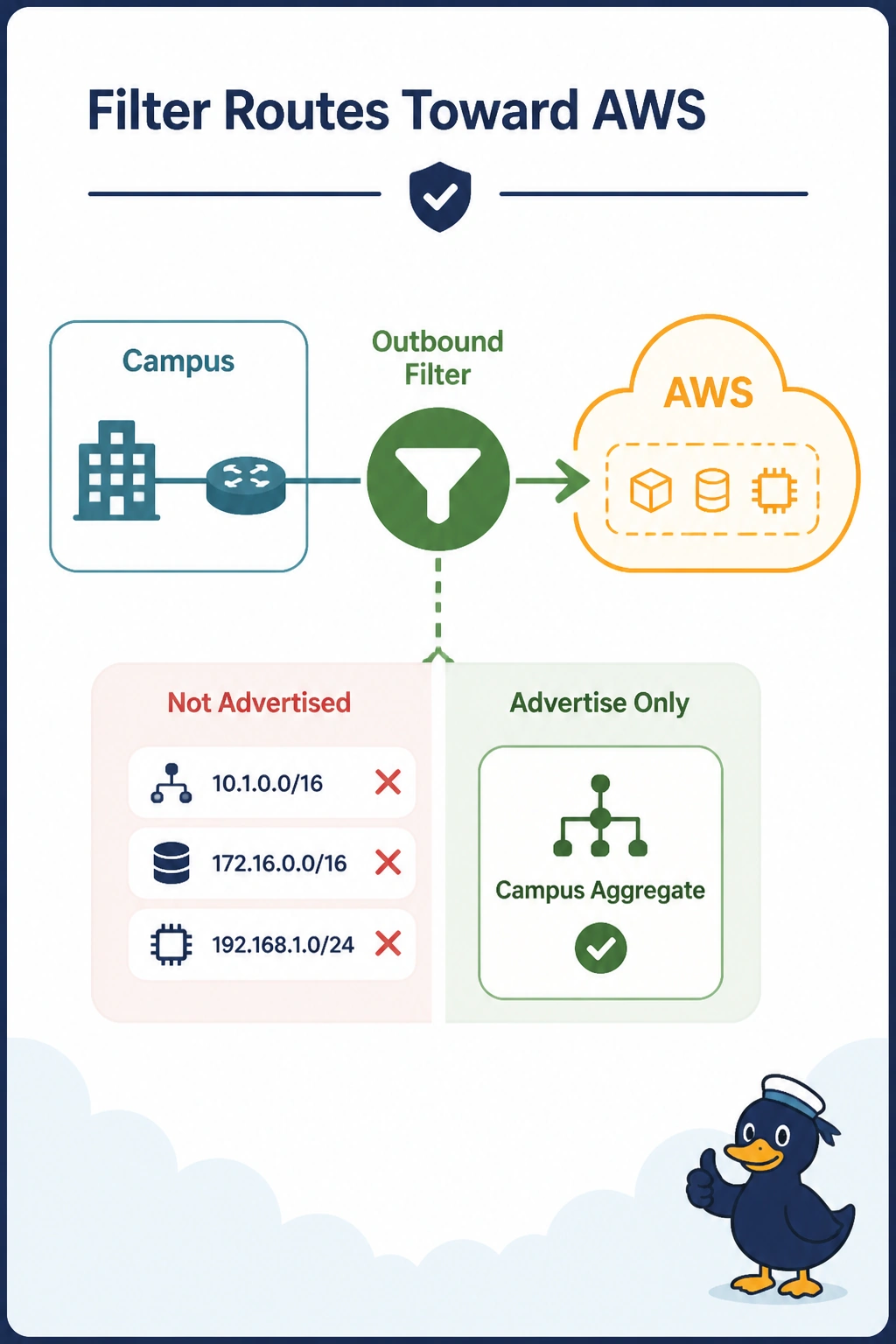
Short Explanation
You can keep the VPC routes stable by using an outbound filter that advertises only the campus aggregate AWS is supposed to learn. Sending every internal prefix without a filter repeats the problem; an IKE identity does not fix a BGP reset, and an OSPF default from the virtual private gateway does not replace the campus aggregate.
Full Explanation
Redistributing the entire internal table into the BGP session toward the AWS virtual private gateway advertises far more than the VPC needs and can reset the session, leaving the VPC without the campus routes. Configure an outbound filter to permit only the campus aggregate AWS is supposed to learn and deny the rest. This limits route advertisement to the intended reachability and helps prevent unrelated internal routes from leaking. Advertising every internal prefix with no filter repeats the action that caused the reset; the issue is not that the table was too small. An IKE identity is not withdrawn because a BGP table is too large, and a BGP reset does not mean the pre-shared key was withdrawn; the tunnel may remain up while BGP flaps. An OSPF default from the virtual private gateway is not a substitute: the gateway is the BGP neighbor, not an OSPF speaker, and that default would not restore the campus aggregate. Exam caveat: do not assume a specific prefix limit for the session; advertise the aggregate you intend AWS to learn. Practical check: use show ip bgp neighbors advertised-routes to confirm that the aggregate is listed and the internal table is not, then verify that the BGP session remains Established.