
A campus router sets local preference on the prefixes it advertises to AWS and expects AWS to prefer tunnel 2 for return traffic. Return traffic stays on tunnel 1. What can influence AWS?
Select an answer to reveal the explanation.
Short Explanation
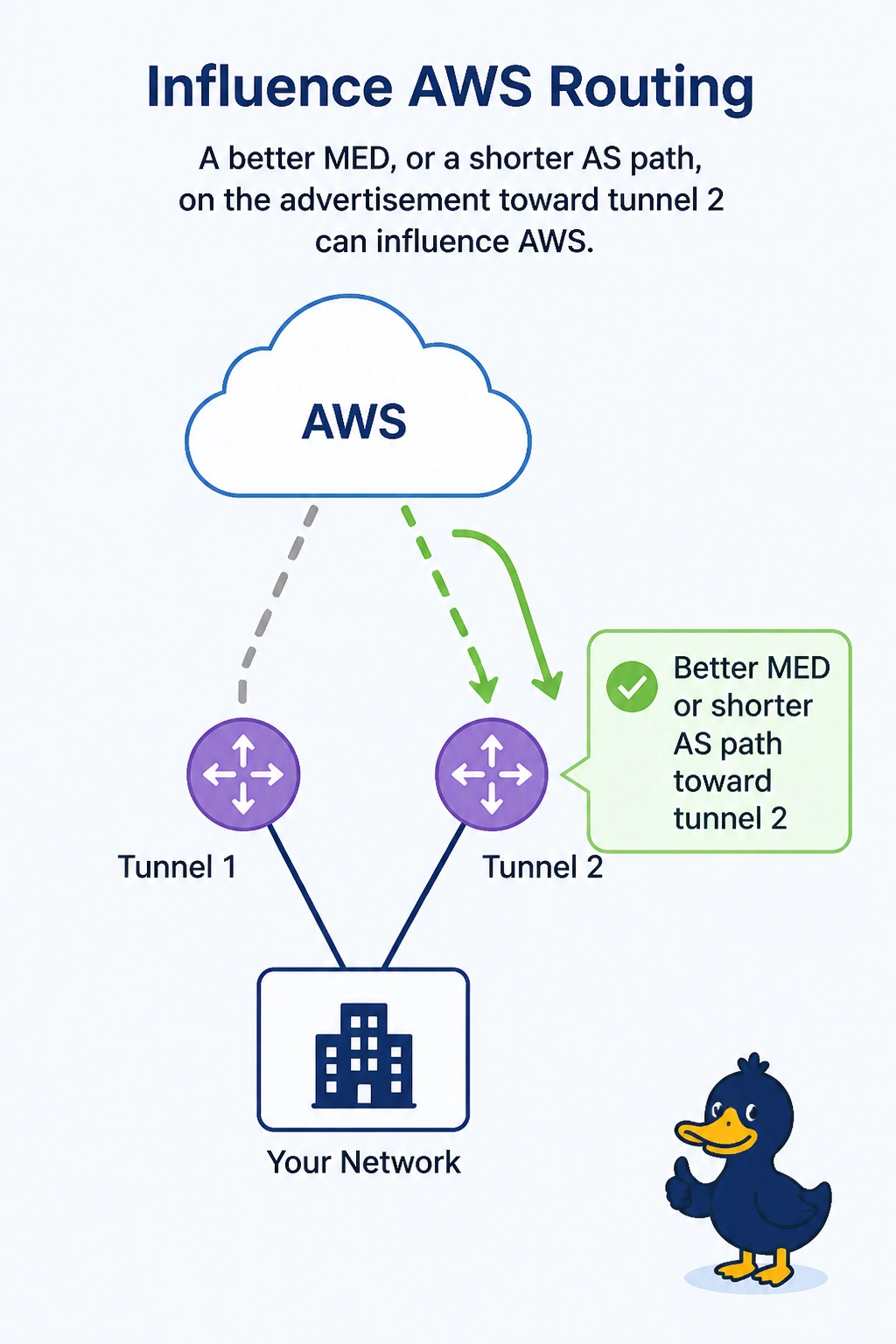
Local preference is your own sticky note, and AWS never reads it. You change the MED or the AS path on the advertisement toward tunnel 2 if you want AWS to prefer that return path. The preference you set outbound stays on your router.
Full Explanation
Local preference is not sent to an eBGP neighbor. Setting it on prefixes advertised to AWS changes nothing in AWS's decision, so return traffic stays on tunnel 1. MED and AS-path length are attributes AWS can use. Give tunnel 2 the better MED, meaning the lower one, or the shorter AS path. The virtual private gateway has no OSPF cost to lower. The IKE lifetime is not a BGP preference AWS reads. Exam caveat: MED is compared only when the AS-path lengths and the other earlier BGP steps tie. If tunnel 1 has a shorter AS path, fix that before you expect MED to move the return. Operational check: the advertised MED toward tunnel 2 should be lower than toward tunnel 1, and return traffic should move after AWS installs it.