
A control requires encryption in transit for a dataset and does not require a private path. An unencrypted private port is available. An IPsec VPN over the internet is available. Which path meets the control?
Select an answer to reveal the explanation.
Short Explanation
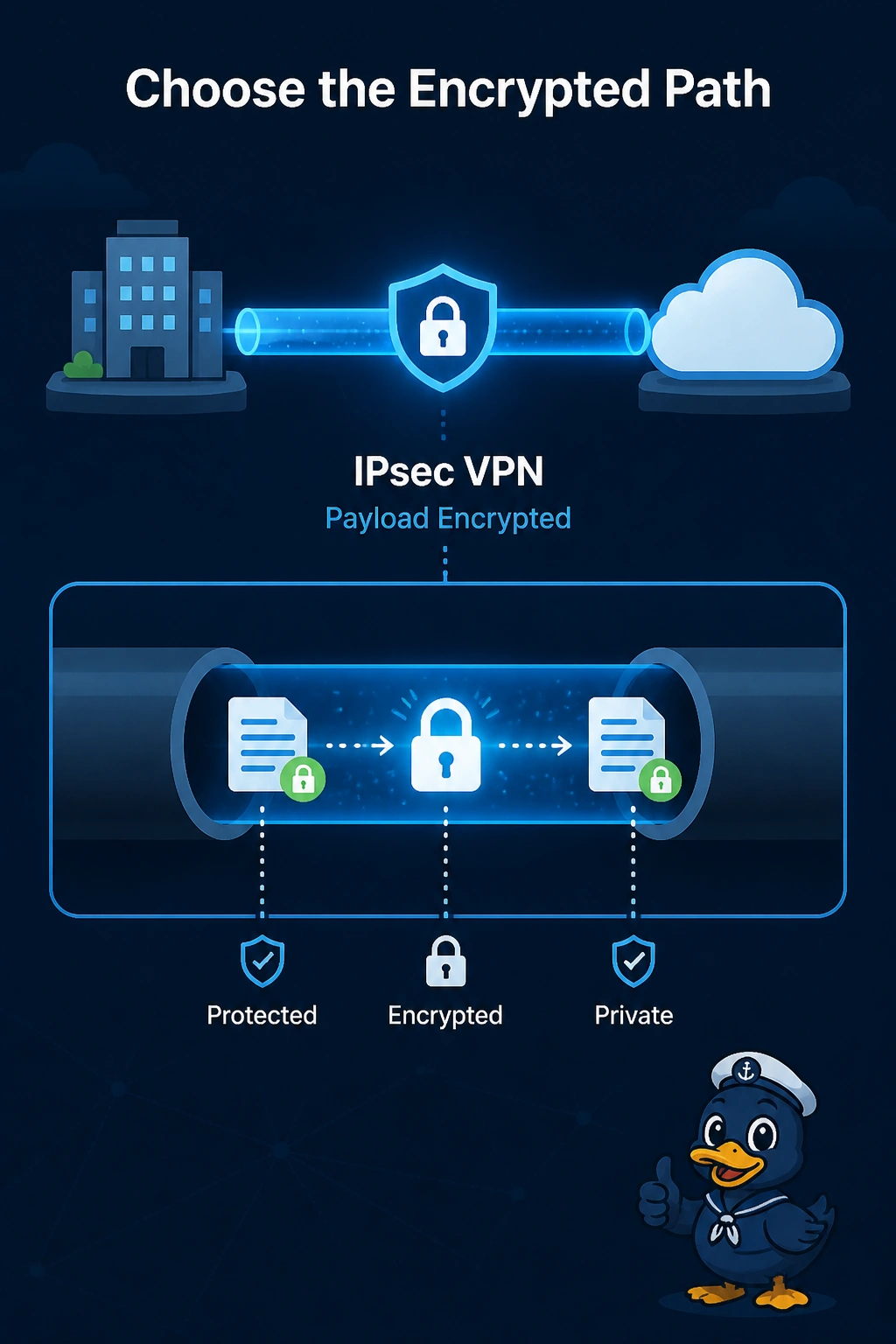
The rule you were given is about the lock, not about which road you take. You use the IPsec VPN so the payload is encrypted. The private port is off the internet and still in the clear, so it does not meet this control.
Full Explanation
The stated control requires encryption in transit and does not require a private path. IPsec over the internet encrypts the payload and meets that wording. An unencrypted private port keeps the dataset off the internet and leaves it in the clear, so it fails the encryption requirement. The control does mention encryption, so the two paths are not equal. Turning encryption off on the private port for a speed test fails the control on purpose. Exam caveat: this is a design fit for the stated control, not a legal opinion. A different control that also forbids the public internet would reject the IPsec VPN. Read the constraint you were given. Operational check: a capture outside the VPN should show IPsec rather than the dataset in the clear, and the private port should not be the path for this dataset while it remains unencrypted.