
A hotel chain needs the WAN provider to queue voice ahead of bulk data and to commit to a loss target between the hotels and a cloud contact-center VPC. Which connectivity choice fits?
Select an answer to reveal the explanation.
Short Explanation
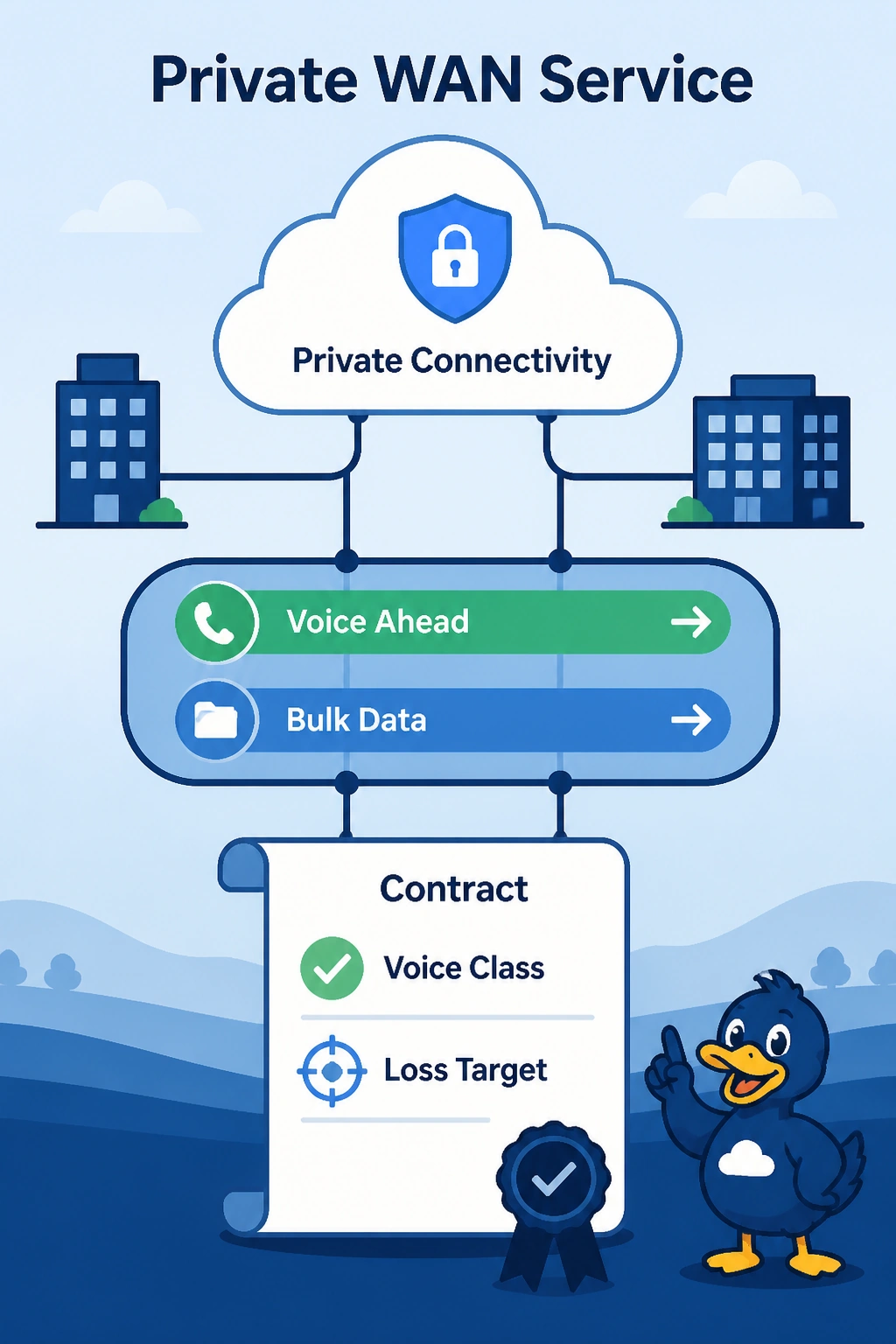
Marking a box fragile does not make the public highway handle it with care. You need a provider that actually queues voice and signs up for a loss target. That is a private path with a QoS commitment, not a DSCP stamp on an internet tunnel.
Full Explanation
QoS is contractual only when the provider that forwards the packets schedules the class and stands behind a loss or delay target. Private options such as an MPLS handoff or a cloud interconnect can include that commitment. Copying DSCP onto the outer header of an internet IPsec packet lets your own router classify traffic as it enters the tunnel. The internet does not honor those bits end to end, and there is no provider queue for voice on that path. Application-aware routing can prefer the healthier of two internet circuits by measuring loss and delay. It does not make either circuit schedule voice or commit to a loss target. Widening the IPsec anti-replay window changes which late packets the decryptor still accepts. It does not create a queue or a provider commitment. Exam caveat: you should still mark traffic so the private provider can see the class. Marking without the contract does not meet this requirement. Operational check: read the provider service schedule for the voice class and confirm the edge policy marks that class before the handoff.