
A university lab has an approved local security stack and a delay target for Google Workspace. Backhaul to the main campus misses that target. Which SaaS model meets the delay target?
Select an answer to reveal the explanation.
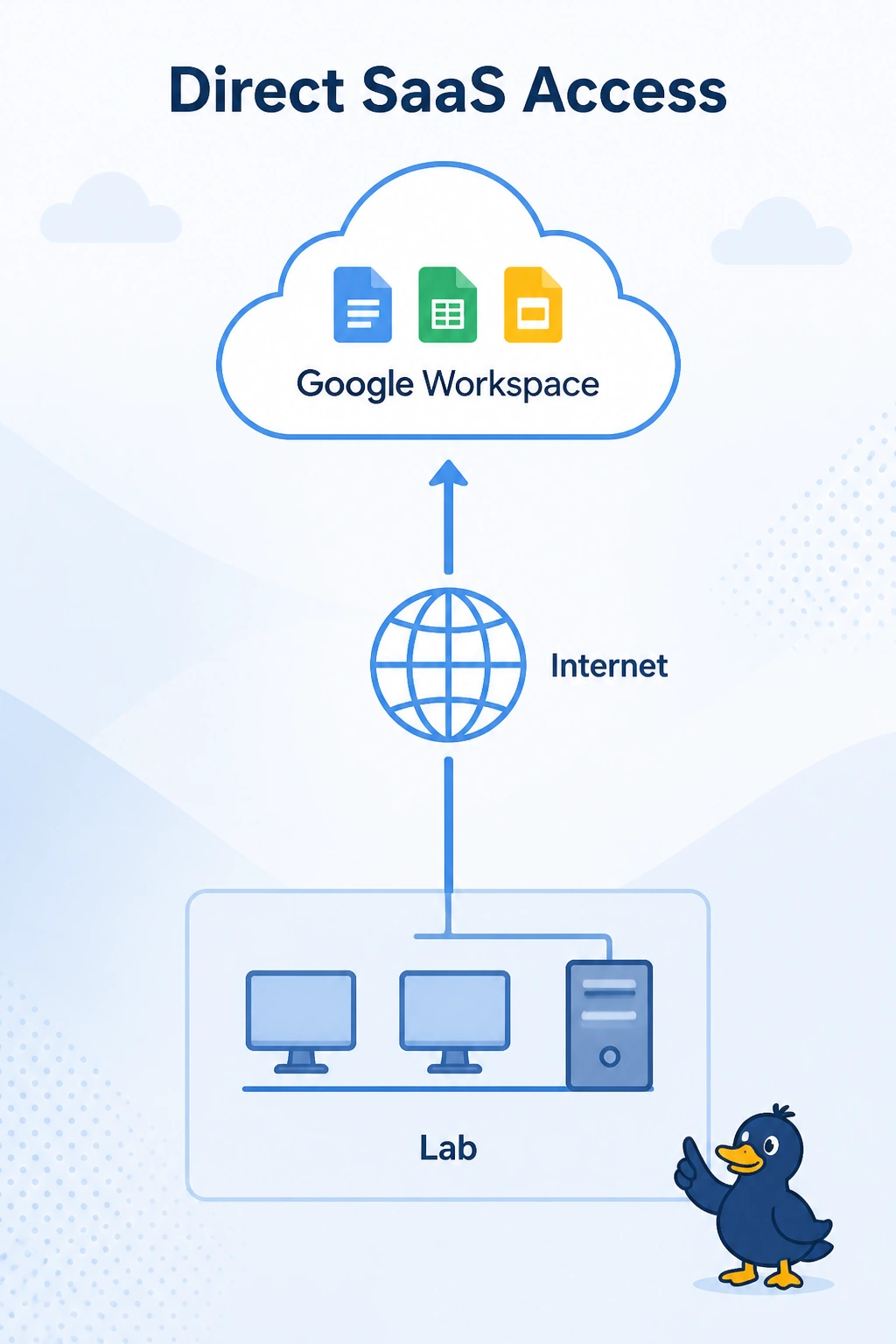
Short Explanation
The lab already has a security stack you trust, and the campus backhaul is too slow. You break Google Workspace out locally, which is direct internet access. The backhaul is the path that misses the delay target, and there is no private circuit to every Workspace host.
Full Explanation
Direct internet access sends the SaaS flow out the lab's own internet exit. The local security stack is approved, and the delay target rules out the main-campus backhaul, so local breakout is the model that fits. Backhaul through the campus internet gateway is the centralized model, and the stem says it misses the target. A dedicated private circuit to every Google Workspace host is not what this lab ordered, and Workspace is not reached that way in this design. An MPLS handoff into a private interconnect is private connectivity toward a hosted workload, not local access to a public SaaS suite. Exam caveat: local breakout is only as safe as the approved stack. If that approval is later pulled, the model changes even if the delay gets worse. Operational check: a lab trace to Google Workspace should egress the lab internet interface, and the local security log should show the session without a main-campus hop.