
A retailer sends every store's Salesforce traffic to a regional hub, and only that hub has an internet exit. Stores have no local breakout. Which SaaS model is this?
Select an answer to reveal the explanation.
Short Explanation
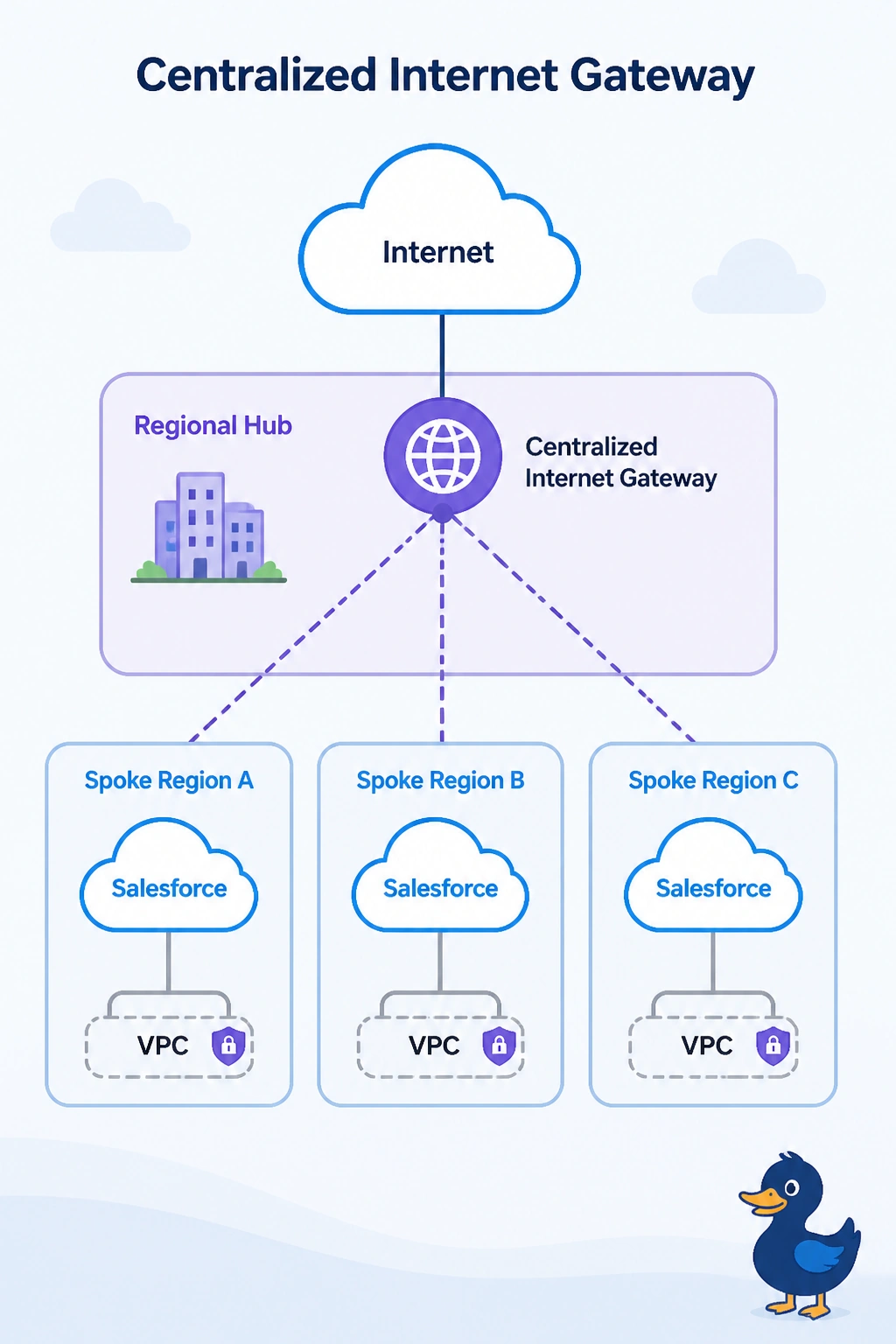
The exit moved from headquarters to a regional hub, and it is still one shared door. You are using a centralized internet gateway. The stores do not break out locally, and nobody ordered a private circuit from each store into Salesforce.
Full Explanation
A centralized internet gateway is any design where branches backhaul SaaS traffic to one internet exit. That exit can be a regional hub instead of a main headquarters. The stores have no local breakout, and Salesforce leaves only from the hub, so this is the centralized model. Direct internet access would send each store straight to Salesforce. That is the path they do not have. Dedicated private connectivity would be a private path the SaaS provider offers. Nothing here orders that path from each store. An MPLS handoff into a private VPC would reach a workload the retailer hosts, not the public Salesforce service, and it would be private connectivity rather than an internet gateway. Exam caveat: a regional hub is still a choke point for the stores it serves. It reduces delay versus a distant headquarters and it does not give a store an independent exit. Operational check: a store trace to Salesforce should pass the regional hub's outside address, and the store router should not have a local default to an internet circuit.