
A grocery chain's MPLS provider extends the private WAN into AWS Direct Connect. The grocery chain does not own a cage at the AWS location and does not order the cross-connect itself. Which model is this?
Select an answer to reveal the explanation.
Short Explanation
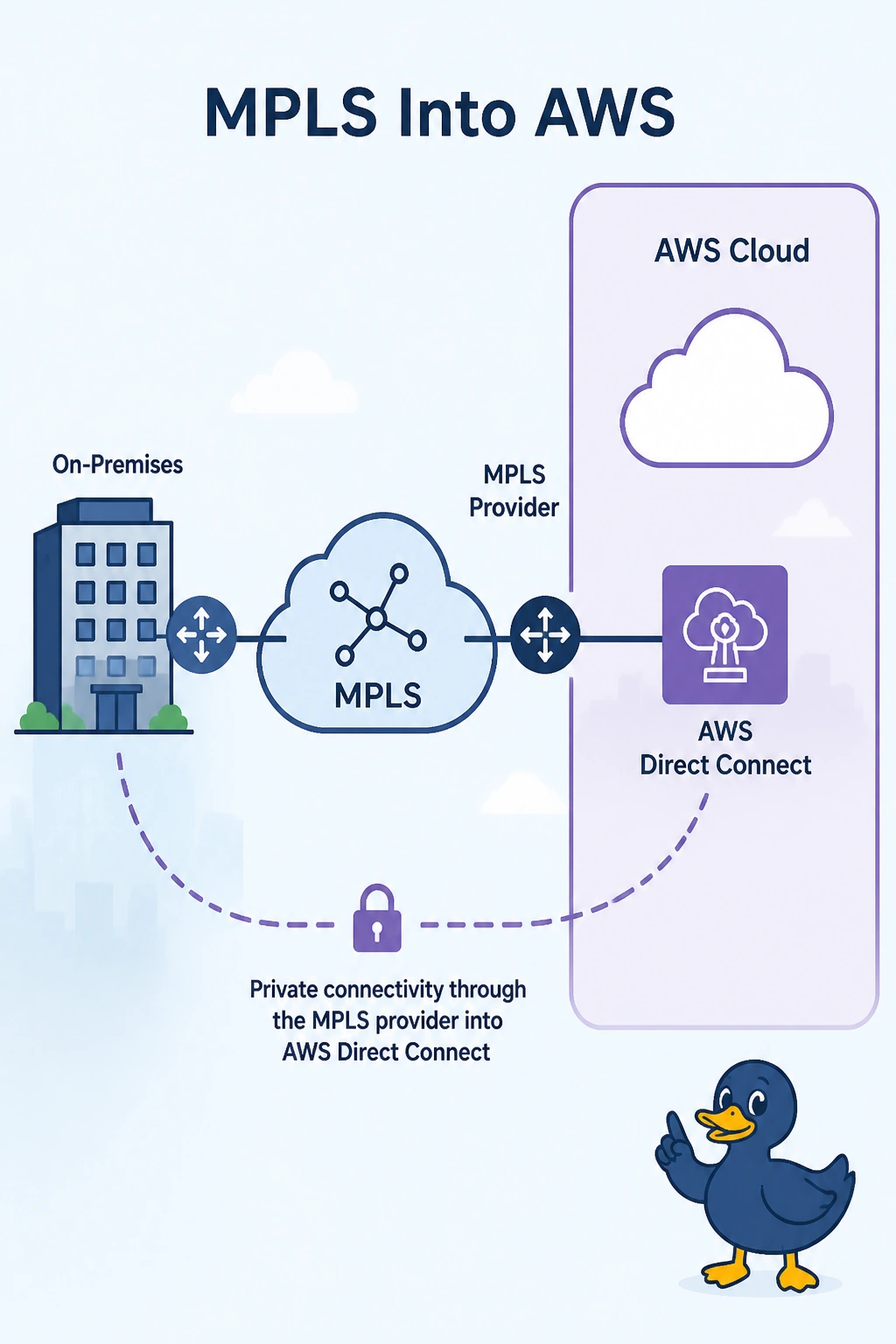
The carrier is already on the private road and is the one who turns into AWS. You’re using private connectivity through the MPLS provider. You didn’t order a cross-connect from a cage you don’t have, or build an internet VPN on the side.
Full Explanation
When the MPLS provider hands the private WAN into Direct Connect, your grocery traffic stays on the provider’s private network and enters AWS without traversing the public internet. Because you do not own a cage at the AWS location or order the cross-connect, the provider is the actor making the cloud handoff; this is private connectivity through the MPLS provider. A colocation cross-connect ordered from your own cage would be your own cable from that cage, which you do not have. Native IPsec over the provider’s internet access would instead leave the private WAN and terminate on a virtual private gateway, so it does not match the described private handoff. An SDCI virtual circuit ordered on your own fabric port would be the software-defined interconnect model, but you are not ordering that port. The provider is carrying out the cloud handoff. Exam caveat: the provider’s handoff still lands on a Direct Connect virtual interface type; a public virtual interface would not carry the private VPC prefixes this WAN is intended to reach. Practical check: confirm that the provider reports the Direct Connect attachment in service and that your grocery edge learns the VPC prefixes from the MPLS cloud handoff, rather than from an IPsec tunnel.