
A hotel branch has an approved local security stack and wants the lowest delay to Salesforce. Traffic should leave the branch straight to that application. Which SaaS connectivity model is this?
Select an answer to reveal the explanation.
Short Explanation
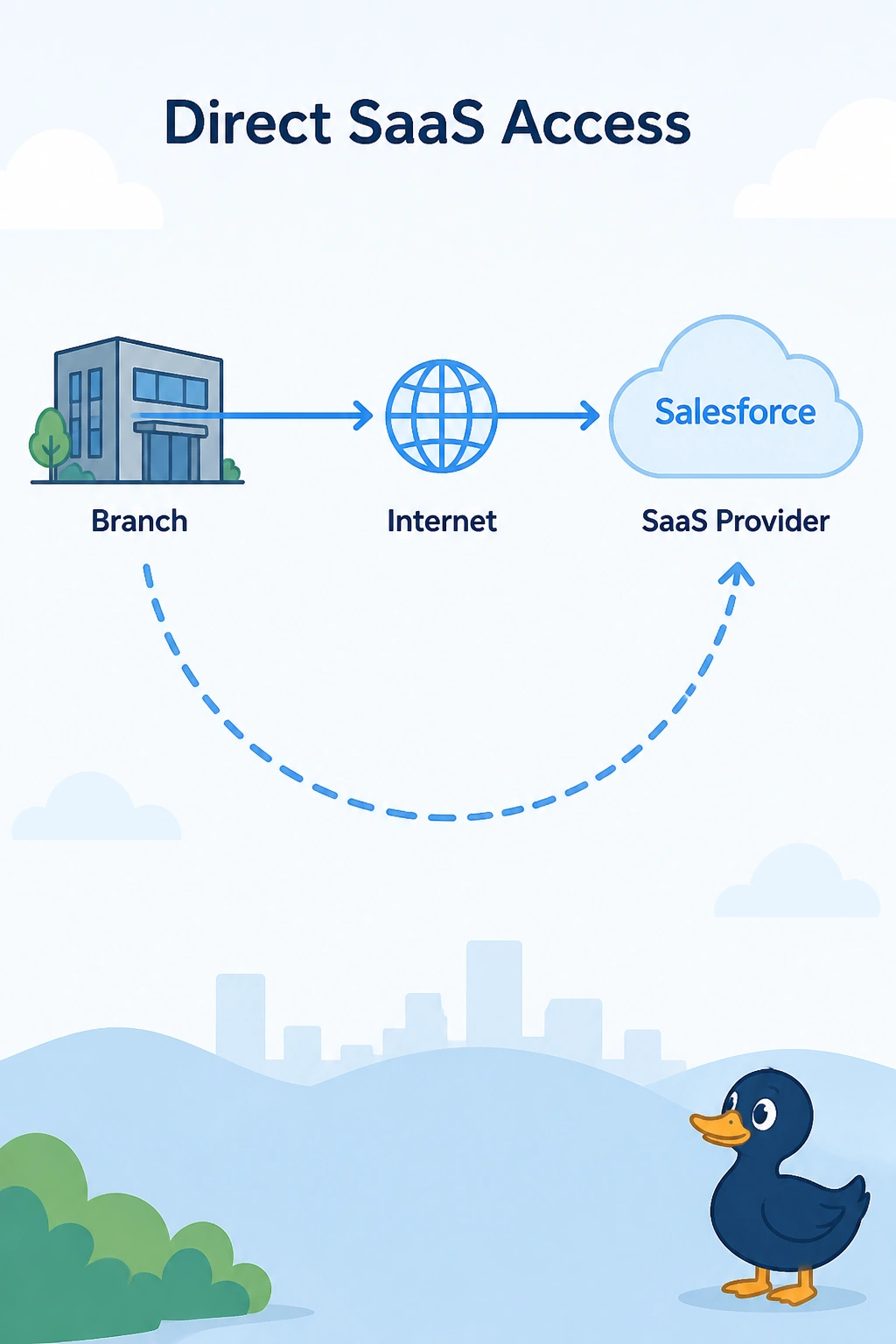
The shortest path to the shop is out your own front door. You break Salesforce out locally, and the branch security stack you already trust inspects it. Hauling it back to headquarters, or to a remote security cloud, adds the delay you are trying to avoid.
Full Explanation
Direct internet access sends the SaaS flow from the branch toward the provider, instead of hauling it to another site first. The hotel already accepts the local security stack for that breakout, and the goal is the lowest delay, so this is the direct-internet model for SaaS. Backhaul through a centralized data-center internet gateway adds a hop to headquarters and usually more delay. It is the centralized-gateway model. A dedicated private circuit to the SaaS provider is a different model, used when the provider offers a private or peering path and the requirement is to stay off the public internet. That is not what this branch asked for. Indirect access through a remote cloud security provider inserts that provider's stack in the path before Salesforce. It can be the right security design, but it is not local breakout. Exam caveat: local breakout is only as safe as the stack on that branch. If the hotel later requires one shared security cloud, the model changes even if the delay gets worse. Operational check: a trace to the Salesforce destination should egress the branch internet interface, and the local security log should show the session without a headquarters hop.