
A logistics firm has a software-defined interconnect port in one metro and needs private virtual circuits from that port into both AWS and Azure, without a new physical cloud port for each attachment. Which model is this?
Select an answer to reveal the explanation.
Short Explanation
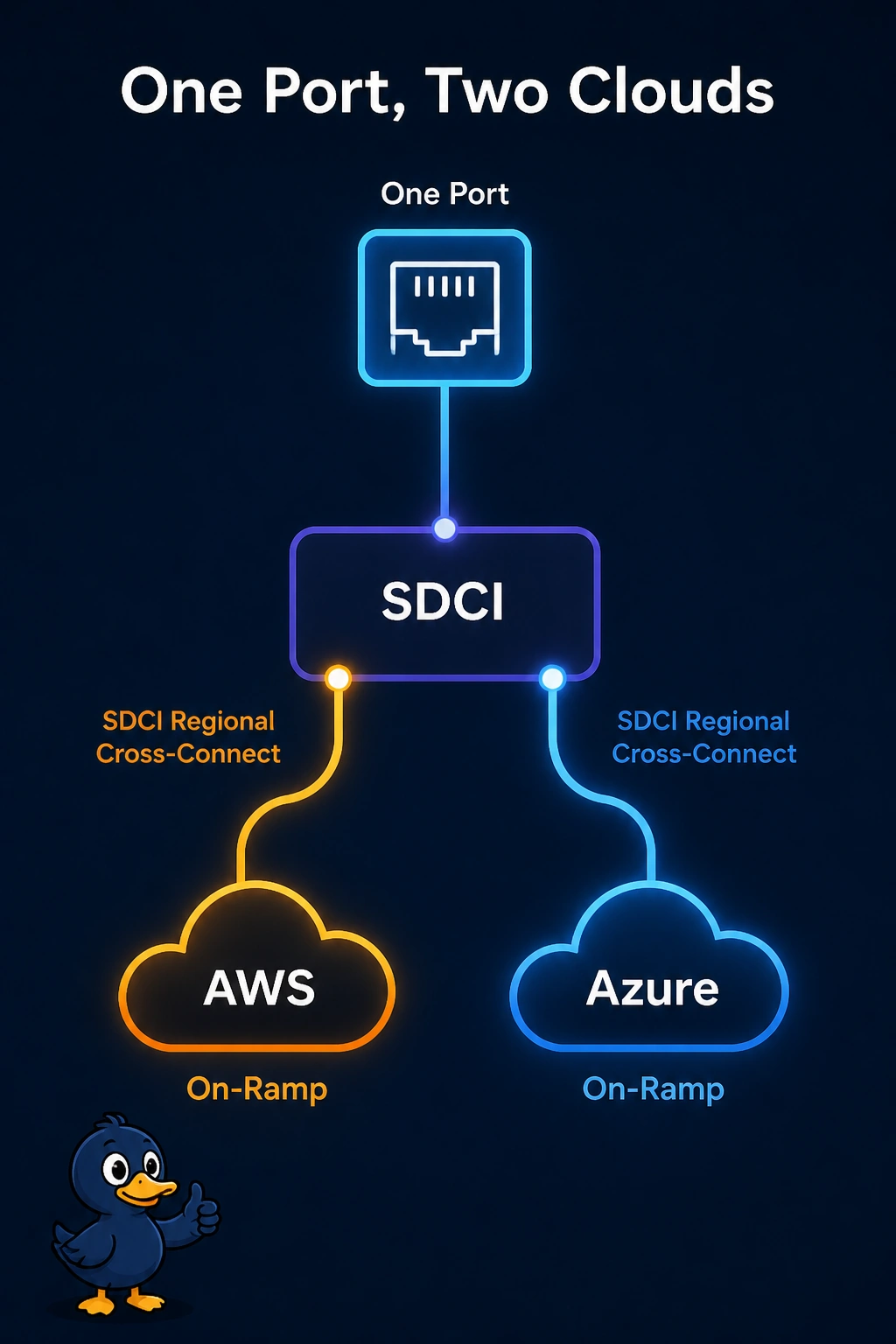
You already bought a programmable on-ramp in one city. You spin virtual circuits from it into AWS and Azure instead of ordering a new physical port every time. That is an SDCI regional cross-connect, not a cage you do not have and not an internet VPN.
Full Explanation
Software-defined cloud interconnect gives you a port on a fabric and then a virtual cross-connect into a cloud on-ramp in that region. The logistics firm can add an AWS attachment and an Azure attachment from the same metro port without ordering a new physical port at each provider. That is the SDCI model. A colocation cross-connect assumes their own cage meets the provider in a building. They did not describe a cage. They described a fabric port and virtual circuits. Native IPsec on a public internet transit product leaves the private fabric and becomes the internet IPsec model. An MPLS carrier handoff is private too, but it is the carrier's WAN extended into the cloud. The firm has not ordered that service. Exam caveat: the virtual circuit still lands on a real cloud interconnect product, such as a hosted connection or partner attachment. SDCI changes how you order it, not the fact that the provider must accept the VLAN. Operational check: the fabric portal should show a live virtual circuit in this metro to each provider, and the cloud side should show that attachment up on a private or partner interconnect, not on a VPN gateway.