
The NOC wants interface state changes to reach the analytics platform within a second of happening, while CPU utilisation should arrive every five minutes whether or not it moved. The sensors use streaming telemetry from IOS XE. Which comparison of periodic cadence and on-change publication is accurate?
Select an answer to reveal the explanation.
Short Explanation
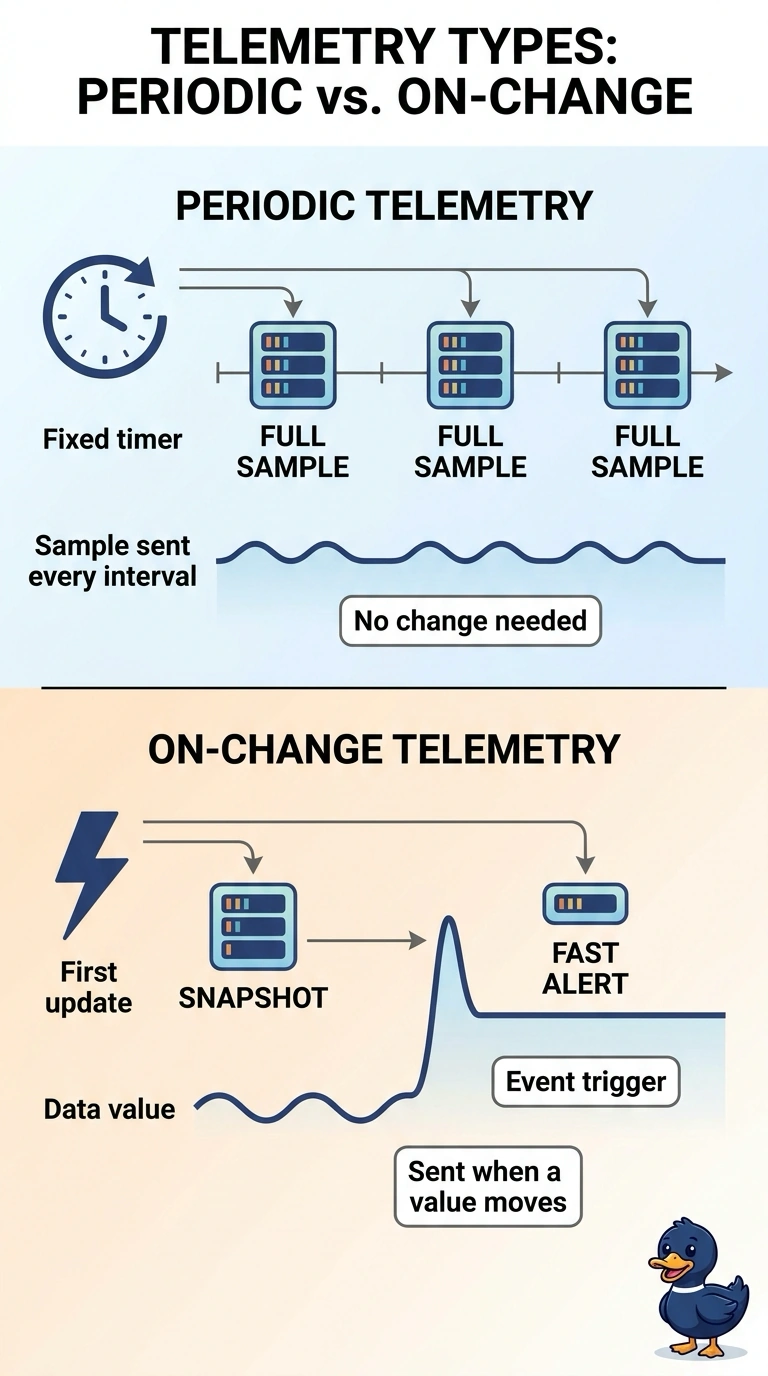
Periodic publication is like a clock checking in: it sends a full sample on a fixed schedule, even when nothing changes. On-change publication starts with a snapshot, then sends updates when a value changes.
Full Explanation
A streaming telemetry subscription defines a sensor and an update policy: a periodic subscription sends the subscribed data at fixed intervals, so the receiver gets a sample whether values changed or sat idle. An on-change subscription can send the current contents of the datastore as its initial update, then trigger updates when the device detects a qualifying change in the configured objects. This can make an interface state change reach the collector promptly, subject to device processing and transport latency; it does not guarantee delivery within a second. The idea that periodic also waits for a change confuses the two modes, because periodic is schedule driven and can emit an unchanged CPU value. Tying both modes to the collector's polling timer misplaces the mechanism, because the device sends telemetry updates while the collector subscribes and listens. Running both sensors as periodic would not meet the desired response time for a state change, while disabling on-change removes event-triggered updates. Practical check: watch message timestamps from both subscriptions and confirm periodic updates arrive at the configured interval while on-change updates follow qualifying events.