
You maintain a Python automation library for SD-WAN Manager and need to duplicate an approved feature template for a lab overlay instead of building one from scratch. The clone must keep every parameter and default while gaining its own identity in the Configuration API. Which feature template cloning sequence should your script use?
Select an answer to reveal the explanation.
Short Explanation
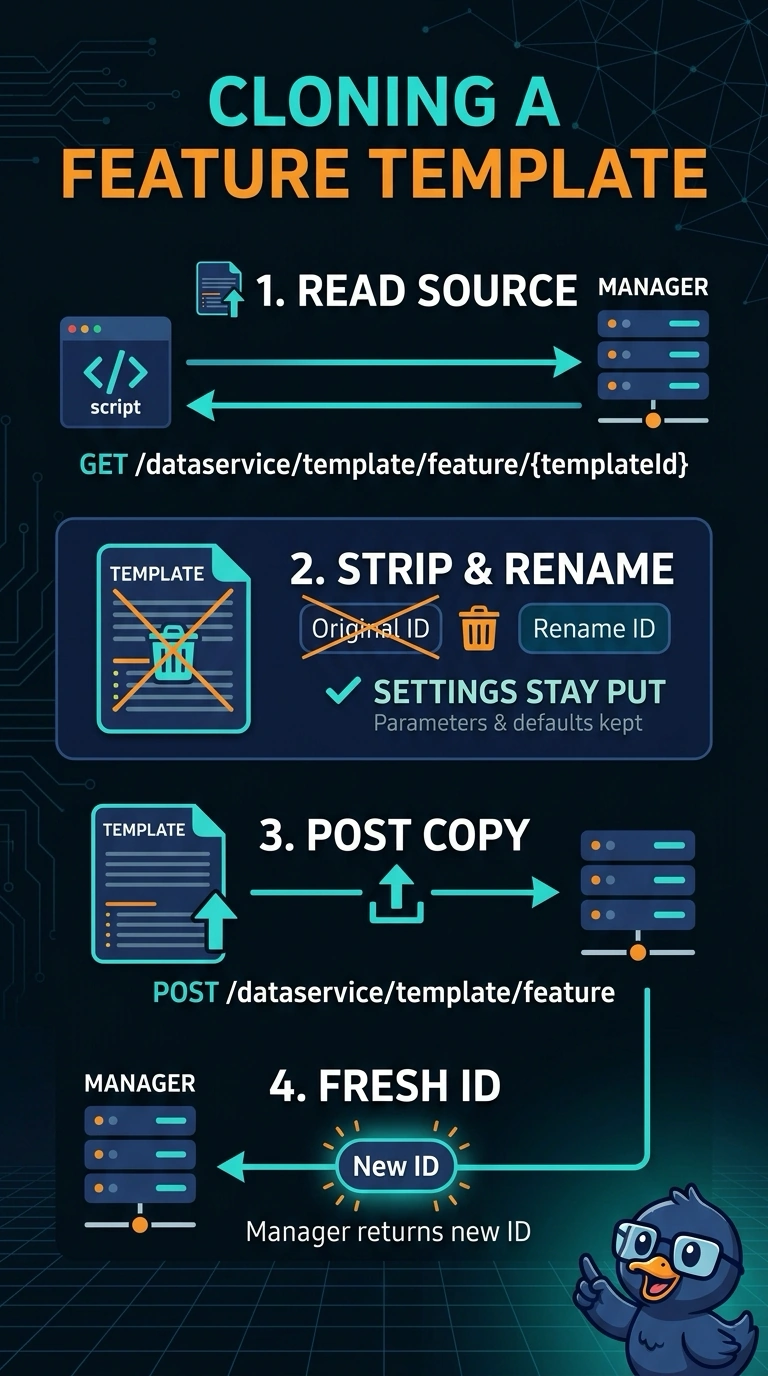
You can treat the source template like a document you’re copying while keeping all its contents. GET /dataservice/template/feature/{templateId}, remove its IDs, rename the copy, then POST it to /dataservice/template/feature so it gets a new identity.
Full Explanation
A typical feature-template clone uses GET /dataservice/template/feature/{templateId} to retrieve the source definition, removes the source templateId, gives the copy a distinct name, and POSTs it to /dataservice/template/feature. The create request produces a new template identity while retaining the template definition and its parameters and defaults. Do not rely on submitting the source templateId unchanged to create a separate template; use the create workflow with a new identity instead. Updating the existing template through its ID modifies that template rather than creating a separate one. The device-template endpoint creates a different object: a device template that can reference feature templates and supply device-specific values. Check the API documentation for the SD-WAN Manager release you use, then confirm that the create response contains a new templateId and compare the feature definitions.