
A network team streams model-driven telemetry from IOS XE switches into one collector. Dashboards need evenly spaced samples of interface counters, engineers need the moment an interface or neighbor changes state, and both feeds must arrive as YANG Push updates rather than polled data. Which subscription plan should the team configure for the two feeds?
Select an answer to reveal the explanation.
Short Explanation
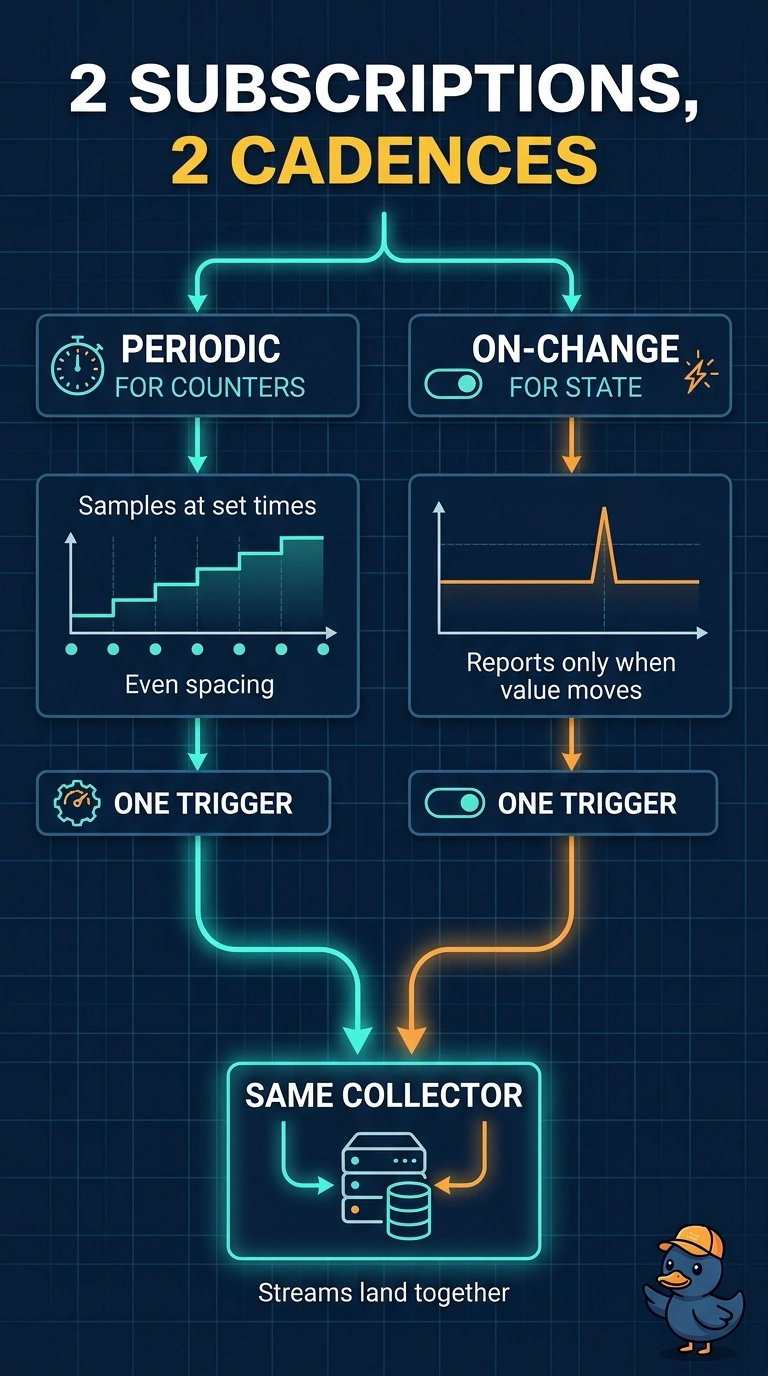
YANG Push fixes one trigger per subscription, so you split the job across two subscriptions aimed at the same collector. Periodic gives your dashboards a steady heartbeat while on-change fires the moment a value moves. It's a metronome for trends and a doorbell for events.
Full Explanation
YANG Push defines the update trigger as a single choice inside each subscription, so one subscription is either periodic or on-change and never both. To serve both needs you establish two subscriptions reporting to the same collector: periodic pushes a sample on every interval whether or not anything moved, which hands your dashboards evenly spaced points you can average and graph, while on-change pushes only when a value differs from the last report, so an interface or neighbor transition lands immediately. One short periodic subscription for everything fails the immediacy requirement, because a state flip must wait for the next tick and your alerting lags behind the network. One on-change subscription for everything fails the dashboard requirement, because counters change continuously and produce a firehose with no predictable sampling rate to draw, and many counter objects are not on-change notifiable at all. SNMP polling fails the delivery requirement, because it reintroduces a polling protocol and a second protocol stack while the push subscription covers only half the job. Exam caveat: on-change is an optional YANG feature, so check the model before promising instant updates for a given subtree. Practical check: build both subscriptions and watch collector timestamps show a steady beat alongside instant state reports.