
An operations engineer must script three SD-WAN Manager tasks: create a read-only auditor account, read controller certificate status, and check cluster health. The script logs in once and reuses the session for every call. Which administration API approach completes all three tasks?
Select an answer to reveal the explanation.
Short Explanation
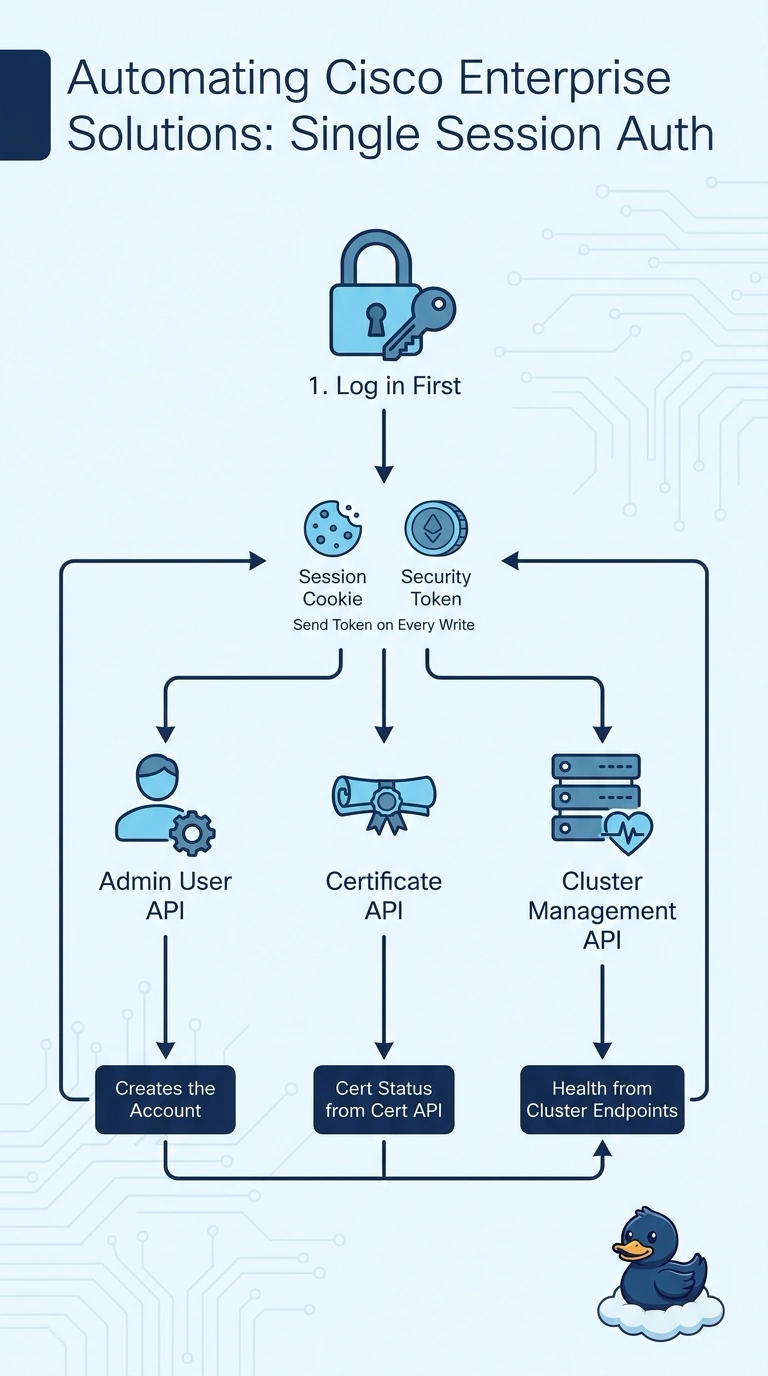
Log in once, keep the session cookie and token, and use them as required for the administration calls. Accounts come from the admin user API rather than the usergroup API, and cluster health comes from the cluster management endpoints. Your session is the keycard for all three doors, so you don't log in again per task.
Full Explanation
SD-WAN Manager (formerly vManage) keeps its administration work under the same /dataservice base as other API resources, with purpose-built resources: admin user for creating, editing and deleting accounts, admin usergroup for managing user groups and their privileges, the certificate endpoints for controller certificate status, and clusterManagement for the manager cluster itself. You log in once to obtain the session cookie and fetch the security token; reuse the session, and include the token on write requests as required. Creating an account through the usergroup API is the wrong approach: account creation uses the admin user API. Reading cluster health from device inventory is also the wrong approach: that endpoint lists network devices and controllers, while manager cluster node health comes from the cluster management health endpoints. Use the session-based login flow rather than sending credentials with every request. Exam caveat: name the user group in the create call, because the account's role is what keeps it read-only. Practical check: after login, fetch the security token and confirm a write carries both the session cookie and the token header.