
A Python service behind HTTPS receives Meraki alert webhooks for a warehouse network. During rollout a malformed test POST crashed the handler, and a slow path held the reply open past the sender's timeout. Which request-handling sequence for the alert webhook satisfies payload validation and timely acknowledgement?
Select an answer to reveal the explanation.
Short Explanation
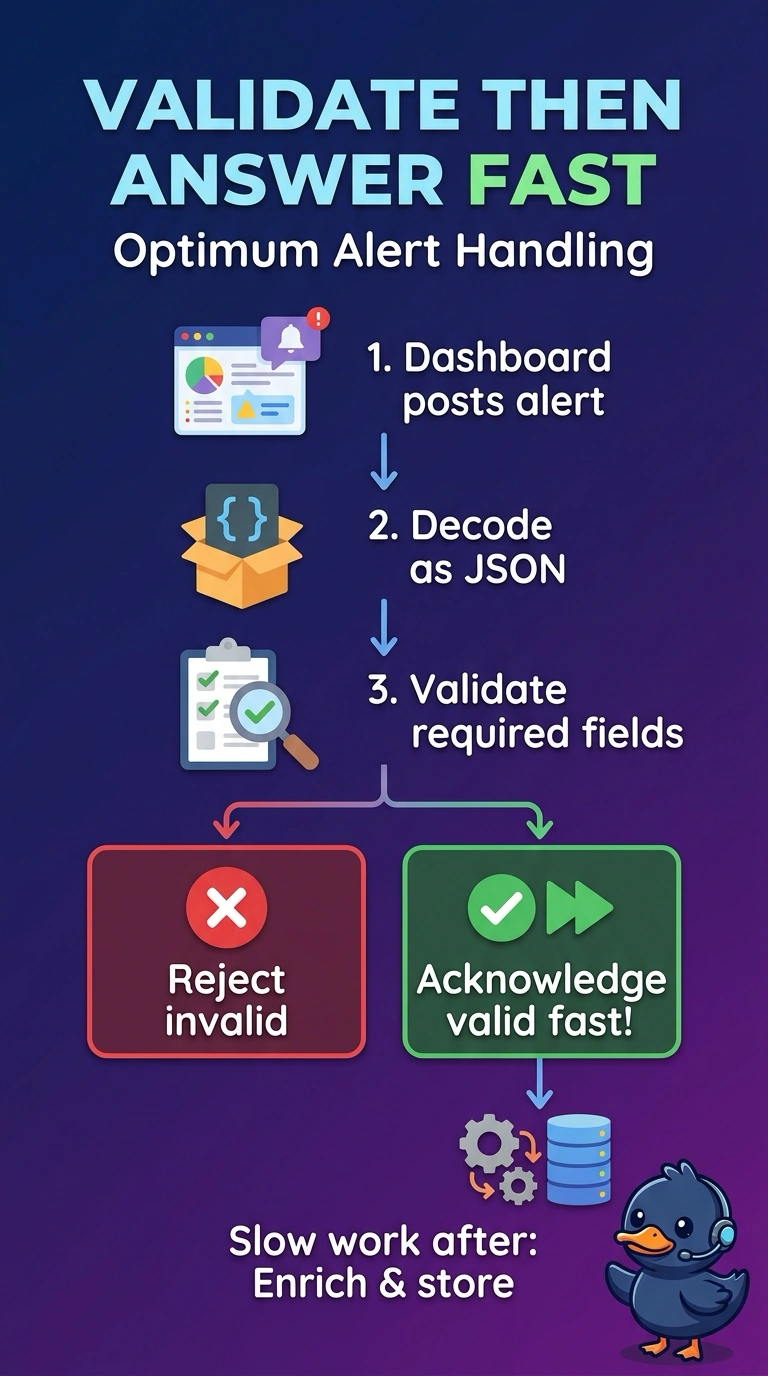
You should parse the JSON, validate required alert fields, reject invalid payloads, and promptly acknowledge valid ones before slower work begins. This separation helps prevent sender timeouts without treating malformed input as accepted.
Full Explanation
The required sequence separates request validation from slower alert processing: parse the JSON safely, validate the fields required for a Meraki alert, reject malformed or invalid payloads, and promptly acknowledge a valid request before work that could exceed the sender’s timeout. Logging malformed or incomplete payloads for review can be useful, but acknowledging them instead of rejecting them does not signal delivery failure to the sender. Persisting an alert and completing downstream enrichment before acknowledging may support durability, but it keeps the request open during potentially slow work and risks the timeout described here. Validating only the envelope, then acknowledging and queueing the request while a worker checks alert-specific fields, enables fast asynchronous handling but acknowledges the payload before establishing that it is valid. Exam caveat: an HTTP success response means the webhook request was accepted, not necessarily that every downstream action completed; the exact status code and retry behavior depend on the sender’s contract. Practical check: test malformed JSON, missing required alert fields, and a valid alert that triggers a deliberately slow workflow; confirm invalid requests are rejected and valid ones receive a response before the slow workflow runs.