
A coffee-chain operations team wants doorway area counts recorded every few seconds into its own dashboard. The stores have Meraki MV cameras but no BLE beacons, and the team will not host computer-vision models or download video. Which camera-analytics capability should they use for these doorway counts?
Select an answer to reveal the explanation.
Short Explanation
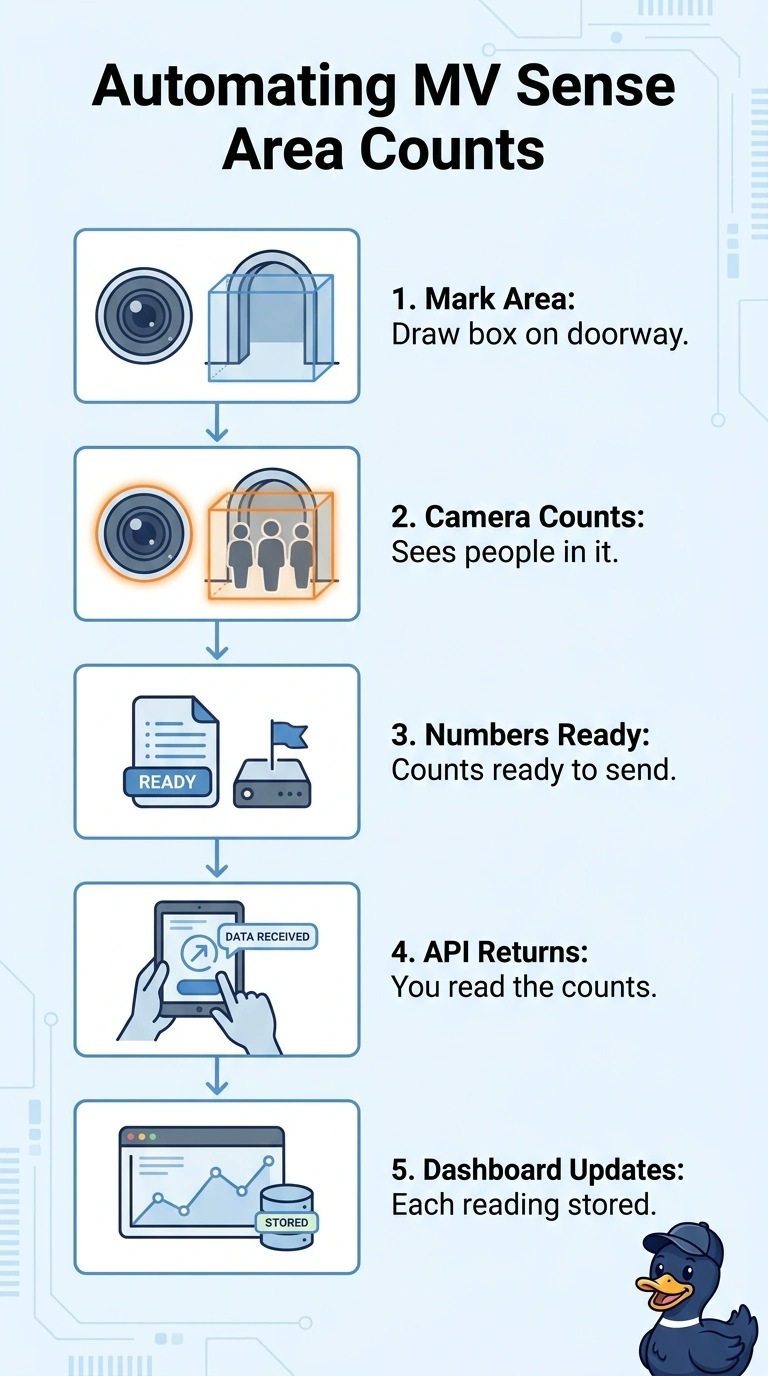
You can use MV Sense to get people-detection and occupancy numbers computed by the camera, then bring them into your dashboard without handling video. Its API fits counts needed every few seconds; Meraki dashboard occupancy analytics stays in Meraki, cloud vision requires video processing, and hourly exports are too infrequent.
Full Explanation
MV Sense fits because the camera computes people-detection and occupancy data itself, and its API lets your team bring those results into its own dashboard without downloading video or hosting a vision model. The data supports near-real-time use, matching the request for counts every few seconds. Meraki dashboard occupancy analytics also provides camera-based information, but reading its live totals in the Meraki dashboard does not deliver them to the team’s own dashboard. A managed cloud-vision service could produce doorway counts for a custom dashboard, but it requires video to be processed by that service, contrary to the stated constraint. Hourly exports of camera-computed occupancy summaries avoid external video processing and could be imported into a custom dashboard, but hourly updates are too infrequent for counts needed every few seconds. Exam caveat: distinguish camera-generated analytics from dashboard presentation and external video analytics; using suitable camera data is not enough if integration or update frequency fails the requirement. Practical check: verify that the specific MV camera and firmware expose the needed MV Sense API fields, then test that the API returns doorway-relevant counts at the required cadence and that your dashboard can ingest them.