
A NOC dashboard refreshes device health scores and open issues from Catalyst Center every five minutes, and a separate job must deploy a versioned configuration template to a branch switch so the change is tracked as intent. Which API approach fits these two jobs?
Select an answer to reveal the explanation.
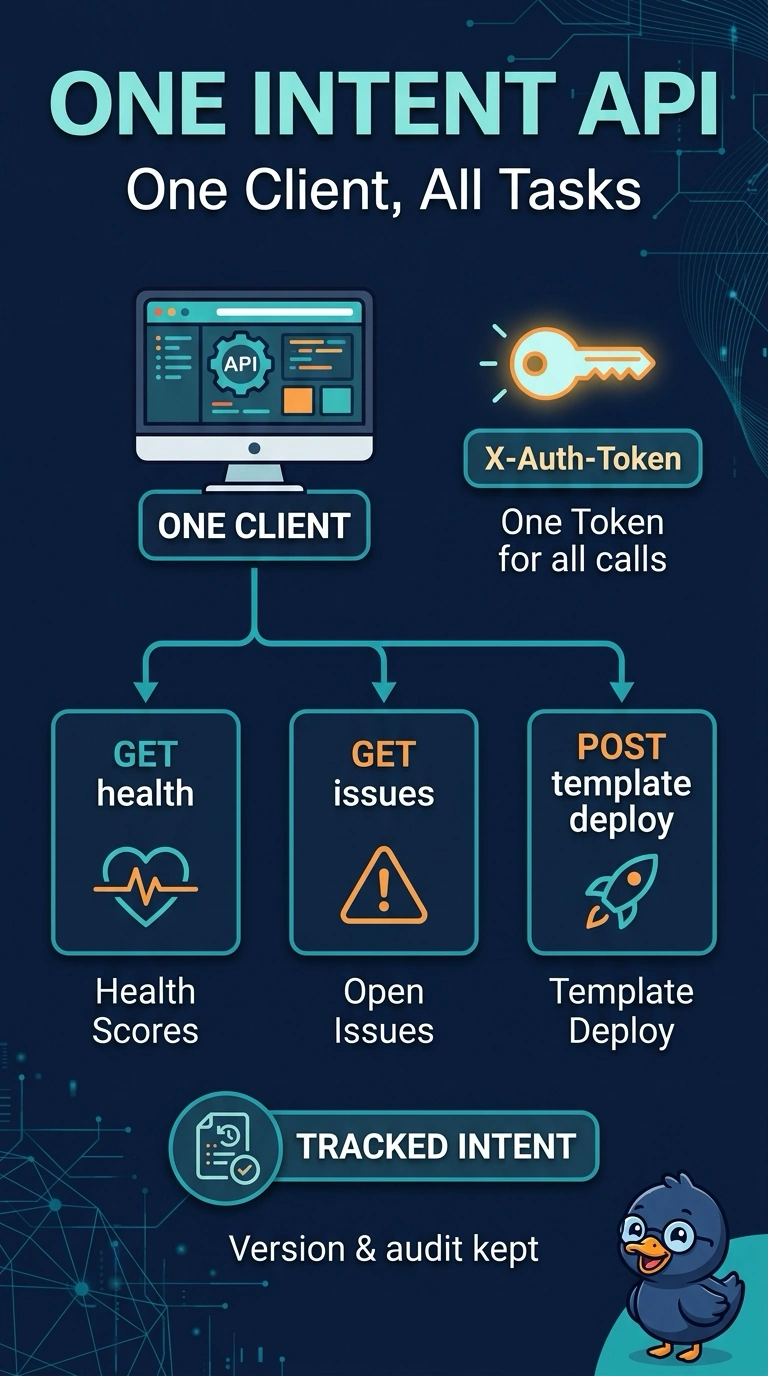
Short Explanation
Catalyst Center exposes both assurance data (health scores, issues) and configuration template deployment through its Intent API, so one authenticated client covers the whole job. Reading health is a GET on a health or issues endpoint, while the template change is a deploy request that Catalyst Center tracks as intent.
Full Explanation
Catalyst Center, formerly DNA Center, publishes its REST interface as the Intent API under /dna/intent/api/v1. Assurance data such as device health scores, site and client health and open issues is read from Intent API endpoints, so the dashboard can poll them every five minutes with the same X-Auth-Token used for everything else. The versioned configuration template is also deployed through the Intent API (template-programmer endpoints), which keeps the template version, its audit trail and later compliance checks tied to the change. The option that invents a separate assurance API for reads or for template writes fails because Catalyst Center has no standalone API family that deploys templates, and health data is not split into a different product API. Command Runner executes raw CLI and bypasses template versioning, so the change would not be tracked as intent. Editing the switch directly over SSH is out-of-band configuration that Catalyst Center would flag as drift rather than record as intent. Exam caveat: the developer documentation groups endpoints into categories such as Devices, Issues and Configuration Templates, but all of them share the Intent API base path. Practical check: call a health endpoint and a template deployment endpoint with the same token and note that one returns data while the other starts a task.