
An engineer hands you a playbook with gather_facts: no that runs cisco.ios.ios_config with parents: ['interface Loopback0'] and lines: ['description managed by Ansible'] against a lab router. QA plans to run it twice from the ios_lab inventory group. Which statement describes the second run?
Select an answer to reveal the explanation.
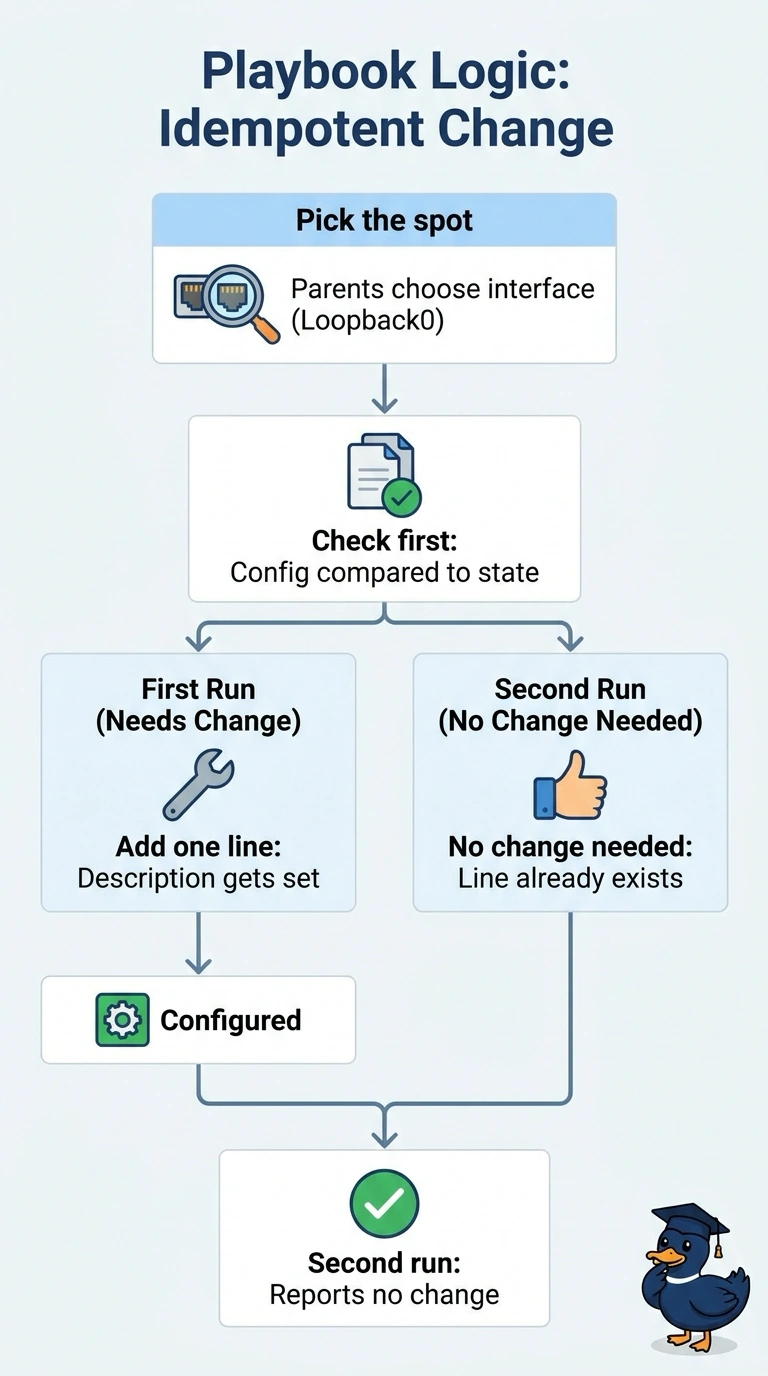
Short Explanation
You can expect ios_config to compare the requested description with the running configuration under Loopback0 before sending commands. Once the line is present, the task reports no change on the second run, showing idempotency in action.
Full Explanation
The ios_config module converges the device configuration by comparing the requested lines with the running configuration before sending commands. The parents list identifies the Loopback0 interface context, so when the description is already present, ios_config sends no configuration commands and the second run reports no change. The claim that ios_config sends its full lines list every time confuses normal execution with an unconditional push: it checks for differences on every run, while check mode controls whether proposed changes are applied. The claim that the task fails unless Loopback0 already exists misreads the parents value; specifying an interface context lets ios_config enter or create that context as needed. Turning off fact gathering does not skip the task: gather_facts controls host fact collection, not whether ios_config runs, and the module does not need gathered host facts to configure the router. Exam caveat: the task still depends on valid inventory connection details and any required enable access, so missing privilege escalation can cause a failure even when the configuration logic is sound. Practical check: run the playbook twice against ios_lab and verify that the second run reports ok rather than changed.