
The upgrade team needs a one-off inventory report from SD-WAN Manager: host name, system IP, and software version for every managed device, gathered in a single run with no device identifiers known in advance. Which inventory API call should the script use to build that report?
Select an answer to reveal the explanation.
Short Explanation
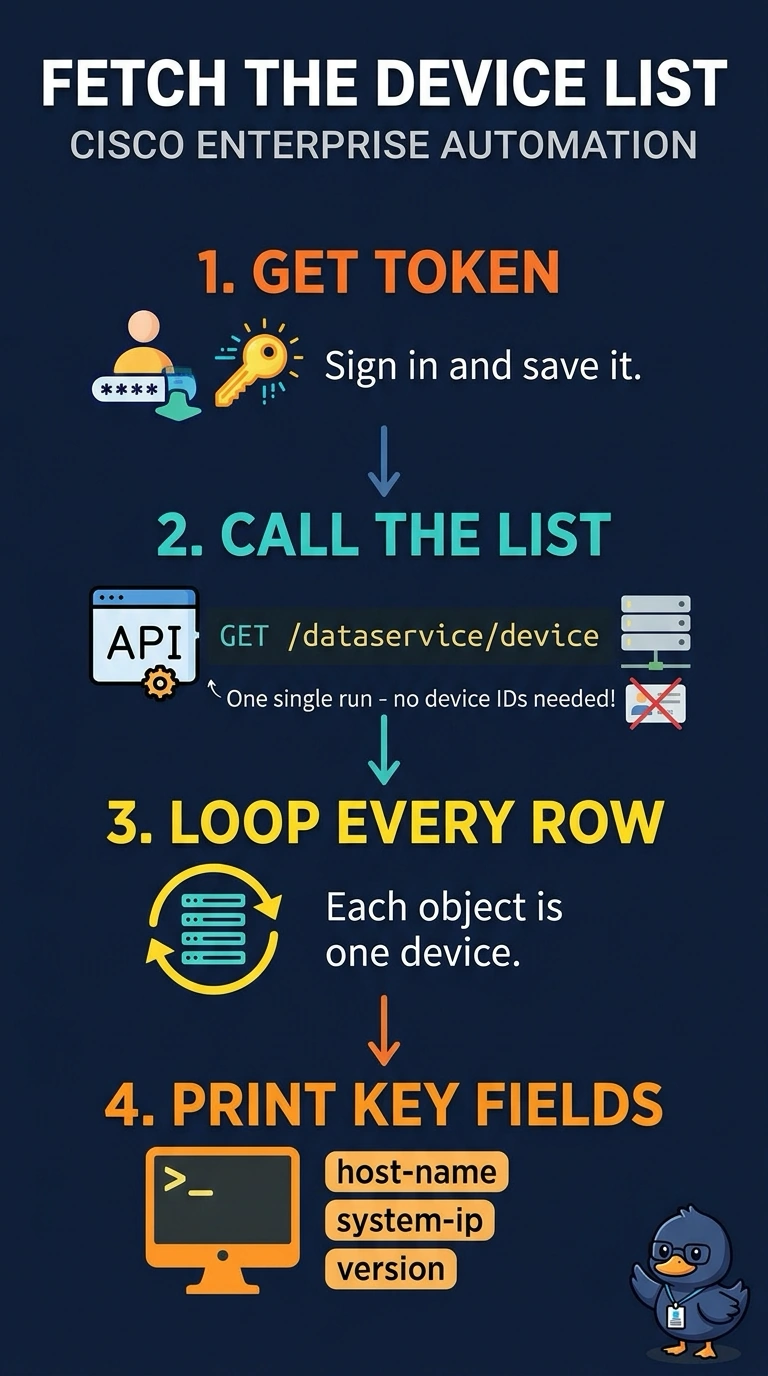
You went straight for the list endpoint, which returns device inventory. Looping through the rows and reading each device's host-name, system-ip, and version turns that response into the report they asked for. Working device by device would have required identifiers you never collected.
Full Explanation
The correct approach uses the collection endpoint, GET /dataservice/device, which returns the managed-device inventory without requiring device identifiers to be supplied in advance. Printing host-name, system-ip, and version from every returned row directly satisfies the report’s field and coverage requirements in one execution. The vedges endpoint is a legitimate inventory route when a report is specifically about edge devices, but it does not necessarily include every managed device, such as controllers, so it narrows the requested population. Looking up IDs in a saved inventory and then querying each device is a common targeted-detail pattern, but it depends on identifiers already being available before the run; it can also leave the report stale if devices have since been added or removed. Querying once per device type and combining the results is another reasonable way to assemble an inventory, but it makes multiple requests rather than gathering the inventory in one collection request, and may introduce gaps if a type is omitted. Exam caveat: endpoint names and returned fields can vary with SD-WAN Manager release and API version, so verify the documented response schema for the deployed release. Practical check: run the collection request against a test manager, confirm that its row count and device types match the manager’s managed-device inventory, and verify the three requested fields are populated before exporting.