
Two hospital campuses connect via a shared WAN where Campus-A runs OSPF and Campus-B runs EIGRP, with mutual redistribution planned on two border routers for resilience. Designers fear loops and suboptimal paths when prefixes are learned from both sides. Which redistribution design best prevents loops while preserving metrics and filtering?
Select an answer to reveal the explanation.
Short Explanation
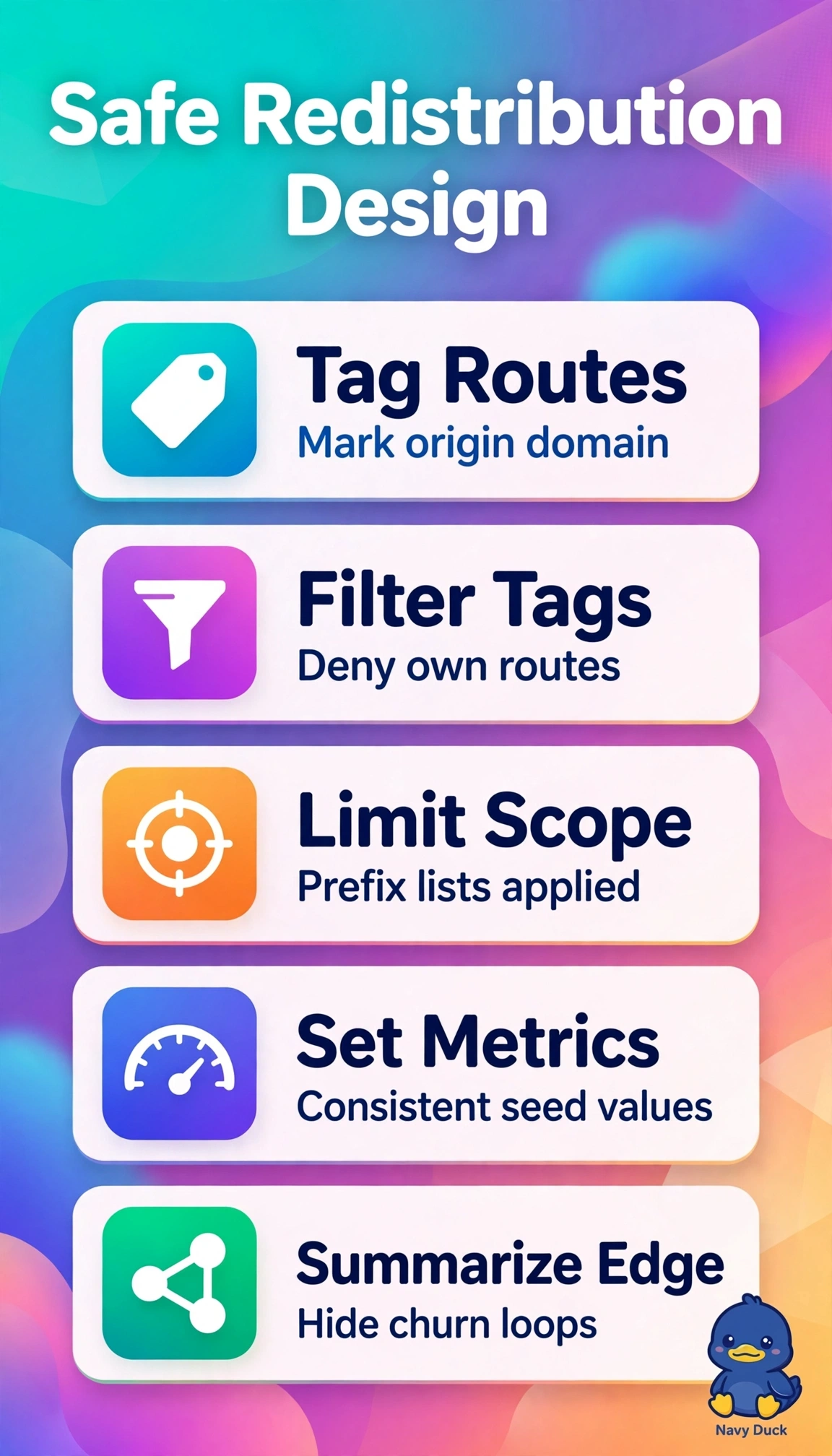
You're labeling boxes so they don't circle back endlessly. Route tagging marks redistributed prefixes so border routers can reject their own routes and keep metrics predictable.
Full Explanation
The correct design using tags with prefix-list filtering plus consistent metric translation and elevated administrative control succeeds because it combines all four controls for two-point OSPF-EIGRP redistribution: tags identify redistributed prefixes for denial on feedback to break loops, prefix lists limit scope to prevent wholesale feedback, consistent translation preserves OSPF cost versus EIGRP composite comparability to avoid suboptimal paths, and elevated control ensures correct preference for native paths. The approach preserving native administrative distances fails on preference management because OSPF and EIGRP defaults create asymmetric selection that can prefer feedback over the true native path despite correct tagging and filtering. The approach permitting all prefixes without filtering fails on selective redistribution because without prefix-list granularity, summarization or tag loss allows excessive feedback and policy violations on the shared WAN. The approach relying on automatic seed metrics fails on metric translation because untranslated defaults break comparability, causing unreachable or inflated costs filtering cannot fix. Exam caveat: do not confuse tagging for identification with filtering for permission or distance for preference, as all are required. Practical check: verify tags at redistribution, confirm prefix-list denial of feedback, compare translated metrics end to end, and check both border routers prefer native source paths.